Category: Book Reviews

  • Temptation and Excess in ‘Goblin Market

    Temptation and Excess in ‘Goblin Market

    Preface: This essay stirred self-doubt and questionable career paths due to its final grade. While I have made a few tweaks to this paper, I felt it was necessary to release a piece that invoked excitement and curiosity within my work at university. My relationship with criticsm has mirrored a complexity of my love for literature in general, so as a way of letting go, i felt it was necessary to uplift a voice not understood, or markedly seen as wrong.


    “The evil of [her] self-indulgence, the fraudulence of sensuous beauty, and the supreme duty of renunciation[1],” delivers Rossetti‘s conflicting dispositions in her fairy-tale world of the “sensuous, […] ascetic[2],” and religious. On reading Christina Rossetti’s ‘Goblin Market,’ sexual desire permeates the text of the fairy-tale world of the poem yet, I argue, we should go further and examine the eroticism of the mouth in maidenhood, to capture consumption through a lense of temptation and excess, eventually altering the body.

    Christina Rossetti’s brother, Dante and his painting, The Annunciation, cited as Image A, composed the Virgin Mary, cowering in the corner of the bed, leaning away from archangel, Gabriel, to capture inciting fear of an approaching holy figure. Yet, the psychological realism confronts the young maiden through a forceful motherhood. Hilda Koe’s painting, referenced as Image B, introduces similar implications as Dante’s piece, of white gowns, biblical references from golden circles to tempting apples, fearful eyes as the man imposes into female spaces. The condition of the women merges here, as she is now tempted by possibility, of the taste of fruit or the holy summoning, yet unaddressed by the sexual nature of the offering, that which is the social insistence of motherhood.

    Laura approaches the Goblin men, by “stretch[ing] her gleaming neck[3]” like a ‘poplar branch,’ an gesture of intrigue, until “[her] last restraint is gone[4].” Desire is initiated by the maiden until the temptation compels her to cut a lock of golden hair; “’Buy from us with a golden curl’ / She clipped a precious golden lock[5].” Her virgin maidenhood shifts to female eroticism, transactional is relingquishing a piece of herself, notably her youth, until the emodiment of seductress follows the expanse of her mouth. Eventually a physical rupture of Laura’s virginity hungrily commences when, “She dropped a tear more rare than pearl / Then sucked the fruit globes fair or red[6],” till the “mouth-watering urgency[7]” she trembles with, incites a realm of perversion. It is through this desirable loss of innocence, her mouth becomes a sexual orifice, filled with, “hunger and satiation[8]” and as a result, temptation becomes animalisitc as her oral state is transfixed on consumption for, “She sucked and sucked and sucked the more / … / She sucked until her lips were sore[9].” Must she bite into the fruit, a mirror of Eve who held the red apple, the ‘fruits that thy soul lusted after[10]’ leave the maiden to be consumed by an erotic madness, which now sustains her body. A hunger which can no longer be satiated by the forbidden fruit “sweeter than honey[11].” The temptation in now embedded within the lining of her stomach and the taste lingering in her mouth, until she must return for more, utilizing such a mouth to speak, kiss, and desire: “’Nay hush, my sister: / I ate and ate my fill, / Yet my mouth water still: / To-morrow night I will / Buy more,’ and kissed her[12].”

                Noted in religious text as the “Fall of Man” with Eve’s temptation of the apple, to the “Fallen Woman” during the pre-Raphaelite era, biblical interpreations begin to center the sexual corruption of women. Sharon Smulders’s, Christina Rossetti Revisited, reimagines Laura’s actions toward that of Eve writing, “Indeed, while the sisters’ temptations double on Eve’s temptation, the fruits multiply outrageously. If the first fruit of the goblin as well as Satanic temptation is the allusive apple, the second fruit (the quince) and the twenty-first (the pear) belong to the apple genus.[13]” Precisely, the relationship between the mouth of a biblical, virginal, or maiden women consume a ‘sinful’ fruit, prescribes her ‘fallen’ stature and immoral standing with God, until the hunger which riddles temptation can only be led by the mouth of a man.

    From this moment, the decay of Laura unfolds. She becomes an “all-giving, all receiving womb[14],” yearning to embrace the taste and the sensuality to suck upon the fruit which fills her mouth, dependent on the pleasure she is to receive. Marsh conceives this phenomena arguing, “This is also the essence of desire: once attained, it ceases to satisfy, vainly driving the sensual urge to repetition, seeking to regain the first, orgasmic joy[15].” As a result, the animalization of Laura recenters the mouth to hold her forbidden carnality, while also supplying bestial gestures as eroticism reconstructs her previous maiden identity: “She gnashed her teeth for balked desire, and wept / As if her heart would break[16].” 

    Correspondingly, Victorian history alongside prostitution produced conversations on venereal dieases, leaving women to become the center of another social illness. Eager to consume only the body of women,[AS1]  their mouths produced the sexual desire, the necessary tempation, to leave the women are their “…hair grew thin and gray: / […] dwindled, as the fair full moon doth turn / To swift decay , and burn / Her fire away[17].” The mouth now rids her of vitality, sprititually depleting the maiden, and a site once fit for eroticism fades swiftly as, “Her tree of life drooped from the root[18]:” until she can no longer serve, nor consume eagerly as a biblical woman.

    As I divulge into ‘excess’ in ‘Goblin Market,’ the maiden’s peverse actions are analyzed through the lens of, “violence of passion[s]; extravagant or rapturous feeling; [and] unrestrained manifestations of grief[19].” Arthur Rackham’s illustration as Image C, drowns Lizzie in the “Cat-like and rat-like, Ratel- and wombat-like[20]” creatures, tearing at her white dress, as their hands force sinful fruit into the maiden’s face. Otto Greiner’s sketches seen as Image D, attracts a desirable comparison between the poised women: the body is malleable, desirable, corporeal as its skin holds the hands of those below them, each head turned purposefully, the mouth shut and unwilling to concede, skin wrapped with pure intention. Sap-filled pastures, blooming lilies, to the maiden’s milking the cows, the intersection of nature within Rossetti’s poem expands Dijkstra’s thoughts, “Thus, the eroticized body of woman became the late nineteenth-century male’s universal symbol of nature and of all natural phenomena. She sat, a flower among flowers, a warm, receiving womb and body, waiting patiently for man, the very incarnation of the spirit of the rose[21].”

    The development of Lizzie from a cautious, untouched maiden insistent of the deviant sexual nature the goblins present to excessively urging her sister to lick upon her face, is no coincidence. A rational, modest maiden who “churned butter, whipped up cream, / Fed their poultry, sat and sewed[22]” to:

    “Come and kiss me.

    Never mind my bruises

    Hug me, kiss me, suck my juices

    Squeezed from goblin fruits for you

    Goblin pulp and goblin dew.

    Eat me, drink me, love me[23]; “

    captures the sexual sacrifice explored by Rossetti, through an excessive, ‘unrestrained manifestations of grief” of Laura’s declining state. A transitionary moment for both sisters, the exploration of excess expands with the rape of Lizzie as the goblins forcefully invade her body with the forbidden fruit. Moreover, Freud’s construction of hysteria, the breach of the mind can develop from, “[…] any pains, whatever their cause, reach maximum intensity and that any afflictions are ‘terrible’ and ‘unbearable’[24]” accompanies the demanding, desperate tone to present her face covered in the ejaculation of the goblin men. Even further, Dijkstra argues alongside Albert Von Keller painting as Image E, of feminine submission as “[…] sadistic pleasure [is felt from] the representation of a vulnerable, naked woman tied to a cross[25].” Mirrored alongside Image C, the subjection of Lizzie as the goblins constrain her body against the tree, in possession of her vulnerable nature, displays the carnality she exhibits as the poem ends.

    As a result, the self-sacrifice must become transactional – Lizzie “put[s] a silver penny in her purse, / Kiss’d Laura” while the carnal desires of the goblins were “unrestrained[AS2] , erotic”, and held that penny to exhibitionism of her now hyper-sexualized body[26]:

    “Tho’ the goblins cuffed and caught her,

    Coaxed and fought her,

    Bullied and besought her

    Scratched her, pinched her black as ink.

    Kicked and knocked her,

    Mauled and mocked her[27]

    It is in the rape of Lizzie, that her new role is to indulge in Laura’s lasting sexual temptations, and most notably, the desperation that inhabits her dying sister’s eroticized mouth, as excess constructs her body to a palatable feast. In the midst of her assault, Lizzie sealed the opening of her mouth, a distant allusion to the virginal qualities that can be physically penetrated, and specifically, Rossetti emphasizes the sacrificial nature of the maiden to relinquish her body instead, “Lizzie uttered not a word; / Would not open lip from lip / … / But laughed in heart to feel the drip / Of juice which syruped her face[28].” An offering, a face covered in forbidden juices, delievers her skin, ripe in sexual pleasure to her sister, until she allows herself to be ruined, perfect for her starving mouth: “Kissed and kissed and kissed her: / Tears once again / Refreshed her shrunken eyes, / Dropping like rain / … / She kissed and kissed her with a hungry mouth[29].” Thus, a promiscious mouth, riddled in ‘raptuous feelings’ of her self-sacrifice, Lizzie transforms her body to capture the erotic desires of Laura’s previously penetrated mouth, until the latter knows of hunger again.

                Altogether, an examination of the mouth is pertinent to grasping the inclusion of eroticism within the poem, and more specifically, in the realm of temptation and excess. Returning to Image D of Greiner’s ‘Gaia,’ the supporting quote, ‘The woman is the man’s root in the earth[30],’ illustrates the sensual relationship between Laura and Lizzie, as each supply their bodies – and more specifically their mouths – to confront maidenhood.


    Bibliography

    Bram Dijkstra (1986). Idols of Perversity. Oxford University Press, USA.

    Breuer, J. and Freud, S. (2013). Studies in hysteria. Digireads.com Publishing.

    Marsh, J. (2012). Christina Rossetti : a literary biography. London: Faber Finds.

    Mermin, D. (1983). Heroic Sisterhood in ‘Goblin Market’. Victorian Poetry, [online] 21(2), pp.107–118. doi:https://doi.org/10.2307/40002024.

    Oxford English Dictionary, s.v. “excess (n.), sense 9,” June 2024, https://doi.org/10.1093/OED/4381276791.

    Rossetti, C. (1862). Goblin Market. [online] Santa Clara University. https://webpages.scu.edu/ftp/lgarber/courses/eng67F10texts/RossettiGoblinMarket.pdf [Accessed 1 Nov. 2024].

    Smulders, S. (1996). Christina Rossetti Revisited. Hall Reference Books.

    [Image A]: Rossetti, Dante. ‘The Annunciation’, 1849-50. https://www.tate.org.uk/art/artworks/rossetti-ecce-ancilla-domini-the-annunciation-n01210 [Accessed 20 November 2024].

    [Image B]: Koe, Hilda. ‘The Goblin Market’, 1895. < https://theharvestmaidsrevenge.com/2023/04/05/revisiting-christina-rossettis-goblin-market-an-early-folk-horror-classic/ [Accessed 19 November 2024].

    [Image C]: Rackman, Arthur. ‘Goblin Market,’ 1933. https://commons.wikimedia.org/wiki/File:Goblin_Market_032.jpg [Accessed 20 November 2024].

    [Image D]: Greiner, Otto. ‘Gaia’ [Mother Earth],’ 1912. http://www.symbolismus.com/ottogreinerg228a1912.html [Accessed 21 November 2024].

    [Image E]: Von Keller, Albert. ‘In the Moonlight,’ 1894. http://www.symbolismus.com/albertvonkeller2.html [Accessed 20 November 2024].


    [1] Mermin 1983: 107.

    [2] Ibid.

    [3] Rossetti 1862: l. 81.

    [4] Rossetti 1862: 86.

    [5] Rossetti 1862: 125-6.

    [6] Rossetti 1862 : 127-8.

    [7] Marsh 2012: 231.

    [8] Dijkstra 1986: 62.

    [9] Rossetti 1862: 134, 136.

    [10] Ibid.

    [11] Rossetti 1862: 129.

    [12] Rossetti 1862: 164-8.

    [13] Smulders 1996: 35.

    [14] Dijkstra 1986: 85.

    [15] Marsh 2012: 233.

    [16] Rossetti 1862: 267-8.

    [17] Rossetti 1862: 277-80.

    [18] Rossetti 1862: 260.

    [19] Oxford English Dictionary 2024.

    [20] Rossetti 1862: 340-1.

    [21] Dijkstra 1986: 87.

    [22] Rossetti 1862: 207-8.

    [23] Rossetti 1862: 466-71.

    [24] Breuer and Freud 2013: 241-42.

    [25] Dijkstra 1986: 34.

    [26] Rossetti 1862: 324-5.

    [27] Rossetti 1862: 424-29.

    [28] Rossetti 1862: 430-4.

    [29] Rossetti 1862: 486-9, 492.

    [30] Dijkstra 1986: 85.


     [AS1]come back to cite

     [AS2]“These images were expressive of men’s dreams of generous, unrestrained inclusion; of nature as simultaneously receptacle, fertile soil, and comforting breast” (85)


  • The Necessary Pages: A Short June Edition

    Orbiting Jupiter, Professor Gary D Schmidt

    Devastation. Original in thought, Schmidt’s attention to the emotional embodies a human-like yearning, where desires to fairy-tale endings must be done within such short chapters. You outline your future with children whose grief is profound in limited pages, whose words shock the body and guard the truth, until getting old seems impossible. It leaves one on the seat never wanting to leave, unless they need to go grab some tissues.

    Open Water, Caleb Azumah Nelson

    All that is lyrical. Nelson carries the soul, molds his hands to make love between two, seem so natural. Surpasing modern romance presently, the maturation toward adoration develops the friends to lovers narrative which carries most of Nelson’s work (i.e Small Worlds). Truly, the movement of generational history and cultural connection, fosters an entirely new world of what love could be, or what is has always been if we had the right words.

    Mama’s Baby, Papa’s Maybe: An American Grammar Book, Hortense Spillers

    “The African-American woman, the mother, the daughter, becomes historically the powerful and shadowy evocation of a cultural synthesis long evaporated – the law of the Mother- only and precisely because legal enslavement removed the African-American male not so much from sight as from mimetic view as a partner in the prevailing social fiction of the Father’s name, the Father’s law.”

    Rich in theory. Spiller’s once again delievers the necessary voice which speaks upon the flesh of the black body and its gendering from American grammar. A vital breath to literature, Spiller’s analysis leave little room for interpretation, allowing her words to simmer between the space the bodies are meant to hold even decades later.

  • Space, Gender and Chastity: Domestic Space in The Rape of the Lock.

    Space, Gender and Chastity: Domestic Space in The Rape of the Lock.

    Literature 1550-1740, Term 2.

    Judith Butler in Gender Trouble (1989) develops the relationship between gender and space through a cultural discourse. An unprecedented work, Butler’s aim shifts the reflection of gender to the corporeal – the body, and by relation, the space in which the physical and mental are shaped by social intrusion. When addressing Alexander Pope’s, The Rape of the Lock, domestic space becomes a cultural and social inscription which is repressive toward women and an unexplored political playground roaming with the women’s plight toward sexual purity. Domestic space shapes the repressive nature spurred by class and patriarchal objectives until chastity defines the characteristics of a women.  

    Re-worked alongside theory, domestic space leans into dichotomies that allows for cultural inscription, a feat best represented by the Oxford Dictionary as they characterized the space to exist as, “The apartheid system dichotomized physical space into masculine and feminine categories, marginalizing the feminine1.” It is practical to notice the dualism, which must be addressed, where women’s domestic space caters to expansion, possibility, and subversive positions which warrants the growth of children, partners, and their developing passions, leaving the mother, daughter, or wife to cater excruciatingly to a force- fed oppression: “Women were relegated to the inferior physical and social space of the homelands where they were expected to farm, raise children, and care for the sick and elderly2.” In replicating the domestic space in The Rape of the Lock, Pope’s execution becomes fluid and satirical, relegating Beauty as a willingly, yet violent adornment alongside the female body, whose vain rituals profess an innocence not yet known to the woman.   

    Revisiting Butler, her suggestions of ‘cultural inscription’ and the body follows Pope’s domestic space of marriage and class, a notion summed up as,  

    “Space is never neutral but always discursively constructed, ideologically marked, and shaped by the dominant power structures and forms of knowledge… space is both created and articulated through cultural discourse, including gender discourse. Thus, we cannot grasp space outside a socially meditated perspective.3” 

    Pope drives the perception of wealth and space satirically in one excerpt, denoting the jewels and objects adorning the main character, Belinda, as a foolish desire the wealthy place on insignificant items. Class is seen as: 

      “Whether the Nymph shall break Diana’s law, / Or some frail China jar receive a Flaw, / Or stain her Honour, or her new Brocade, / Forget her Pray’rs, or miss a Masquerade, /Or lose her Heart, or Necklace, at a Ball;/ Or whether Heav’n has doom’d that Shock must fall.4” 

    Represented by ‘frail China,’ or her ‘new Brocade,’ the objects surrounding the female character shapes both a metaphysical and domestic space aligned with conforming to beauty practices upheld from a ‘socially meditated perspective,’ whose yearning for marriage is a presentation of ‘her Honour.’ In mock-epic fashion, Belinda’s description of wealth pervades human protection, as the Sylphs surround the embellished and objectifiable lady, leaving Pope to pursue the permeation of the body through the adornment of wealth and established performativity of gender roles: “Form a strong Line about the Silver Bound, / And guard the wide Circumference around.” (ii.121-122) The fixation on the ‘Necklace’ and a ‘Heart’ situate the body and the material in the same category of space – domestic, as Belinda unconsciously indulges the prospect of her situated repression – a decision by Pope, which posits her outside a space of volition and feeds into the class-act of marriage and wealth. The ‘circumference’ of Sylphs surrounding Belinda introduces the skin as a mode of space, a quality capable of permeation and personal condemnation, whose association to gender discourse, brings about the plights of the domestic space, as a limit to the female self:  

    “What constitutes the limit of the body is never merely material, but that of the surface, the skin, is systemically signified by taboos and anticipated transgressions indeed, the boundaries of the body become, within her analysis, the limits of the social per se5”  

    Now, the existence of space from the self to the social creates a distinction of physical limitations; performativity rest upon the beauty of her skin, its likeness to grace and wonders distinctive of innocence until the body performs its own objectivity – she enacts her own gender discourse through a desired cultural inclusion.  

    The significance of the domestic space is rendered to the adequacy of the female body, the forced objective beauty that is: “Th’ inferior Priestess, at her Altar’s side, / Trembling, begins the sacred Rites of Pride.” (i.127-28) Pope’s verbal control toward terms like ‘sacred’ and the aforementioned ‘pride’ by extension must exist in the domestic space of femininity – exemplifying the required attention the body must hold for the women. It is a space worthy of adoration and touch, where ‘rites’ signify the opportunity the woman holds, leaving the ‘trembling’ as Pope’s chosen dichotomy in the sentence: does the sacred nature of feminine rituals driven by excitement of reenactment or nervous acceptance toward her guarded purity and vanity she must act upon? 

    Ending physical permeation of the female body, one last signification of the domestic space is the internalization of the female body and young girls. Introducing Braidotti, Lois McNay states simply, “The internalization of representation of the female body by women is fundamental to the formation of the feminine identity.6” The formation is drawn clearly in Pope’s text, compared quickly alongside Belinda’s evolving vanity, and one which characterizes the female body as less, due to the directive nature one must adopt: “’Tis these that early taint the Female Soul, / Instruct the eyes of young Coquettes to roll, / Teach Infant Cheeks a bidden Blush to know, / And little Hearts to flutter at a Beau.” (i.87-90) Pope’s reference to ‘taint’ corresponds with his mock-epic attitude, drawing upon the absurdity of social adherence, the forceful nature of desire, seduction, and innocence that must be catered to, even when innocence is all the young body holds. The domestic space is manipulated, so much so that the submission must be unnatural – formulated for social coherence and the uplifting of gender roles, and in Butler’s simplest words, performative, until the body is lacking in space completely. 

    Hovering in the realm of the metaphysical, the metaphorical ‘rape’ of Belinda exposes the manipulation of the domestic space and repression of the female body by means of chastity. When positioning the ‘natural’ alongside the female body in Pope’s mock-epic, it becomes “…a device central to the legitimation of certain strategies of oppression,” until it lacks the signification held toward beauty and ornamental jewels of the self – a disruption to the desirable objectification of a ‘body [as] a site of conquest.7”. Belinda’s honed acceptance must follow and indulge toward repression, of self and sexual identity, until she foster’s the decoration of her own virginity, as Pope writes, “Fair Tresses Man’s Imperial insnare, / And Beauty draws us with a single Hair.(ii. 27-28)” The dichotomy rest in Belinda’s internalized and furthered materialized objectification of her beauty – a cultural process spurred by a patriarchal body, while also characterizing the male self to egregious behaviors akin to ‘rape’ and ‘insnare.’ The permeation of this dichotomy rest internally for Belinda, and it is only until the ‘rape’ of her lock is orchestrated by the Baron, does the domestic space wither: “So long my Honour, Name, and Praise shall live!” (iii.170) From her rage-filled declarations, the representation of the female body loses touch with feminine objectification when it eventually becomes ‘conquered,’ or when the honor and name have been stripped of pure, virgin innocence. The woman assembled through mock-epic fight scenes permeate a physical domestic space, where skin contends with its own internal and external oppressors and moral plights induce the voice of women such as Clarissa, Thalestris, and Belinda. 

    Quickly, Foucault’s revaluation of women and their bodies produces a hierarchy of their repression, noted as, “…individuals as docile bodies has the effects of pushing women back into the position of passivity and silence8.” The construction of metaphysical conceptions like honor, pride, and vanity develops what domestic space is and its significance to the female self; It was a rite of passage and a representation of women’s suppression, generational to “her Mother’s hairs/ Which long she wore, and now Belinda wears.” (v. 95-6) Pope references these facets of identity in multiples, contriving, “He spoke, and speaking, in proud Triumph spread / The long-contended Honours of her Head.” (iv.139-140) The hair as a metaphor for rape, or seizing, delineates ‘docile bodies’ enacting ‘passivity’ genealogically, until the unitary movement of the body, the objectified female self and the space in between becomes “a construction, a product of the effects of power.9” This ‘construction,’ lies within the critical nature of man described by Pope, as the female self internalized honor and pride and vanity on man’s decisive rule, yet it was used against them for their sexual identity and objectifiable pleasure.  

    Domestic space is arguably a metaphysical conception, overarchingly dependent on the women’s existence and played by Pope to represent the potential reversal of power between men and women. Canto V redefines the significance of domestic space, as women “killed him with a frown / She smil’d to see the doughty Hero slain” (v.68-9), or the echoing of Belinda’s rage-filled desires, “Restore the Lock! She cries; and all around / Restore the Lock! the Vaulted Roofs rebound.” (v.103-04) The female body, in the domestic space, warrants voice past the expression of honor or virtue but rather violence shed from lack thereof, and rather utilizes the metaphysical to create what can be termed a new ‘domestic space.’ Foucault redefines this shift as a“discourse [which] transmits and produces power; it reinforces it, but also undermines and exposes it, renders it fragile and makes it possible to thwart it.10” Pope’s decision to ‘thwart’ the systematic power over women, to alter the significance of the domestic space, is delivered by Clarissa, whose moral address is noted as such: “Think not, when Women’s transient Breath is fled, / That all her Vanities at once are dead” (i.51-52). Sequentially, the women’s consciousness and further assertions toward their vain plights recognizes space as its own body, capable of change and fluid movements must death alter the current inferiority of the female body, and rather renders the domestic space in favour of their own, personal space. Naturally, the power is seized from men the moment Belinda’s lock of hair tumbles into space, or what Pope denotes as “the shinning Sphere!” (v.143-44). 

    The figurative “domestic space,” the female body encounters welcomes a navigation not only through the construction of gender and sexual identity, but its interaction with metaphysical space and personal identity. Through Alexander Pope’s, The Rape of the Lock, and philosophers such as Judith Butler and Michel Foucault, the significance of space can be critically analysed through cultural inscription, and as a result, the spatial and social begin to develop the performativity of gender past the dichotomy of a domestic space. It is through these articulations that the female self is positioned past the theoretical to the present, capable body, much like Pope’s Belinda.  

    Bibliography: 

    A Dictionary of Geography. ‘Domestic Space,’ oxfordreference.com <https://www.oxfordreference.com/display/10.1093/oi/authority.20110803095725760

    Butler, Judith. 1990. ‘Bodily Inscriptions, Performative Subversions’ in Gender Trouble. Routledge 

    Jagger, Gill. 2008. ‘Judith Butler: Sexual Politics, Social Change and the Power of the Performative.” Routledge 

    McNay, Lois. 1992. ‘Foucault and Feminism: Power, Gender, and the Self.’ Polity Press 

    Pope, Alexander. 2007. The Rape of the Lock. (Vintage) 

    Wrede, Theda. 2015. ‘Theorizing Space and Gender in the 21st Century.’ Rocky Mountain Modern Language Association 

  • Review: The Woman Destroyed

    Review: The Woman Destroyed

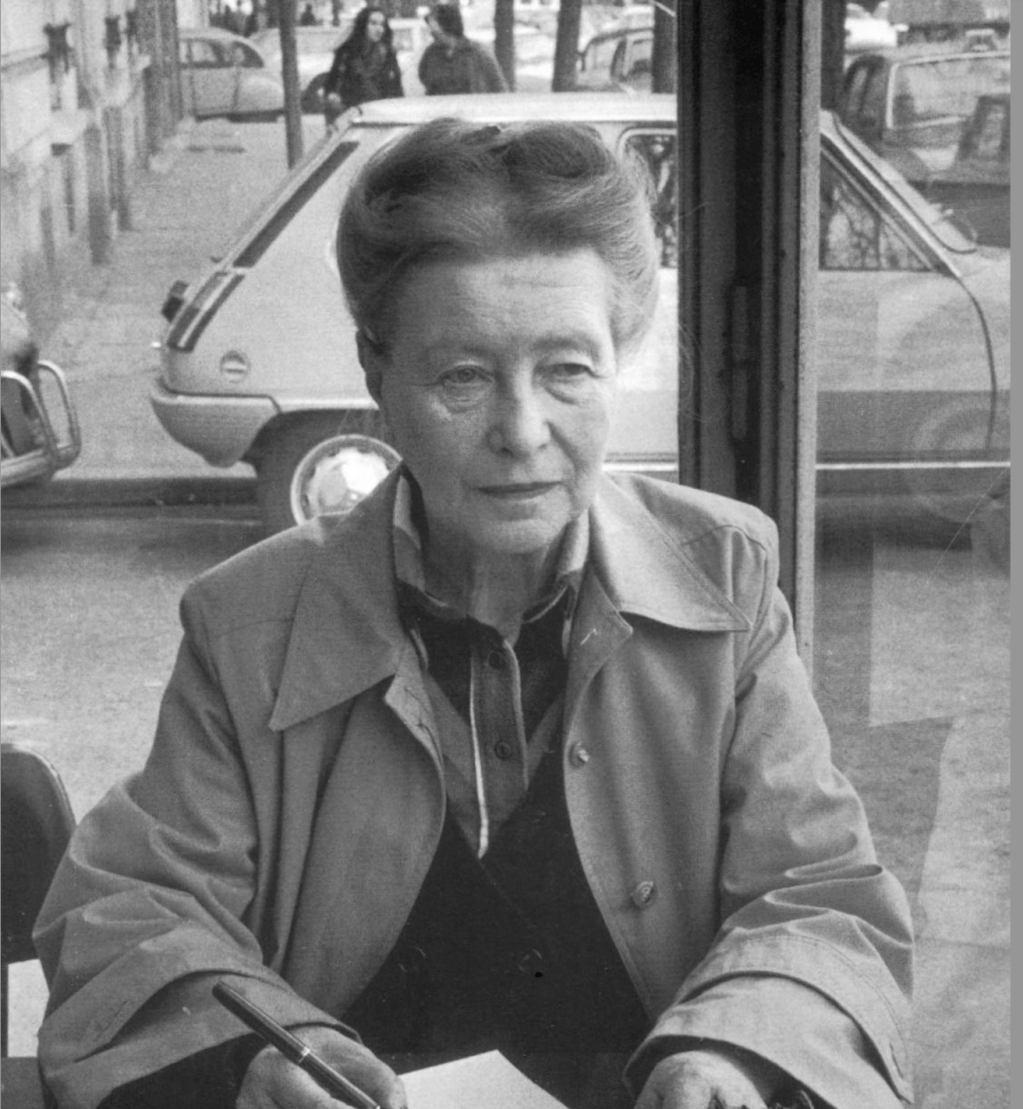
    Simone De Beauvoir, an existentialist philosopher whose developed critique on feminist theory enacts a sort of ‘second- wave’ feminism, publishes The Woman Destroyed, whose sentiments and serpentine excerpts enact the lives of three women whose crisis is not a matter of age and lack of youthful-like endeavours but the inability to return to the past, whether their love is castrated by unfaithful husbands or the ‘second-shift’ of tending to their children. What becomes fascinating is each women slowly begin to blend together in relation to such issue. ‘Idiotic Vanity’ Beauvoir deems, the women’s inability to play into such notions that even men who can carry out propositions of love, who play into the term of ‘soulmate’ or anything akin to holding such high regard, are fooling themselves and only regarding their ego. Looking into all three women, Monique’s tumultuous relationship with her husband after his affair becomes a mutual acknowledgement between both, plays into her emotional state early on, outlining the dilemma each women encounters, years past their ‘prime.’

    “All women think they are different; they all think there are some things that will never happen to them; and they are all wrong” (136).


    The Age of Discretion

    Beauvoir removing names as an identifier in conversation, leaves examinations to be marked by titles such as, ‘main character’ or rather ‘woman.’ These sections will be outlined by the term, ‘woman’ ‘mother’ or anything adjacent as means to describe the characters mentioned in the novel. Looking into The Age of Discretion, the first part of the novel builds conflicting emotions of youth, rather the lack of it, as the hands of the clocks continue their journey. The mother, now stuck in her inability to create a novel idea yet untouched by the publishing industry, begins to down spiral when her only child, a son whose intelligence and political opinion is attributed to that of his parents, begins to ‘defy’ his mothers wishes of sticking to education and teaching in favour for a political job, one marked to be for the other side. As youth becomes a heavy subject both by the mothers lack of acceptance and her husbands keen embracement of ‘old age’ conversations become tense, rather shaped on miscommunication and terse engagements. Beauvoir continues to write:

    “No. At my age one has habits of mind that hamper inventiveness. And I grow more ignorant year by year” (17)

    “The less I identify myself with my body the more I feel myself required to take care of it. It relies on me, and I look after it with bored conscientiousness, as I might look after a somewhat reduced, somewhat wanting old friend who needed my help” (23)

    The plight of youthfulness slides among the pages, entrenching each rushed conversation, leading the way a compass might, and in doing so not only creates tension between the mother and her inability to prescribe a closer relationship to her son, but also the confusion of not understanding her husband anymore due to his ill attempt at grasping life like she. The continual regurgitation of the past is felt with the linking of clocks and watches and light turning to darkness allowing a cycle to flourish, leaving the heart stricken mother unable to move forward. The conflict continues, an incapability to align herself with the thoughts of those outside of her, leaves her shameless, often playing into the miscommunication trope all readers feign to hate.

    “It was I who molded his life. Now I am watching it from outside, a remote spectator. It is the fate common to all mothers; but who has ever found comfort in saying that hers is the common fate?” (29)

    “The two pictures I had, of the past André and the present André, did not coincide. There was an error somewhere” (43)

    The lack of dependency by both men here, in this case emotional resemblance, causes the mother to question her role in her sons childhood, an uncomfortable possessiveness pushed in between lines as she tries to reclaim her son as her own. Every girls worst fear – a mother – in – law attached to the hip of her son, and as she loses touch with the ability to control his positions in life, her full-proof plan of comfortability collapses as her husbands arguments find home in the other side. The intimacy in sections of turmoil between each characters made me cringe and possibly awkwardly laugh through her bouts of covetousness as the pondering of emotional incest is not lost within your own mental connections, but the rawness of her grieve and inability to persist without the men in her life, gives way to some viable truth mothers rarely ingest themselves. That their youth is no longer dispensable and to require such efforts toward yourself is unjust. That the feeling of being ‘invalid’ is marked by an empty home where pots are only touched by your hands and grocery trips cover 1/3 of the fridge, and to leave such notion of women’s identity tied to her ability to reproduce and have children and when left with the loneliness of during and after, their present identity is still marked by their past. One of staring quotes wraps up her internal fight toward youthfulness, as she claims herself to be:

    “I am not young: I am well preserved” (64)

    To end the first section, the last points I wish to digress on are such: how much should a parent muddle into their child’s life and at what point is protectiveness or even support, overbearing and conflicting? and Simone to end this section on a note of hopefulness, a note of contentment and overall acceptance toward her situation and the conflict she felt toward her loving relationships writing, “We are together: that is our good fortune. We shall help one another to live through this last adventure, this adventure from which we shall not come back. Will that make it bearable for us? I do not know. Let us hope so. We have no choice in the matter” (85). Her ending tone of cooperation seems needed after the mother’s long digression with her fear of the future, and while some might find her words lacking with her front of simplicity and good-natured ‘approval’ of her new life, Beauvoir decision to end this act of discretion with a few minor sentences with no defining statement, no established emotion, pushes for a new kind of ‘humanness,’ one where you don’t have to understand your present, so long as your don’t fight against it to reclaim who you were in the past.

    The Monologue


    Beauvoir second piece, opening with the quote, “The monologue is her form of revenge,” challenges the stereotypes of grammar and the importance of comma’s, as her shortest section delves into the bitterness of a mother who loss of her daughter exhibits reoccurring moments of grief and unnerving anger as she cuts ties with her husband, and later family. Written as a vitriolic diatribe, the movement of anger is a burning vice for the grieving mother, now facing the multitude of affairs that must be acknowledged in her family. Her down-spiral consumes each word in the text, creating a confusing, questionable monologue. While those who pride themselves on their ability to succeed in grammar years ago, Beauvoir’s decision to make the monologue almost unreadable at points, where the reader must return to what the mother is trying to convey, accurately portrays the struggle woman face when caste aside in their own family, a designated role in society. While I can deliver my own monologue of destruction that patriarchy has created, Simone uses a simple forgotten voice of a mother to depict the struggles quite well. As stated above, family is a running topic in this section, the necessity to keep all of them together begins to ruin her identity as a ‘mother.’

    “I want to be treated with respect I want my husband my son my home like everybody else” (96)

    And her most stirring issue; her daughter:

    “I should have won her back. I’d have made her into a worthwhile person. But it would have taken me time” (105)

    “Sylvie died without understanding me I’ll never get over it. […] All that effort all those struggles scenes sacrifices — all in vain. My life’s work gone up in smoke” (106)

    A fixation on her daughter, creates the parallel that all woman endure: the suffering and struggle the mother encountered and such a cycle impedes the growth of the daughter, hindering and discouraging her from firstly, existing. While the structure of patriarchy is not a key theme in this section, particularly, the passing of anger and/or resentment, and a need for an individuality complex stems from the mother, where her repressed anger, whether produced from that of her husband or the conflicts of society, is further exacerbated by the known suffering she is to endure in the future. While I could be looking to far into this, the relationship present between mother and daughter is established as weary, one caused for escape, and as her daughter enacts suicide, the suffering of the mother is ten-fold, sequestering her to abject loneliness, as her willingness of her husbands affair only falls to the loss of her presence in her son’s life. So as not the spoil most of the monologue, Beauvoir brings up women’s relationships in a few twisted lights in all sections of the novel, the relationships of the mother and her friends becoming a picturesque model for such interaction:

    “I had spoken to her out of loyalty women have to stand by one another. Who had ever shown me any gratitude? (112)

    “You mustn’t let yourself be eaten up” she tells me. But she’d be delighted to swallow me whole” (113)

    Often, in fiction centred around the suffering of women where the root of such is by men, the relationships formed between women become a solidifier, a theme perhaps, where words of wisdom inscribe their conversations and vows of healing, yet Beauvoir’s rejection of this narrative, plays into the whole, ‘I am a women on my own,’ which can be inspiring in some ways, but I don’t think Simone intended this. Being a known feminist activist, this former narrative is built on pity and inability causing the correlation between ideas to fall short. With the quote,

    “I was simpleminded — I thought they were capable of turning over new leaves I thought you could bring them by making them see reason” (112)

    [continued] it suppresses impotence and replaces it with questions of personal reason and worth. With the position of mother in the hierarchy, she is already diminished and demanded of her value, further creating acceptance of treatment by personally demoting herself in favour of her children, a self-sacrifice if you must, yet after demanding so little of herself, she expect others to see the abandonment of herself, yet this also fails as well. Simone proceeds to characterise this mother as one who has not only lost her daughter, but now her son to a husband riddled with affairs, while also becoming detached with unsympathetic family in order to prescribe the conditions of a woman, whose lack of empathy received by others has granted her an entire thirty page monologue, riddled with forgotten commas and run-on sentences, to show how the sacrifice has evolved into anger. She has made a woman in the only way possible: neglect.

    Simone ends this section with two short sentences, a win for all the grammar police out there, and its little movement on the pages provides all that is needed for women forgotten:

    “You owe me this revenge, God. I insist that you grant me it” (120)

    While the shortest section, this piece enacts the rage of women and the abundance of such emotion we are made to feel. The seamless integration of rejections by those who made her a mother, a daughter, an individual, creates an atmosphere of a women who can no longer prescribe to the very values that made her. Such revenge can only be acted upon in this case and lack of action only leads to the same death as her daughter: suicide.


    The Woman Destroyed

    Beauvoir’s final part, a needed reference to the title, carries on the varying themes mentioned in previous section, as she delves into a long standing marriage destroyed by the husband’s ever-growing affair. Simon seems enlightened by the psychology of the affair, the steady insanity and conditioned acceptance reinstated by women, drives the narrative as this mother now concerns herself with an internal struggle of moral justification and physical love. The tarnishing of self-worth transpires through her relationships starting with her husband, through her daughters, and to other outside friendships / engagements. Given the multitude of interaction and struggle, the development of many themes and statements arise on surviving grief. The primary struggle, again with the patriarchy, is the ideal that husbands are to grow weary of their wives and so him having an affair is normal, needed even to keep his peace and youth. Such quotes nuture this ideology:

    “I have had exactly the kind of life I wanted — now I must deserve that privilege” (137).

    “He is lying so as to ease things for me. If he eases things for me that means that he values me. In a way it would be worse if he were quite brazen” (176)

    Entertaining such quotes, the sense of patriarchal interference reaks in the entirety of this section with the soothing attitude, “You are lucky he has decided to stay with you and not the other woman.” In this context, the mother’s disintegration develops into a hierarchy of self-examination to all aspects of inter-personal relationships, where the obvious start is that of her husband. As mentioned above, the psychological conditioning of acceptance turns into the questioning of love for both parties, whether he actually did love her or if she reciprocated such emotion enough. Beauvoir’s thorough depiction of regression reminds me of Sylvia Plath, The Bell Jar, in ability to transform to the mental processes of an individual that lead to questions of insanity and death. The mothers eventual progress to questioning key emotions can be noticed when Simone writes,

    “I have never asked anything for myself that I did not also wish for him” (135)

    “I had to make sure that a man could still find me desirable. That has been proved. And where does it get me? It has not made me any more desirable to myself” (169)

    “The question is why did he love my in the first place? […] For my part I loved him when he was twenty-three — an uncertain future — difficulties. I loved him with no security; and I gave up the idea of a career for myself. Anyhow I regret nothing” (195)

    While Simone does play into the guilt the husband feels for grief the mother is encountering, the shift in focus to the mother’s personal inability to cope developed no empathy over the husband’s personal afflictions. As the topics of feelings drive this side of the narrative, the range of emotion explored in this piece creates wonderful stability for the mother to be explored from such a psychological hierarchy, even if it was not intended to be so. By stripping the husbands voice, it furthers the notion of woman being able to contemplate the very same existentialistic questions. The shift is not gradual, but rather blended as the women maintain both the perspective of catering to her husband and questioning her self-worth, leaving a few minor infuriating moments as a reader. The hierarchy evolves along with her personal onslaught into the mother’s main identity: her children. Mother-daughter relationships are the foreground to each suffering woman in Beauvoir’s narrative, and in this case, the switching of roles creates complexities as both the mother and husband carry worries, yet the development of all three woman hold ground for positivity, and even empathy despite each other personality. Beauvoir depicts this as:

    “Fathers never have exactly the daughters they want because they invent a notion of them that the daughters have to conform to. Mothers accept them as they are” (163)

    “If I have failed with the bringing up of my daughter, my whole life has been a mere failure” (215).

    “My only life has been to create happiness around me. I have not made Maurice happy. Any my daughters are not happy either. So what then? I no longer know anything. Not only do I not know what kind of person I am, but also I do not know what kind of person I ought to be” (252)

    As stated in prior sections, as the mother is defined by her relation to her children, the root, the internal identification of herself does not seem to equal the recognition of motherhood, in so the woman’s capacity to provide rather than the appreciation of the role in practice. The hierarchy continues to evolve as the mother now concerns such worries with herself, as the interest of self-worth becomes a known concern toward the end of the piece. Beauvoir attaches to the emotion of contentment as means of creating a basis for how the mother is supposed to feel. She was supposed to accept her husbands affair willingly, even with a degree of happiness. She had to accept the publicity, lack of familial support, burnout from her passions, lack of self-value all for her husband to continue said affair, yet her jump to self-questioning, while months after the affair started, became the needed ending to the families story. The next section of quotes highlights growth in relation too questioning thy self while also highlighting the emotional struggle woman will encounter in daily relationships.

    “I asked Isabelle whether she was happy. “I never ask myself, so I suppose the answer is yes” (140)

    “In fact I am defenseless because I have never supposed I had any rights. I expect a lot of the people I love — to much, perhaps. I expect a lot, and I even as for it. But i do not know how to insist” (151)

    “But I won’t, I won’t! I am forty-four; it’s top early to die — it’s unfair! I can’t live any longer. I don’t want to die” (223).

    “Things have been given other names: they have not altered in any way. I have learned nothing. The past remains as obscure as ever. The future remains uncertain” (209)

    The permanence of grief continues, the acknowledged struggle of self-preservation, the understanding the such relationships lived through could in theory be forgotten over time but cannot be wiped away, only shaped and twisted. Throughout the novel, the most cathartic section had to be the last remaining pages of this section, where the self-identification is raw, poignant, and severely needed. The last remaining quotes provide a basis for truth even without a concluding ending.

    “‘What else do I possess?’ The heavy silence. I possess nothing other than my past” (214)

    “Tragedies are all right for a while: you are concerned, you are curious, you feel good. And then it gets repetitive, it doesn’t advance, it grows dreadfully boring: it is so very boring, even for me” (239).

    “I am on the threshold. There is only this door and what is watching behind it. I am afraid. And I cannot call to anyone for help. I am afraid” (254).

    To end this sweetly, Simone de Beauvoir’s published text, The Woman Destroyed, can be complicit with those who are struggling with lost youth, who identify as a woman, whose grief is consuming and old enough to have a name. It is one that you process a little week later, prescribed too long, dark nights and blaring music, and you begin to understand the loss of what it means to be a woman and love dearly, closely, and too much. If you begin to question such intimate, particular moments of looking at clocks too closely, reminiscing of clothes to tight, and phone calls never placed, Beauvoir might just be the perfect medication.