Lewis and Maslin, a pair of Professors in Geology at UCL, present a paper in MacMillian as ‘Defining the Anthropocene1’ aimed at consolidating the ‘possible Anthropocene-specific’ dates, alongside ‘evidence-based decisions’ which would elucidate the consequence of this Anthropocene Epoch. A scientific and social discourse barely half a century old, the ‘Anthropocene’ Era is reliant on the deconstruction and processing power of humanity to become a primary agent of environment change, often coined Climate Change. For further precision, the introduction of the Anthropocene by the pair above, define the term within its critical tensions:
The magnitude, variety and longevity of human-induced changes, including land surface transformation and changing the composition of the atmosphere, has led to the suggestion that we should refer to the present, not as within the Holocene Epoch (as it is currently referred to), but instead as within the Anthropocene Epoch2.
Utilizing evidence-based papers and scientific diagrams, I aim to position ecological violence enacted by individuals as superior to human-on-human violence by exploring industrial pollution of Roman antiquity and the occupation of military infrastructure which posits the natural world as incorporeal.
Industrial Pollution
Humanity has been consistent in exploiting industrial pollutants, namely carbon emission and sulphur compounds. By 400 BC, Hippocrates published, ‘On Airs, Waters, and Places’ which explored the critical role of an individual (and later collective) interacting with nature. The introduction offered a candid argument of the environment, space, and human interaction: “There was a rational element, which relied upon accurate observation and accumulated experience. This rationalism concluded that disease, and health depended on environment3.” By Hippocrates argument, the individual must surpass a co-dependent relation to the outright reliance onto the environment for overall survival. Correspondingly, the naturalist and naval commander of the early Roman Empire, Pliny the Elder, dedicated pieces to the ongoing mobilization and further urbanization of the Roman Empire. A mirror of Hippocrates four centuries later, the scientist writes, “We taint the rivers and the elements of natures, and the air itself, which is the main support of life, we turn into a medium for the destruction of life4.”
Susanne Knittel5, within the field of Memory Studies examines a ‘forgotten’ approach to environmental violence, one that does not pose the socio-cultural field as its primary application: “Often, the way ecological violence is framed as violence relies on repertoires, forms and conventions for representing and commemorating genocides and other acts of large-scale violence against humans… [we should explore] the turn towards the environment and the non-human6.” Knittel’s implication of broaching the incorporeal, that which is ‘non-human’, posits the metaphysical hierarchy, currently recognized as the Anthropocene7. Applying Knittel’s proposal to the groundwork of Industrial Pollution in the Roman Empire, we can begin to address the lineage of ecological violence, beginning with lead measurements in Greenland Ice.
In 2018, the multidisciplinary scientific journal PNAS8, delivered a research article within Environmental Sciences, known as, ‘Lead Pollution Recorded in Greenland ice Indicates European Emissions Tracked Plagues, Wars, and Imperial Expansion during Antiquity’, which provided evidence on Roman industrial pollution peaking at the start of its emerging empire. Referencing Figure 1, the chart provides data of fluctuating lead measurements in relation to critical centuries of human development, which is contextualized by the articles abstract:
Here we show, using precisely data records of estimated lead emissions between 1100 BCE and 800 CE derived from sub annually resolved measurements in Greenland ice and detailed atmospheric transport modelling, that annual European lead emissions closely varied with historical events, including imperial expansions, wars, and major plagues9.
Figure 1. Lead measurements in Greenland Ice derived from PNAS article.
Environmental exploitation in the Roman Empire lacked any legal mediation or government interference unless the natural resource was guarded for ‘indiscriminate exploitation10.’ Notably, the persistent exploitation of ‘high temperature smelting’, large scale extraction of conquered lands and valuable elements, deforestation to combat rapid expansion, and industrial-scale operations for mining for economic profit11, produced enough emissions to penetrate the integrity of the soil and land from 500 BCE. Moreover, the biological and microscopic structures of the ice utilized for this data collection showed immense morphological changed nearly two millennium later.
Section II: Current Industrial Pollution
Many of the present phenomena, field of studies, or terminology fall under Waring, Wood and Szathmarys’ procedure of ‘Group-level Environmental Management Traits12’. Precisely, larger groups will encounter more challenges to manage their environment as they lack consistent evolutionary qualities or solutions to the developing involutions (e.g extinct species). Correspondingly, we are unable to manage the scale of social organization to readjust, convene, or faithfully deconstruct previous systems of belief.
Macroecology, a subfield in ecological studies, focuses on ‘large-scale ecological patterns across broad spatial and temporal scales,’ and is only a present-day distinction. It was a side-effect without the precaution of mobility, in which, the development of a new ecological system was necessary and could not be removed without further dislocation from the original objective. Therefore, the structures of biological and environmental distinctions must be expanded to address, study, or report on the rapid shift in our present climate conditions.
Moreover, to establish violence in the context of industrial pollution, we must refer to Serene Jones explication of the ‘traumatized physical environment’- that which must witness the ‘integrity of the creation [become] violated13’. The ‘violation’ is eventually dualistic, as the physical degradation of plants, landscapes, and synchronic climates correspond to the conceptual, biological, and evolutionary framework we have once prescribed upon nature. This ‘twofold approach’ must present a concurrent discourse of the existing conditions of nature and all that is absent to consider the future. Correspondingly, the condition of the environment will become integral to daily interaction, allowing for the destabilization of an anthropogenic perspective, as human-on-human action becomes secondary to the foundation of landscape, matter and the self-regulating processes of the Earth.
Turning to Fig. 2., The University of Leeds produced linear graphs depicting the quality of air pollution between The United Kingdom and Pakistan, drawing upon the a ‘global disparity’ amongst pollutants. While the contrast of colours may produce a positive or negative attributes, the diversity of shades becomes a concerning ‘cocktail of pollutants14’. The agriculture, cars, forest fires, burning of oil, vehicle exhaust, power plants and the fossil fuel industry united as a primary cause to a degrading ozone layer, acid rain, bleached coral reefs, scorched landscapes, and a lack of biodiversity within plants. A rather careless violence stuck in a cycle too repair itself.
Fig 2. The United Kingdom, Global Air Quality Trends15
Fig. 2, Global Air Quality Trends16
Moreover, if we are to return to Hippocrates, the presence of dense air and floating sulphur pollutants is a familiar topic. Referencing his notable texts, On ‘Airs, Waters and Places’, the naturalist writes, “They are likely to have deep, hoarse voices, because of the atmosphere, since it is usually impure and unhealthy in such places17.” The individual’s innate reliance on oxygen produced by a stable, homeostatic body, will suffer a similar violation as the integrity of the body is compromised. So, if the co-dependency of humanity onto the expansive, biological function of the Earth, reduces the anthropocentric measures to a more equal baseline of existence between nature and humans, the violence upon the environment will be held to the severity, repercussions and justice that humans have awarded themselves.
Military Infrastructure
Roman Antiquity
[…] argued that the emergence of modern bureaucratic, territorialized and centralized nation-states — marked by the monopolization of the means of violence […] — was in large part the result of protracted wars and highly expensive military campaigns, a process of co-evolution whereby ‘war made the state and state made the war18’.
Roman, military grounds were littered with dead bodies. Their armour was weaponized, buried, or reused for the solider next in line. Deforestation become a building block for invasions, providing enough resources for fuel, materials for weapons, and the space for military sites. Yet, how was military infrastructure displayed in an active war? Josephus, Jewish War, presents the siege of Jotapata as the Roman army sought the Jewish stronghold for further power in their campaign to Galilee. As the campaign makes way, the distraction of military weapons and an erected stone wall is as much a Roman display of power as it is a forceful overtaking of integral landscape:
Vespasian now brought up his artillery engines — 160 in all — and set them in a semi-circle with order to fire on the defenders on the wall. In one concerted barrage the catapults sent their spears whistling through the air, the stone-throwers hurled hundredweight rocks, and both flaming and regular arrows flew in a hail19.
Eventually, the earth will begin to scream of thirst, the charred dirt will be forced to recover, the cement left behind from the battering ram will stand still as a trophy depicting their conquer. The city will continue, with or without the inhabitants, conquerors, or those in-between, but the landscape must reclaim a buried ecosystem once more.
Section II: The Present
[…] where I, for a fraction of time, caused a security alert, because I violated this order by standing on a scrap of grass, next to a public highway, looking through a fence20.
This ‘scrap of grass’ — a space designed to hold up the fence, the shoes of her body, the cement that is to guide aircrafts, bustling bases, and artillery weapons is barely a register. The purpose has changed, unbeknownst to the grass covered in gravel or the roots pulled for concrete bases, the land lacks recognition. Nature became the first casualty, with the title of victim but lacking in the finality of justice. Thus, they are just a victim.
Fig. 3. Burning of Oil Wells in Kuwait during The Gulf War. Noted to be ‘one of the worse environmental disasters’ in recent history21.
Returning to the Anthropocene, the self-awareness of humankind becomes imperative to the assumptions one must accept for central power. An awareness catering to conditions, that of:
[…] continental trade and transport networks, eradication policies for nuisance species and diseases, agricultural pollution fines, genetic modification, anti-extinction policies and the emergence of global environmental law22.
While armed forces sustained Weapons of Mass Destruction (WMD):
[..] from uranium mining and milling; through transport of ‘yellowcake’, MOX and other nuclear materials; fabrication of fuel rods; reprocessing and fast-breeder reactors; and the problems of storage of nuclear waste over millennia23.
Unsurprisingly, Nature will lack the corporeal rights, or rather the right to co-exist fairly, within a centrist collective. Even further, the environmental laws, annual summit meetings, prosecution by fines or trespassing warnings are in favour of the individual, not of the planet. They become exercises of free will, faux determinism, or ill-informed manuscripts delivered with enough enthusiasm to think moral implications are censored. We will continue to address future generations in decorated speeches, before questioning the soil degradation in Sudan. Reports of, “50 nuclear warheads and 11 nuclear reactors littering the ocean floor24” will be cleared an ‘accident’ yet the responsibility of the ocean to absorb the force of a nuclear weapon, must be rationalized as a the only ‘right’ Nature can afford.
Fig 3. is a makeshift military infrastructure. An active battlefield, with no soldiers as enemies, but rather the land as their final target. While the burning of oil wells in Kuwait were documented as a military tactic, or an economic loss for the country, the campground, uniforms, artillery shells, surveillance helicopters, and the bodies, traumatized that land. The burning fuel was violent, the weakening ground was silenced, and the smoke-filled air traumatized the natural, surrounding life. It would take over eleven months for the last oil well to be capped and the miles of ‘fire trenches25’ would be discovered.
Fig 4. Unrecorded spraying of Agent Orange in Vietnam War26.
Lastly, there are a few human disasters to touch upon. Captured in Fig. 4, the use of Agent Orange in the Vietnam War became a hidden ecological disaster, as released FBI files lack the extensive records of using chemical warfare. As the black-and-white photographs display, the thick, scar-like line amongst the tree is defoliation. A common tactic within war to uncover food, shelter and aid harvesting of the opposition. The chemical agent utilized biologically alters the structures and / or compounds of the plant, forcing them to de-shed, often permanently. The land cannot recover, and the herbicide will flourish in the soil of next year’s harvest. Put simply by Pearson, “the militarization of landscape is rarely complete or final27.”
Conclusion
My aim within this paper balanced loosely between a personal, corporeal discernment and sympathies toward the incorporeal. What rights, as an individual, have I willingly taken from the environment to further this violation? Could we, as a collective, repair the tension, brutality, and suffering we have posited to be correct, moral and justified? Either way, our violence is noticeable. It is then, imperative to start on the contrary to modern thought, to focus on the corporeality, the body of the environment, as a necessary right to life.
Hay-Edie, David. 1991. THE MILITARY’S IMPACT on the ENVIRONMENT: A NEGLECTED ASPECT of the SUSTAINABLE DEVELOPMENT DEBATE a Briefing Paper for States and Non-Governmental Organisations (Sebastian) <https://www.ipb.org/wp-content/uploads/2017/03/briefing-paper.pdf> [accessed 1 November 2025]
Knittel, Susanne C. 2023. ‘Ecologies of Violence: Cultural Memory (Studies) and the Genocide–Ecocide Nexus’, Memory Studies, 16.6 (SAGE Publishing): 1563–78 <https://doi.org/10.1177/17506980231202747>
McConnell, Joseph R., Andrew I. Wilson, Andreas Stohl, Monica M. Arienzo, Nathan J. Chellman, and others. 2018. ‘Lead Pollution Recorded in Greenland Ice Indicates European Emissions Tracked Plagues, Wars, and Imperial Expansion during Antiquity’, Proceedings of the National Academy of Sciences, 115.22: 5726–31 <https://doi.org/10.1073/pnas.1721818115>
Serene Jones. 2009. Trauma and Grace : Theology in a Ruptured World (Louisville, Ky.: Westminster John Knox)
Waring, Timothy M, Zachary T Wood, and Eörs Szathmáry. 2023. ‘Characteristic Processes of Human Evolution Caused the Anthropocene and May Obstruct Its Global Solutions’, Philosophical Transactions of the Royal Society B, 379.1893 (Royal Society) <https://doi.org/10.1098/rstb.2022.0259>
Woodward, Rachel. 2004. Military Geographies (Malden, Ma: Blackwell Pub)
Zvereva, Elena L, Eija Toivonen, and Mikhail V Kozlov. 2008. ‘Changes in Species Richness of Vascular Plants under the Impact of Air Pollution: A Global Perspective’, Global Ecology and Biogeography, 17.3 (Wiley): 305–19 <https://doi.org/10.2307/30137862>
Preface: This essay stirred self-doubt and questionable career paths due to its final grade. While I have made a few tweaks to this paper, I felt it was necessary to release a piece that invoked excitement and curiosity within my work at university. My relationship with criticsm has mirrored a complexity of my love for literature in general, so as a way of letting go, i felt it was necessary to uplift a voice not understood, or markedly seen as wrong.
“The evil of [her] self-indulgence, the fraudulence of sensuous beauty, and the supreme duty of renunciation[1],” delivers Rossetti‘s conflicting dispositions in her fairy-tale world of the “sensuous, […] ascetic[2],” and religious. On reading Christina Rossetti’s ‘Goblin Market,’ sexual desire permeates the text of the fairy-tale world of the poem yet, I argue, we should go further and examine the eroticism of the mouth in maidenhood, to capture consumption through a lense of temptation and excess, eventually altering the body.
Christina Rossetti’s brother, Dante and his painting, The Annunciation, cited as Image A, composed the Virgin Mary, cowering in the corner of the bed, leaning away from archangel, Gabriel, to capture inciting fear of an approaching holy figure. Yet, the psychological realism confronts the young maiden through a forceful motherhood. Hilda Koe’s painting, referenced as Image B, introduces similar implications as Dante’s piece, of white gowns, biblical references from golden circles to tempting apples, fearful eyes as the man imposes into female spaces. The condition of the women merges here, as she is now tempted by possibility, of the taste of fruit or the holy summoning, yet unaddressed by the sexual nature of the offering, that which is the social insistence of motherhood.
Laura approaches the Goblin men, by “stretch[ing] her gleaming neck[3]” like a ‘poplar branch,’ an gesture of intrigue, until “[her] last restraint is gone[4].” Desire is initiated by the maiden until the temptation compels her to cut a lock of golden hair; “’Buy from us with a golden curl’ / She clipped a precious golden lock[5].” Her virgin maidenhood shifts to female eroticism, transactional is relingquishing a piece of herself, notably her youth, until the emodiment of seductress follows the expanse of her mouth. Eventually a physical rupture of Laura’s virginity hungrily commences when, “She dropped a tear more rare than pearl / Then sucked the fruit globes fair or red[6],” till the “mouth-watering urgency[7]” she trembles with, incites a realm of perversion. It is through this desirable loss of innocence, her mouth becomes a sexual orifice, filled with, “hunger and satiation[8]” and as a result, temptation becomes animalisitc as her oral state is transfixed on consumption for, “She sucked and sucked and sucked the more / … / She sucked until her lips were sore[9].” Must she bite into the fruit, a mirror of Eve who held the red apple, the ‘fruits that thy soul lusted after[10]’ leave the maiden to be consumed by an erotic madness, which now sustains her body. A hunger which can no longer be satiated by the forbidden fruit “sweeter than honey[11].” The temptation in now embedded within the lining of her stomach and the taste lingering in her mouth, until she must return for more, utilizing such a mouth to speak, kiss, and desire: “’Nay hush, my sister: / I ate and ate my fill, / Yet my mouth water still: / To-morrow night I will / Buy more,’ and kissed her[12].”
Noted in religious text as the “Fall of Man” with Eve’s temptation of the apple, to the “Fallen Woman” during the pre-Raphaelite era, biblical interpreations begin to center the sexual corruption of women. Sharon Smulders’s, Christina Rossetti Revisited, reimagines Laura’s actions toward that of Eve writing, “Indeed, while the sisters’ temptations double on Eve’s temptation, the fruits multiply outrageously. If the first fruit of the goblin as well as Satanic temptation is the allusive apple, the second fruit (the quince) and the twenty-first (the pear) belong to the apple genus.[13]” Precisely, the relationship between the mouth of a biblical, virginal, or maiden women consume a ‘sinful’ fruit, prescribes her ‘fallen’ stature and immoral standing with God, until the hunger which riddles temptation can only be led by the mouth of a man.
From this moment, the decay of Laura unfolds. She becomes an “all-giving, all receiving womb[14],” yearning to embrace the taste and the sensuality to suck upon the fruit which fills her mouth, dependent on the pleasure she is to receive. Marsh conceives this phenomena arguing, “This is also the essence of desire: once attained, it ceases to satisfy, vainly driving the sensual urge to repetition, seeking to regain the first, orgasmic joy[15].” As a result, the animalization of Laura recenters the mouth to hold her forbidden carnality, while also supplying bestial gestures as eroticism reconstructs her previous maiden identity: “She gnashed her teeth for balked desire, and wept / As if her heart would break[16].”
Correspondingly, Victorian history alongside prostitution produced conversations on venereal dieases, leaving women to become the center of another social illness. Eager to consume only the body of women,[AS1] their mouths produced the sexual desire, the necessary tempation, to leave the women are their “…hair grew thin and gray: / […] dwindled, as the fair full moon doth turn / To swift decay , and burn / Her fire away[17].” The mouth now rids her of vitality, sprititually depleting the maiden, and a site once fit for eroticism fades swiftly as, “Her tree of life drooped from the root[18]:” until she can no longer serve, nor consume eagerly as a biblical woman.
As I divulge into ‘excess’ in ‘Goblin Market,’ the maiden’s peverse actions are analyzed through the lens of, “violence of passion[s]; extravagant or rapturous feeling; [and] unrestrained manifestations of grief[19].” Arthur Rackham’s illustration as Image C, drowns Lizzie in the “Cat-like and rat-like, Ratel- and wombat-like[20]” creatures, tearing at her white dress, as their hands force sinful fruit into the maiden’s face. Otto Greiner’s sketches seen as Image D, attracts a desirable comparison between the poised women: the body is malleable, desirable, corporeal as its skin holds the hands of those below them, each head turned purposefully, the mouth shut and unwilling to concede, skin wrapped with pure intention. Sap-filled pastures, blooming lilies, to the maiden’s milking the cows, the intersection of nature within Rossetti’s poem expands Dijkstra’s thoughts, “Thus, the eroticized body of woman became the late nineteenth-century male’s universal symbol of nature and of all natural phenomena. She sat, a flower among flowers, a warm, receiving womb and body, waiting patiently for man, the very incarnation of the spirit of the rose[21].”
The development of Lizzie from a cautious, untouched maiden insistent of the deviant sexual nature the goblins present to excessively urging her sister to lick upon her face, is no coincidence. A rational, modest maiden who “churned butter, whipped up cream, / Fed their poultry, sat and sewed[22]” to:
captures the sexual sacrifice explored by Rossetti, through an excessive, ‘unrestrained manifestations of grief” of Laura’s declining state. A transitionary moment for both sisters, the exploration of excess expands with the rape of Lizzie as the goblins forcefully invade her body with the forbidden fruit. Moreover, Freud’s construction of hysteria, the breach of the mind can develop from, “[…] any pains, whatever their cause, reach maximum intensity and that any afflictions are ‘terrible’ and ‘unbearable’[24]” accompanies the demanding, desperate tone to present her face covered in the ejaculation of the goblin men. Even further, Dijkstra argues alongside Albert Von Keller painting as Image E, of feminine submission as “[…] sadistic pleasure [is felt from] the representation of a vulnerable, naked woman tied to a cross[25].” Mirrored alongside Image C, the subjection of Lizzie as the goblins constrain her body against the tree, in possession of her vulnerable nature, displays the carnality she exhibits as the poem ends.
As a result, the self-sacrifice must become transactional – Lizzie “put[s] a silver penny in her purse, / Kiss’d Laura” while the carnal desires of the goblins were “unrestrained[AS2] , erotic”, and held that penny to exhibitionism of her now hyper-sexualized body[26]:
It is in the rape of Lizzie, that her new role is to indulge in Laura’s lasting sexual temptations, and most notably, the desperation that inhabits her dying sister’s eroticized mouth, as excess constructs her body to a palatable feast. In the midst of her assault, Lizzie sealed the opening of her mouth, a distant allusion to the virginal qualities that can be physically penetrated, and specifically, Rossetti emphasizes the sacrificial nature of the maiden to relinquish her body instead, “Lizzie uttered not a word; / Would not open lip from lip / … / But laughed in heart to feel the drip / Of juice which syruped her face[28].” An offering, a face covered in forbidden juices, delievers her skin, ripe in sexual pleasure to her sister, until she allows herself to be ruined, perfect for her starving mouth: “Kissed and kissed and kissed her: / Tears once again / Refreshed her shrunken eyes, / Dropping like rain / … / She kissed and kissed her with a hungry mouth[29].” Thus, a promiscious mouth, riddled in ‘raptuous feelings’ of her self-sacrifice, Lizzie transforms her body to capture the erotic desires of Laura’s previously penetrated mouth, until the latter knows of hunger again.
Altogether, an examination of the mouth is pertinent to grasping the inclusion of eroticism within the poem, and more specifically, in the realm of temptation and excess. Returning to Image D of Greiner’s ‘Gaia,’ the supporting quote, ‘The woman is the man’s root in the earth[30],’ illustrates the sensual relationship between Laura and Lizzie, as each supply their bodies – and more specifically their mouths – to confront maidenhood.
Bibliography
Bram Dijkstra (1986). Idols of Perversity. Oxford University Press, USA.
Breuer, J. and Freud, S. (2013). Studies in hysteria. Digireads.com Publishing.
Marsh, J. (2012). Christina Rossetti : a literary biography. London: Faber Finds.
Mermin, D. (1983). Heroic Sisterhood in ‘Goblin Market’. Victorian Poetry, [online] 21(2), pp.107–118. doi:https://doi.org/10.2307/40002024.
[AS2]“These images were expressive of men’s dreams of generous, unrestrained inclusion; of nature as simultaneously receptacle, fertile soil, and comforting breast” (85)
Devastation. Original in thought, Schmidt’s attention to the emotional embodies a human-like yearning, where desires to fairy-tale endings must be done within such short chapters. You outline your future with children whose grief is profound in limited pages, whose words shock the body and guard the truth, until getting old seems impossible. It leaves one on the seat never wanting to leave, unless they need to go grab some tissues.
Open Water, Caleb Azumah Nelson
All that is lyrical. Nelson carries the soul, molds his hands to make love between two, seem so natural. Surpasing modern romance presently, the maturation toward adoration develops the friends to lovers narrative which carries most of Nelson’s work (i.e Small Worlds). Truly, the movement of generational history and cultural connection, fosters an entirely new world of what love could be, or what is has always been if we had the right words.
Mama’s Baby, Papa’s Maybe: An American Grammar Book, Hortense Spillers
“The African-American woman, the mother, the daughter, becomes historically the powerful and shadowy evocation of a cultural synthesis long evaporated – the law of the Mother- only and precisely because legal enslavement removed the African-American male not so much from sight as from mimetic view as a partner in the prevailing social fiction of the Father’s name, the Father’s law.”
Rich in theory. Spiller’s once again delievers the necessary voice which speaks upon the flesh of the black body and its gendering from American grammar. A vital breath to literature, Spiller’s analysis leave little room for interpretation, allowing her words to simmer between the space the bodies are meant to hold even decades later.
Judith Butler in Gender Trouble (1989) develops the relationship between gender and space through a cultural discourse. An unprecedented work, Butler’s aim shifts the reflection of gender to the corporeal – the body, and by relation, the space in which the physical and mental are shaped by social intrusion. When addressing Alexander Pope’s, The Rape of the Lock, domestic space becomes a cultural and social inscription which is repressive toward women and an unexplored political playground roaming with the women’s plight toward sexual purity. Domestic space shapes the repressive nature spurred by class and patriarchal objectives until chastity defines the characteristics of a women.
Re-worked alongside theory, domestic space leans into dichotomies that allows for cultural inscription, a feat best represented by the Oxford Dictionary as they characterized the space to exist as, “The apartheid system dichotomized physical space into masculine and feminine categories, marginalizing the feminine1.” It is practical to notice the dualism, which must be addressed, where women’s domestic space caters to expansion, possibility, and subversive positions which warrants the growth of children, partners, and their developing passions, leaving the mother, daughter, or wife to cater excruciatingly to a force- fed oppression: “Women were relegated to the inferior physical and social space of the homelands where they were expected to farm, raise children, and care for the sick and elderly2.” In replicating the domestic space in The Rape of the Lock, Pope’s execution becomes fluid and satirical, relegating Beauty as a willingly, yet violent adornment alongside the female body, whose vain rituals profess an innocence not yet known to the woman.
Revisiting Butler, her suggestions of ‘cultural inscription’ and the body follows Pope’s domestic space of marriage and class, a notion summed up as,
“Space is never neutral but always discursively constructed, ideologically marked, and shaped by the dominant power structures and forms of knowledge… space is both created and articulated through cultural discourse, including gender discourse. Thus, we cannot grasp space outside a socially meditated perspective.3”
Pope drives the perception of wealth and space satirically in one excerpt, denoting the jewels and objects adorning the main character, Belinda, as a foolish desire the wealthy place on insignificant items. Class is seen as:
“Whether the Nymph shall break Diana’s law, / Or some frail China jar receive a Flaw, / Or stain her Honour, or her new Brocade, / Forget her Pray’rs, or miss a Masquerade, /Or lose her Heart, or Necklace, at a Ball;/ Or whether Heav’n has doom’d that Shock must fall.4”
Represented by ‘frail China,’ or her ‘new Brocade,’ the objects surrounding the female character shapes both a metaphysical and domestic space aligned with conforming to beauty practices upheld from a ‘socially meditated perspective,’ whose yearning for marriage is a presentation of ‘her Honour.’ In mock-epic fashion, Belinda’s description of wealth pervades human protection, as the Sylphs surround the embellished and objectifiable lady, leaving Pope to pursue the permeation of the body through the adornment of wealth and established performativity of gender roles: “Form a strong Line about the Silver Bound, / And guard the wide Circumference around.” (ii.121-122) The fixation on the ‘Necklace’ and a ‘Heart’ situate the body and the material in the same category of space – domestic, as Belinda unconsciously indulges the prospect of her situated repression – a decision by Pope, which posits her outside a space of volition and feeds into the class-act of marriage and wealth. The ‘circumference’ of Sylphs surrounding Belinda introduces the skin as a mode of space, a quality capable of permeation and personal condemnation, whose association to gender discourse, brings about the plights of the domestic space, as a limit to the female self:
“What constitutes the limit of the body is never merely material, but that of the surface, the skin, is systemically signified by taboos and anticipated transgressions indeed, the boundaries of the body become, within her analysis, the limits of the social per se5”
Now, the existence of space from the self to the social creates a distinction of physical limitations; performativity rest upon the beauty of her skin, its likeness to grace and wonders distinctive of innocence until the body performs its own objectivity – she enacts her own gender discourse through a desired cultural inclusion.
The significance of the domestic space is rendered to the adequacy of the female body, the forced objective beauty that is: “Th’ inferior Priestess, at her Altar’s side, / Trembling, begins the sacred Rites of Pride.” (i.127-28) Pope’s verbal control toward terms like ‘sacred’ and the aforementioned ‘pride’ by extension must exist in the domestic space of femininity – exemplifying the required attention the body must hold for the women. It is a space worthy of adoration and touch, where ‘rites’ signify the opportunity the woman holds, leaving the ‘trembling’ as Pope’s chosen dichotomy in the sentence: does the sacred nature of feminine rituals driven by excitement of reenactment or nervous acceptance toward her guarded purity and vanity she must act upon?
Ending physical permeation of the female body, one last signification of the domestic space is the internalization of the female body and young girls. Introducing Braidotti, Lois McNay states simply, “The internalization of representation of the female body by women is fundamental to the formation of the feminine identity.6” The formation is drawn clearly in Pope’s text, compared quickly alongside Belinda’s evolving vanity, and one which characterizes the female body as less, due to the directive nature one must adopt: “’Tis these that early taint the Female Soul, / Instruct the eyes of young Coquettes to roll, / Teach Infant Cheeks a bidden Blush to know, / And little Hearts to flutter at a Beau.” (i.87-90) Pope’s reference to ‘taint’ corresponds with his mock-epic attitude, drawing upon the absurdity of social adherence, the forceful nature of desire, seduction, and innocence that must be catered to, even when innocence is all the young body holds. The domestic space is manipulated, so much so that the submission must be unnatural – formulated for social coherence and the uplifting of gender roles, and in Butler’s simplest words, performative, until the body is lacking in space completely.
Hovering in the realm of the metaphysical, the metaphorical ‘rape’ of Belinda exposes the manipulation of the domestic space and repression of the female body by means of chastity. When positioning the ‘natural’ alongside the female body in Pope’s mock-epic, it becomes “…a device central to the legitimation of certain strategies of oppression,” until it lacks the signification held toward beauty and ornamental jewels of the self – a disruption to the desirable objectification of a ‘body [as] a site of conquest.7”. Belinda’s honed acceptance must follow and indulge toward repression, of self and sexual identity, until she foster’s the decoration of her own virginity, as Pope writes, “Fair Tresses Man’s Imperial insnare, / And Beauty draws us with a single Hair.(ii. 27-28)” The dichotomy rest in Belinda’s internalized and furthered materialized objectification of her beauty – a cultural process spurred by a patriarchal body, while also characterizing the male self to egregious behaviors akin to ‘rape’ and ‘insnare.’ The permeation of this dichotomy rest internally for Belinda, and it is only until the ‘rape’ of her lock is orchestrated by the Baron, does the domestic space wither: “So long my Honour, Name, and Praise shall live!” (iii.170) From her rage-filled declarations, the representation of the female body loses touch with feminine objectification when it eventually becomes ‘conquered,’ or when the honor and name have been stripped of pure, virgin innocence. The woman assembled through mock-epic fight scenes permeate a physical domestic space, where skin contends with its own internal and external oppressors and moral plights induce the voice of women such as Clarissa, Thalestris, and Belinda.
Quickly, Foucault’s revaluation of women and their bodies produces a hierarchy of their repression, noted as, “…individuals as docile bodies has the effects of pushing women back into the position of passivity and silence8.” The construction of metaphysical conceptions like honor, pride, and vanity develops what domestic space is and its significance to the female self; It was a rite of passage and a representation of women’s suppression, generational to “her Mother’s hairs/ Which long she wore, and now Belinda wears.” (v. 95-6) Pope references these facets of identity in multiples, contriving, “He spoke, and speaking, in proud Triumph spread / The long-contended Honours of her Head.” (iv.139-140) The hair as a metaphor for rape, or seizing, delineates ‘docile bodies’ enacting ‘passivity’ genealogically, until the unitary movement of the body, the objectified female self and the space in between becomes “a construction, a product of the effects of power.9” This ‘construction,’ lies within the critical nature of man described by Pope, as the female self internalized honor and pride and vanity on man’s decisive rule, yet it was used against them for their sexual identity and objectifiable pleasure.
Domestic space is arguably a metaphysical conception, overarchingly dependent on the women’s existence and played by Pope to represent the potential reversal of power between men and women. Canto V redefines the significance of domestic space, as women “killed him with a frown / She smil’d to see the doughty Hero slain” (v.68-9), or the echoing of Belinda’s rage-filled desires, “Restore the Lock! She cries; and all around / Restore the Lock! the Vaulted Roofs rebound.” (v.103-04) The female body, in the domestic space, warrants voice past the expression of honor or virtue but rather violence shed from lack thereof, and rather utilizes the metaphysical to create what can be termed a new ‘domestic space.’ Foucault redefines this shift as a“discourse [which] transmits and produces power; it reinforces it, but also undermines and exposes it, renders it fragile and makes it possible to thwart it.10” Pope’s decision to ‘thwart’ the systematic power over women, to alter the significance of the domestic space, is delivered by Clarissa, whose moral address is noted as such: “Think not, when Women’s transient Breath is fled, / That all her Vanities at once are dead” (i.51-52). Sequentially, the women’s consciousness and further assertions toward their vain plights recognizes space as its own body, capable of change and fluid movements must death alter the current inferiority of the female body, and rather renders the domestic space in favour of their own, personal space. Naturally, the power is seized from men the moment Belinda’s lock of hair tumbles into space, or what Pope denotes as “the shinning Sphere!” (v.143-44).
The figurative “domestic space,” the female body encounters welcomes a navigation not only through the construction of gender and sexual identity, but its interaction with metaphysical space and personal identity. Through Alexander Pope’s, The Rape of the Lock, and philosophers such as Judith Butler and Michel Foucault, the significance of space can be critically analysed through cultural inscription, and as a result, the spatial and social begin to develop the performativity of gender past the dichotomy of a domestic space. It is through these articulations that the female self is positioned past the theoretical to the present, capable body, much like Pope’s Belinda.
If you’re not careful, the newspaper will have you hating the people being oppressed, and loving those doing the oppressing
Malcolm X
Eight thousand seven hundred and eighty bodies. Three thousand three hundred children. Murdered, bombed, martyred. Nine hundred and five civil families were ripped off of the civil registry. Murdered, bombed, martyred. Israel’s violence takes on many forms: genocide, apartheid, ethnic cleansing, colonization, terrorism, same action, different name. If there is one certainty, Israel’s actions cannot be deemed synonymous with war, or retaliation, as it would imply either side is fairly equipped, suitable in means of protection and weapons and food and electricity and water – I can go on. Rather an occupational state, Israel has funded relations, security, weapons of mass destruction, under the guise of what? Why has Israel been funded by billions of dollars from Western countries? There is the religious cause, an abundant desire for a theocratic ethno-state, or even their argument that the land belonged to them before Palestine on religious identity. Yet, fallacy was proven time and again, and once more the revelation that a genocide has been apparent for seven decades and the world still can’t condemn the killing of Palestinian children, of women, of elderly, of every Palestinian who lives. Genocide has always been easy for those who are white.
“First of all, if you’re gonna talk about a revolutionary situation you have to have people who are physcially able to rage revolution, who are physically able to organise and physically able to do all that is done..
Angela Davis
A Tumultuous History
Nabka, 1948. Catastrophe in Arabic. The displacement and dispossession of over 950,000 Palestinians from their homeland, from their homes. Marking the start of settler colonialism, the Palestinian refugee crisis was left unsolved by its own perpetrators, and as the campaign for ethnic cleansing continues, a genocide marked by a tiring 75-year-long occupation leaving 1.7 million Palestinians displaced, where they are subjected to an onslaught of bombing, torture, and death. With the expelling came the seizing of land and formally maps out what is now Gaza and the West Bank, two plots of land characterized by population density or the ‘open-air prison.’ Meaning Israel has 78% of Palestinian land, and those native, those born as Palestinians on Palestinian land – they hold the last 22% of their homeland. While it will be hard to encapsulate the severity of this genocide, I want there to be an underlying understanding of how little the Palestinians are left with, how much suffering they have experienced, how frequently maimed and brutally targeted they are by Israel, and the little help they have received.
IDF soldiers recount the tragedy of Nabka, rather pleasantly, highlighting just how easy it was to kill Palestinian civilians: “For the first 3-4 months, I was a murderer… If there was a classroom with their hands up, then on the same day if I would see this, I would ‘cut’ everyone down.’ ‘How many people do you think you killed like that?’ ‘I didn’t count. [laughs] I had a machine gun with 250 bullets and I shot. [laughs]. I can’t count.” 15,000 Palestinians were killed in the Nakba6. Another IDF soldier proudly states: “Of course we killed them. We killed them without remorse. No qualms at all… The soldiers took flamethrowers in their hands, chased the villagers, and set them on fire… One of the soldiers raped a 16-year-old girl here [laughs]… He gathered them (Palestinians) and put them in a cage and killed them.”
As I often recall when speaking of the United States’ history of brutality and death the Native Americans experienced on their land, it is understandable an environment is to be fostered with the same reenactment of violence. Israel is no exception, with a mindset toward a ‘pure race’ and ‘exceptional mental qualities,’ the Zionist awakening in the last wave of nationalism in Europe took on an impossible task – ‘to forge a single ethos from a great variety of cultural-linguistic groups, each with a distinctive origin.’ By inciting violence, here are the major conflicts Israel spurred with Palestine since 1947:
1948 Arab-Israeli War, also known as the Nakba, that was commenced at the establishment of the State of Israel. 15,000 Palestinians were killed, tortured, and displaced. Palestine was annexed with West Bank belonging to Jordan and Gaze belonging to Eygpt.
1967. Six-Day War, Israel gained control of the West Bank from Jordan and Gaza from Egypt resulting in 20,000 Palestinian Casualties and fewer than 1,000 Israelis. 350,000 Palestinians were displaced and 100,000 Syrians fled from the West Bank.
2000 -2004. Second Intifada, U.S. President Clinton interjected on behalf of Israel for a peace treaty, that sparked Camp David Peace Treaty. Palestine rejected on behalf of no negotiations toward land, settlement, and security. It was a deal to keep Palestine quiet.
2006. Hamas won the Palestinian Parliamentary election. Israel imposed sanctions unless Hamas agreed to accept Israeli-Palestine agreements, forswear violence, and recognize Israel’s right to exist, Hamas declined.
2007. Battle of Gaza, Hamas took control of Gaza and Israel imposed a naval blockade
2008. Operation Cast Lead, a 22-day-long militia leaving 1,338 Palestinians killed and billions of dollars in damage. Use of chemical warfare. Ceasefire was noted in 2009.
2014. Gaza War, Operative Protective Edge. Complete devastation to the Gaza Strip after Eygptian ceasefire. 2,200 Palestinian deaths, 11,000 injured, a civilian casualty rate of 75%, 500,000 Palestinians were displaced, and 17,000 homes were destroyed. The UN-run schools, Gaza’s power plants, and civilian buildings were the main targets of Israel’s bombs.
Palestinian history has been tarnished since 1947, ever since they walked to the ships the Jews disembarked and welcomed with open arms. Shlomo Sand wraps up the conflict simply; “To achieve this aim, the Zionists needed to erase existing ethnographic textures, forget specific histories, and take a flying leap backward to an ancient, mythological, and religious past7“
“More children killed in Gaza than in global conflicts annually over the past four years”
Save the Children
The Present and its Ongoing Genocide
There is much I want to be clear about and that is the statistics of this genocide. To reference the onslaught of bombing Palestine has faced in the last seven decades, I want to bring attention to the amount utilized by Israel. Currently (1.11.23), Israel has dropped 18,000 tons of explosive bombs, which is 1.5 times the bomb dropped on Hiroshima1. Along with this staggering number, chemical warfare has been essential in operation for Netanyahu, as Israel is using white phosphorus during their rounds of bombing. This is not the first time the chemical has been used, as Israel also admitted to using white phosphorus in Operation Cast Lead2, leaving 1,417 Palestinians dead. Furthermore, after destroying 85 government buildings, they also “[Israel] demolished 47 mosques and inflicted significant harm to three churches. The attack has resulted in over 200,000 damaged buildings, with 32,500 of them rendered uninhabitable, 203 and three schools have sustained major damage, and 45 schools are now completely non-operational1.” Hospitals like Anglican Hospital, Turkish Hospital, Indonesian Hospital, and Al-Dorra Hospital just in 2023. Refugee camps, like Jabalia Refugee Camp, which has been bombed profusely over the years and as of 31.10 was bombed twice in 24 hours later being known as a ‘children’s graveyard’ leaving brains outside of the skulls of children and skin melting off of bodies.
Next, is the war crimes, the many of them. While it is easy to deduce the funding Israel receives from the Western powers, i.e 158 billion dollars from the US, the MYOU spanning 2019-2028 funds 38 billion in military aid and as per the MYOU2023 Congress authorized 520 million for joint US-Israel defense programs, the terms of the MOU congress appropriated 3.8 billion for Israel with addage to military power12… bigger questions are examined when Israel has yet to receive consequence for the enacted war crimes onto Palestine. To keep it short here are the crimes committed: Geneva Protocol, Common Article 33, 2B1 of the Geneva Convention, 2BV, 2BIX, 2BXXII, XXV, 2EIII, XIII, VIII, IV3. Consequences would be an appropriate response, right? As the UN fights for its sacredness toward being ‘united,’ little action has been done, or rather none, and so what becomes of this? Simply, if Western powers commit war crimes without punishment, then to them genocide has no consequence, they are lifted from the moral obligation to care about those outside of themself, and likely it will continue past what we are currently witnessing on an international scale.
Focusing on the West Bank briefly, it is imperative to break down the atrocious conditions of Palestinians living in what is known as ‘an open-air prison.’ Restrictions, as it is put, where the villages and towns inside the forced territory are now blocked by military checkpoints, earth mounds, cement blocks and iron gates4, allowing for no movement between Palestinians. Angela Davis delivered a speech at the SOAS, stating, “The Israeli military made no attempt to conceal or even mitigate the character of violence they inflicted on Palestinian people. Gun-carrying military men and women — many extremely young — were everywhere. The wall, the concrete, the razor wire everywhere conveyed the impression we were in prison. Before Palestinians are even arrested, they are already in prison… one can be transferred from an open-air prison to a closed prison5.” In hindsight, the terminology is simple – forced into precise cuts of land where one is surrounded by fences, IDF soldiers, blockades, etc. while simultaneously controlling and removing freely food, water, electricity, trade, mail delivery, access to fishing ports, medical supplies or assistance, and contact from the outside world. The houses of Palestinians are bombarded, ransacked, and overtaken forcibly until they are forced out onto the streets. The eastern wall, which expands from the north to the south, is estimated at 200 kilometers in length. This wall allows Israel to isolate and control the Jordan Valley area, which is considered as the food basket of Palestine and the main source of food for the Palestinian people6.
When speaking of the present, or rather any attack Palestine has encountered from Israel, here are some proponents that cannot be seen:
Dust: Every time a bomb is dropped on a civilian building, a refugee camp, a hospital, the building becomes dust, which is inhaled without a mask and left in the body due to a lack of water. (97% of Palestinian water is contaminated right now). This is something that can’t be documented, only felt.
Noise: There is no break from noise whether it be the bombing, firing from weapons by the IDF in both the West Bank and Gaza, the ambulances, mothers and fathers and children screaming for help, crying as their loved one is stuck under rubble or they hold their dead child in their hands. There are no breaks.
Decay: There are at least 1500+ bodies trapped under the rubble, Presumed to be dead. The smell of dead flesh fills the air as 8,796 Palestinians are killed. After the ice cream trucks could no longer hold bodies, they started for mass graves, where the children played and exclaimed how they would one day be in this ground.
Waste: Trash, blood-soaked clothes, food scraps, and waste get piled up in huge piles with no one to collect them, no sanitation practices. Women are delaying their periods with pills so no infection could incur.
Flies: With decay comes flies, an uncontrollable amount. They bite the living as well as the dead. They land on the trash, the food, the rubble, and what very water is left.
Insomnia: Palestinians are recording three to four hours a night if possible due to the constant bombing. Fear, despair, and trauma rack their bodies leaving them in a state of exhaustion. With this comes slow reaction times and a weakened immune system.
As I am writing this, explosives of white phosphorus were dropped into a UNRWA school, and while brave Palestinian men immediately rose into action to cover the phosphoric acid, it is recognized they most likely will not survive within the next 24 hours due to skin falling off the body or internal shutdown. After bombing the highest concentrated refugee camp, Jabalia Refugee Camp, killing 400 instantly, the camp was bombed once more in less than 24 hours. It is known as the ‘graveyard of children.’ To be clear, it is a war crime to bomb a hospital, refugee camp, or school. Israel has bombed 1211 hospitals since 2014 (relentlessly), 1011 schools since 2008 (multiple times), and 2411 refugee camps since 2012 (sometimes 4 times a year), and yet they are declared the brave ones, the ones who need help, the ones who are suffering and trying to discover ‘peace.’
“The struggle between the children of light and the children of darkness, between humanity and the law of the jungle”
Prime minister of Israel
Israel and Its Racism: The First Step Toward Radiclization
There was always talk of a ‘pure race.’ The ‘founding fathers’ of Zionism, Buber and Jabotinsky, contrasted significantly in their political values when forming such nationalism, yet they agreed on one particular hypothesis: ‘Jews have a distinctive blood that sets them apart from the other people.’ While I will be lacking in insinuation, the foundation didn’t lack racist ideology, and when determining that religious metaphysics could not forfeit Palestinian land, they turned to biology, or more specifically the breakdown and eventual segregation of race. As the present-day marches in Israel support the murder of Palestinians or rather Arabs in general, there is much to be said of the lack thereof for change toward a Eurocentric outlook. With this, Ruppin, another leftist Zionist, envelops key declaration of Israel and zionist followers: “The Jews have not only preserved their great natural racial gifts […] Other nations may have other points of superiority, but in respect of intellectual gifts the Jews can scarcely be surpassed by any nation.7“
Shlomo Sand, author of The Invention of the Jewish People, summarizes the desire for purity writing, “The purpose of Jewish biology was to promote separation from others, not actually to be purified of them. It sought to serve the project of ethnic nationalist consolidation in the taking over an imaginary ancient homeland.” The disapproval of ‘intermarriage’ would create a loss in ‘race-character’ traits the Jews naturally possessed and ‘remarkable gifts’ were to be lost if one did not marry within the ethnicity. Simply marked down by eugenics, the dispossession and killing of Palestinians is redefined by order of “one ethnic majority, one religion, and one language” and a hunger “to produce anew the Philistine type in Philistia.”
For this I am going to play into the ritual destruction identity politics offer, an available mechanism that creates urgency for a new nation-state. Eventually, with the connection of the Bible to the Palmah to state-taught education, racial exclusion was a proponent to their ideology, leaving generations of students who believed wholeheartedly in their racial ‘uniqueness.’ Chanting ‘death to Arabs’ was natural with the Israel flag in hand, watching Palestines being carpet bombed on top of a hill while enjoying dinner, clapping each time a bomb dropped down on Gaza, spitting on Christians in Palestine, rejoicing on the death of Prophet Muhammad, desecrating Mosques, it continues. Then, ‘Jewish Genetics’ materialized. Funded by Western science, with constant conferences and academic research, it was clear a distinct separation must be made between ‘Ashkenazi’ and ‘Sephardis’ Jews to prove their racial superiority. There was no conclusion to support Jews having been descendants of the ancient Hebrews, but rather, “still indicated that the Ashkenazi and Sephardic Jews were related, only now they did not resemble local Arabs, but rather the Armenians, Turks, and chiefly, as noted, the Kurds7.”
In comes the UN, declaring there to be a “Jewish State” and an “Arab State” as the United States refused to take in any Jews after 1924 and rich white countries closed their borders, it was easier to solve the ‘troublesome’ Jewish issues in a faraway land not connected to them. As the international community has witnessed for the last seven decades, the violence enacted by Israel was never short of fatal, always constant, never once welcoming, and you are left to question to absurdity of the situation. It is easy to declare that white, rich, European countries lack empathy toward the Middle East, easy to assume that such a situation falls upon them [colonizers], whether it be the countries previously colonized fight back for their rightful land, they would never allow the co-existence of ‘two states’, but I become hysterical when arguing about liberation and freedom to the same people willing to wage wars for their own country. I am dumbfounded and I often feel tricked with a lack of empathy in the masses. The videos of Palestinians being tortured, taken from homes, killed, with flesh burning off the faces of children and bones protruding out of legs with tearless kids. When I hear the screams of mothers that ring into my nightmares and every shower, meal, bus ride until I sit at a desk like I am now and feel hopeless like I did fifteen years ago. I was a child, just like they are children, yet I was never pushed out of my homeland, killed or maimed, hell even threatened by such atrocities and the simplest conclusion I can make is that the bravery Palestinan’s have will never match mine.
If you are to take a single idea from this section let it be that peace was never part of a resolution, nor way of co-existence. They were never silent about their desire to kill, why should this be such a surprise now? If you are questioning how one group that has experienced genocide possibly reenact such actions onto another group, must I leave you with this quote: “Suffering doesn’t make people good. It just makes them suffer.”
“Standing neutral when a fire is raging is standing with the ones who lit it.”
Funding and Boycotts
While speaking on funding, the money is extensive and nauseating. Of course, statistics are to be vital in this section, but the frequency of money leads to inconceivable devastation. As the United States names Israel to be its closest ally in the Middle East, vast military apparatus is funded, and while it is to be known that once you are 18 and living in Israel your hands now hold machine guns and rifles, Israel finds its necessary to have 300,000 IDF soldiers stationed in the Gaza Strip, a 12-mile piece of land home to two million Palestinians. Must I indulge in a quick breakdown of Israel’s funded military: 169,500 active personnel (465,000 reserves), the Iron Dome, 2,200+ tanks, 530 artillery, 5 submarines, 49 patrol and coastal combats, 142 helicopters, 339 combat capable aircrafts (309 fighter ground attack jets)9. To be frank, how is by definition, this a war? By which I mean, the 263 billion dollars the US has given Israel in the last six decades, funding military and civilian healthcare, what is Palestine to fight back with? Coming ahead in military spending from the United States, 3/4 of Israel’s imports come from the United States amounting to 2.1 billion, the rest coming from Germany with 546 million. Even with breaking The Leahy Law, US weapons, funding, deals, are brutally massacring Palestinians. There are many stances to the situation at hand. It can be noted that the US government entered a shutdown after failing to compromise on the overall spending for the next fiscal year, a fight between the two parties yet unsolved, and still the United States president drew up a 100 billion dollar deal that would send over 14.3 billion dollars in aid to Israel after October 7th (Edit: The United States approved of the bill to aid Israel in the 14.3 billion dollars on 2.11). A country lacking in healthcare, homelessness, food deserts, education, livable wages, etc. funds a country founded on a pure race and hatred for Arabs. Maybe they have more in common than many thought.
In terms of boycotting, the list is once again, extensive. Due to conglomerates, companies like Nestle, hold the American food chain by its neck. Therefore, three companies were targeted: McDonald’s, Starbucks, and Disney +. The former giving free meals to IDF soldiers, a matter which can only be done at the death of Palestinians. Starbucks sued its union for standing with Palestine. A simple action to defund Israeli occupation still faces backlash, but we are simply doing what Israel did to Palestine multiple times: inducing sanctions.
All parts of me question why there is no ceasefire, hell why is there no call for a ceasefire by the UN, an impartial union of leaders from around the world who deliver consequences when breaking international law, yeah that UN? As I am a pessimistic girl at heart, I think it to be fair to state that politicians, international communities, governments, are inherently corrupt. For example, Catherine Russell, the executive director of UNICEF is married to Thomas Dillion, the chairman of Blackrock Investments. To be clear, Blackrock Investments is the biggest shareholder in weapons manufacturer, Sturm, Ruger, & Company, shares that bring in 200 million dollars annually. Or in 2019, articles featuring Palestine covered one specific topic, the title speaks for itself, “The Unrealized Potential of Palestinian Oil and Gas Reserves,10” an article published and founded by the United Nations Conference on Trade and Development. It was shortly followed by the words, “The Economic Cost of Occupation for Palestinian People.” All old desires fester.
Why must Palestinians fight for your empathy? It was never about the children being shot dead in refugee camps by the IDF, as steel missiles bombarded their buildings, as their olive trees are set on fire and their food is taken, no, they had to prove their innocence first. They had to declare, condemn, ostracize, and beg for a spared look at the massacre of their people, their homeland.
To all that wish to have families, big and abundant, loud and full of life, know that your silence aided in 905 families no longer existing, wiped off the civil registry, martyred. What makes your family so special?
There is much I was not able to say, or know, and by this I say to go and learn. Support your Palestinian friends, protest, march, sign, donate.
To end, I leave with the indomitable faith of Islam, of Palestinians, and their trust in Allah, sallallahu alayhi wa sallam:
“If Allah lifted the veil for you just 10 minutes and you could see the sky of Palestine, you would see a sight of wonder. Waves of angels racing to ascend with the souls of the martyrs to Allah in a special celebration. I swear by Allah besides whom there is no god, but him. The sky is filled with the scent of perfume. These people have completed their test in this world, so there is no need for them to stay in this world. Allah has chosen them for. You see the painful images, don’t you? But my messenger and your messenger Muhammad Sallallahu Alayhi Wasaallam swore by Allah that the martyr will not experience pain, except that of a pinch. So just as if I pinch you by the hand, do not fear for them. I know you are saddened, so remember that the messenger Sallallahu Alayhi Wasallam said, “No one in this world dies and wishes to return to the world except the martyr. The martyr wishes that they would die for his sake, 1000 times, to keep dying gor his sake and come back.” I am now seeing things in Gaza that if you saw them with your own eyes, you would die of joy. These martyrs are alive and eternally provided for by their sustainer.”
When a real and final catastrophe should befall us in Palestine the first responsible for it would be the brisitsh and the second responsible for it the Terrorist Organization built up from our own ranks. I am not willing to see anybody associated with those misled and criminal people.
2: Operation Cast Lead: Three week armed conflict between Gaza Strip Palestinan ‘military’ groups and the IDF that continued for 22 days before ending in a ‘unlitateral’ ceasefire. Israel intiated the conflict with Hamas defending the land, afer the IDF attacked police stations, military targets, and political and administrative institutions. It is to be deemed illegal under international law of the ground invasion and use of white phosphorus. Israel was never codemned nor accounted for in their war crimes during this invasion.
3: Prohibition of the Use in War of Asphyxiating, Poisonous or other Gases, and of Bacteriological Methods of Warfare, Collective Punishment, Taking of hostages, Attacking or bombarding towns, villages, buildings which are undefended and are not military objects, Internationally directing attacks against building dedicated to religion, hospitals, education or where there are sick and wounded, Committing raoe or any type of form of sexual violence, Intentionally issuing starvation of civilians as method of warfare by depriving them objects indispensile to their survival, Intentionally directing attacks against building materials and medical supplies, Destroying and seizing of property, The deportation or transfer of all parts of the populations occupied territory within or outside that territory, Intentionally launching attacks with the knowledge it would cause loss of life to civilians widespread or severe damage to the natural environement.
11: Hospitals: Al-Aqsa Hospital (2014), Al-Shifa Hospital (2014), Beit-Hanoun Hospital (2014), Balsam Hospital (2014), European Gaza Hospital (2014), Indonesian Hospital (2021), Al-Asqa Hospital (2015), Al-Awda Hospital (2021), Al-Dorra Hospital (2023), Indonesian Hospital (2023), Indonesian Hospital (2023)
Schools: Islamic University (2008), Islamic University of Gaza (2014), University College of Applied Sciences (2014), Jabalia Elementary Girls School (2014), Beit-Hanoun Elementary School (2014), Ragas UNRAW School (2014), Al-Quds University (2022), Islamic University of Gaza (2023), Education above all Foundation (2023), Al-Maghazi School (2023), UNWRA School (2023)
Freshman year, Undergraduate; Paris 2023: Iceland v The United States
Keywords: Regression, Reform, Feminism, Political Sphere, Gender Inequality / Equality
Abstract: The United States and Iceland have differing political and legal adaption of Gender Equality for their citizens. As the former is regressing and the latter adapting reform, Nancy Fraser’s Two-Dimensional approach explains the current state of both respective countries.
“Misrecognition consists in the depreciation of such identity by a patriarchal culture and the consequent damage to women’s sense of self” (Fraser 167). Nancy Fraser, an American Philosopher and feminist, developed in her book, Fortunes of Feminism from Women Liberation to Identity Politics to Anti-Capitalism, deconstructed and redeveloped gender inequality women endure in her chapter, “Feminist Politics in the Age of Recognition: A Two-Dimensional Approach to Gender Injustice” supplementing a new system labeled as misrecognition and redistribution to create equality for women in socio-economic and political ways. In this essay, the conferring issues above will be delegated the names Gender Specification and Lack of Egalitarian Distribution in reference to a case on the repression and reform of gender in/equality in The United States and Iceland.
Before addressing either country, the system in which Nancy Fraser reveals her synopsis and eventual reimagined conception of justice toward recognition and distribution for the equal benefit of women is divided into her ‘two-dimensional concept.’ Being frugal in this paper with her description toward this new approach, Fraser utilizes a ‘bifocal’ method to see gender through two different lenses [recognition and distribution] (Further notes, 162). Each being saturated in sexism, both contain ‘political-economic face’ along with ‘cultural-discursive face’ that devalue a women’s established position of equality in relation to that of a man. Fraser solution: 1the principle of parity of participation. Broken into two sections, her conditions outline her eventual reasoning: ‘ensure participates’ independence and “voice”’ and ‘express[sion] of equal respect for all participants and ensure equal opportunity for achieving social esteem” (Fraser 164). From this, justice would be formed in areas such as ‘labor markets, sexual relations, family life, public spheres, and voluntary associated in civil society.’ Establishing the principle of parity, recognition [gender specification] and distribution [egalitarian distribution] are foundational in grasping the inequality targeting women. Causing ‘internal self-dislocation’ for women is androcentrism: an institutionalized pattern of cultural value that privileges traits associated with masculinity, while devaluing everything coded as “feminine,” paradigmatically – but not only – women” (Fraser 162). Obscuring women in this way, denotes women to social subornation, promoting separatism in the favor of masculine idealism, and furthers stereotypes of misconstrued language where the representation of women in media, law, social distinction, economic disparity, etc. become dedicated to ‘valorizing feminism’, a misinterpreted word spurred on by cycles of ‘dominant stereotypes and political correctness’. As both recognition and redistribution must be examined together (bifocal vision), only then would those be able to ‘comprehend both the class-like aspects and status aspects of women’s subordination’ (173). The continuing argument will be situated between regression of women’s equality in The United States and the reform present in Iceland by using Nancy Fraser’s recognition [gender specification] and redistribution [lack of egalitarian distribution] to comprehend the distinctions of gender in/equality between them.
The United States
To begin, the basis in which I will address the regression as stated is defined by ‘returning to a former state or condition; the act of going back’ in which the former condition is identified with the loss of rights that inhibit the female from being viewed as equal to the male counterpart. Such inequality sparked the 19th amendment, Title IX, Roe v Wade, Violence Against Women Act, etc. Examining the legal sphere in The United States, women’s reproductive rights, gender-based violence, lack of equal economic are representational of the struggles women encounter even centuries later. Addressing the United States in this paper, the political sector is to be examined as such laws, bills, amendments, etc. are the foundation toward the repression of such rights, mentioned above.
Nancy Fraser, in Fortunes of Feminism, addresses Neoliberal feminism as “The network society,” the feminist turn to recognition has dovetailed all too neatly with a hegemonic neoliberalism that wants nothing more than to repress socialist memory” (Fraser 160). Delving into Gender Specification, the issue begins to lie in feminist movements lack of development toward Egalitarian distribution for movement on gendered terms. Such issues are seen in the multitude of facets present in feminism that have developed after the MeToo movement, coined in 2006. Liberal Feminism, Radical Feminism, Marxist and Socialist Feminism, Cultural Feminism, Eco-Feminism, and so on (UAH) Focus on the language, structure, and foundations of movements that eventually hinder change within the legal system as recognition produces misinformation and diluted advocacy; Fraser’s interpretation remarks “The remarkable recent feminist gains on the axis of recognition would coincide with stalled progress – If not outright losses – on the axis of distribution” (Fraser 161). The issue continues as Media contrives an image of who ‘Feminist’ are, denoting them to different than ‘regular’ women who are ‘man-hating’ and not associated with the goals of other women, who ‘are constantly framed as deviant sexually, a bunch of man-haters out to destroy ‘family values’ (Wikipedia). These modes of recognition begin to disrupt the women’s ability to self-identify within herself, rather forming a collective idea, that can only be changed once the women forms a new self-representation for herself, one where ‘recognition becomes a positive relation to oneself’ and in this case, with socio-economic and political issues. As the United States begins to lack recognition, in which the general idea of ‘equality’ between gender or the labels defining such causes hold negative connotations in the patriarchy, no redistribution can exist.
In terms of egalitarian redistribution, the United States also falls short leading to such ‘regression’. A key identifier is the lack of ratification of the Equal Rights Amendment. The lack of ratification of the Equal Right Amendment that was passed in 1978 but not used by a state till 1982. Yet it is still only ratified in 38 states, the most recent being Virgina in 2020. Three states have filed an appeal of this ERA in 2021(eand). The United States also refuses to ratify the UN’s conventions for the Elimination of all Forms of Discrimination Against Women – the only countries that fall under this list is Iran, Sudan, Tonga, Palau, and Somalia (eand). Along with a non-cohesive agreement toward gender equality, stripping of women’s rights is a more recently pressing issue with the overturning of 4Roe v Wade, economic disparity, and positions of power Nancy defines as ‘subordination’ as women have to tend to the ‘second shift’ that covers familial dependency, have a lack of healthcare available, and face even developments like the pink tax. To put it as such, Nancy Fraser writes, ““The underlying premise was that gender injustices of distribution and recognition are so complexly intertwined that neither can be redressed entirely independently of the other” (172). Simply, the United States lacks recognition, in this case a primary focus on Gender Specification that leads to harmful connotations and loss of support from a systematic patriarchy, and when the approach fails, redistribution lacks equality in socio-economic and political spheres for women leaving the United States to fail at pushing for any form of gender equality, rather regressing as with a newfound 2oppression against women that becomes a leading posterity for their children. Furthermore, American women are underrepresented in positions of power. 3The US is one of the few countries left that has yet to have a head of state be a woman, along with Congress only being 24% women, yet women make up 51% of the population. The contrast continues in the economic disparity between men and women as the United States, “Gender pay gap narrowed in the 1980’s and ‘90s, but progress has stalled since. The gender pay gap has remained relatively stable in the United States over the past 20 years or so. In 2022, women earned an average of 82% of what men earned” (Pew Research). Within jobs and industries women continue, ‘to be underrepresented in high-level, highly paid positions and overrepresented in low-paying jobs’ (Inequality.org) that will continue to create divides at every avenue for women, as ‘egalitarian distribution’ cannot be noticed, nor accepted, as the United States lacks a firm grasp in recognition of women being naturally equal to men. Fraser ends, “In such cases, reforms aimed at remedying sexist misrecognition have ended up fueling sexist maldistribution” (Fraser 172).
1: Page 164, “justice requires social arrangement that permit all (adult) members of society to interact with one another as peers” Page 172, “The moral here is the need for bifocal vision in feminist politics. This means looing simultaneously through the two analytically distinct lenses of distribution and recognition”
2: South Carolina women who get abortions could get the death penalty under bill (Winston-Salem Journal); No-Fault divorce being reenacted in states (Vanity Fair).
3: Compared to other countries like France, New Zealand, Denmark, Spain, Sweden, etc. they make over twice the political representation than the women in the US. It gets to a point where in countries determined to be ‘poorer’ than the US, women in their political representation equal that of Sweden, France, Spain and Denmark coming in at numbers like Cuba (53%), South Africa (40%), Mexico (48%). The not ratifying the ERA allows them to not have equal rights for women, which puts the men in continual power, continues to establish the patriarchy. (eand)
4: June 24, 2022 The U.S supreme court overturned Roe v. Wade, a 1973 supreme court decision that allowed the constitutional right to abortion for women. This has a huge impact on marginalised groups who already struggle to access health care (Guttmacher)
Iceland
Opposing the United States is the country of Iceland, whose use of reform toward their legal policies, laws, bills, acts, etc. have developed a society where gender equality is the baseline for social practices and relationships of citizens. To open up on gender specification in their reform, the recognition of gender was formed into an act known as the 1Equal Rights and Equal Rights irrespective of Gender (150/2020) “for those whose gender is registered as neutral” this then leads to the1Act on Gender Autonomy (80/2019) “right for persons to define their own gender” which puts the construct of gender at a baseline, that instead of segregating men and women, the general consensus is that everyone would obtain equal rights regardless of presenting or identifying gender. Breaking the stereotypes toward gender, denotes it to not holding severe power over political issues, almost desensitizing gender as not being a needed construct within society to separate individuals. Iceland’s most encompassing Act is 1The Act of Equal Status and Equal Rights of Women and Men (established 2000, revamped 2008), is comprised of 35 articles that desire to “reach equality rights through all paradigms of society”. This Act coincides with the United States’ ERA, but in light of reform the Act is in use and extends to all portions of Iceland society.
As distribution follows recognition, Iceland egalitarian distribution centers around the women and their depiction in society. Following their Equal Status and Rights act, 1Article 23 of said Act states that gender equality must be taught in school through all levels of education, along with the free education the children are to receive. Such teaching causes normalization toward equality, not deeming the other sex to be inferior especially as the child is developing mentally and emotionally and will eventually extend into adulthood as paying for sex in Iceland is illegal. The women are not criminalized for the act as the country considers them to be coerced into physical acts, as consent could not be established in dire situations. This further extends strip clubs being banned, no public advertising belittling either gender, or profiting off of nudity. (Global Citizen). Fraser’s conclusion provides insight as to how Iceland’s reform pushed toward equality more efficiently as she writes, “Only an approach that redresses the cultural devaluation of the “feminine” precisely within the economy (and elsewhere) can deliver serious redistribution and genuine recognition” (Fraser 173). Continuing with redistribution, another Act Iceland instated is known as the 2Icelandic act on Maternity / Paternity Leave and Parental leave (established in 2020, 144/2020), in which both parents have equal leave when taking care of the child. Revamped in 2006, the leave is presently 9 months, which also covers leave for birth, foster care, adoption, and those employed and self-employed. Not only does this not leave the mother with ‘two-shifts’ in daily life, but it also produces the effect that the parents of the child both have equal share in the relationship, supplying that the mother would not be forced into a caretaker role. Compared to the United States stalled pay gap, ‘a decrease can be seen within charts, graphs, and overall a declining difference between the years’ as its original average of 14-18% hit a standard 10.2% in 2021 (Pew Research). And lastly, in terms of labeling the country to a standard of reform past the Acts and bills they have passed, the government automatic decision to reevaluate their system in light of recent corruption that caused a financial collapse in 2009, they passed a bill in which a company must have no less than 40% of people on their board be women. The men involved were sentence properly and women become the solution to the issue (Global Citizen). To end, when addressing reform on Gender Equality, Iceland’s action toward delivering a system to improve gender equality can be characterized as ‘reform’ given the political adjustment and overall improvement toward the treatment of women, compared to the United States.
To conclude, when using Nancy Fraser’s Two-Dimensional Approach to Gender Justice, her bifocal sections of recognition and redistribution provide a functional basis to address and eventually reconstruct gender inequality women face in society, and in this case within their country. When applying Fraser’s approach to both Iceland and The United States, the terms ‘Reform’ and ‘Regression’ are attributed to the country’s advancements toward gender equality in socio-economic and political terms, while also deciphering the major causes leading both to have such labels.
2: In establishing the healthcare women receive from the government, the United States has an issue with women receiving proper care. “Between 2018 and 2020, the US maternal mortality rate increased from 17.4 deaths per 100,000 live births to 23.8. For comparison, in 2020, the US maternal mortality rate was more than three times higher than that of 10 other high-income countries, including Canada, the UK and Germany. A 2022 CDC report suggests most pregnancy-related deaths in the US are preventable. (Knowable Magazine)
“The African-American woman, the mother, the daughter, becomes historically the powerful and shadowy evocation of a cultural synthesis long evaporated – the law of the Mother – only and precisely because legal enslavement removed the African-American male not so much from sight as from mimetic view as a partner in the prevailing social fiction of the Father’s name, the Father’s law”
Hortense Spillers: Mama’s Baby, Papa’s Maybe
Table of Contents
Overarching Essay:
Preconceived Notions of the Black Female Body and their Disruptions to the self
Piece 1:
Harriet Jacob: Incidents in the Life of a Slave Girl; Harlem Shadows, Claude McKay
Piece 2
What My Mother And I Don’t Talk About: Bernice L. McFadden, Fifteen
Piece 3
Hortense Spillers, Mama’s Baby, Papa’s Maybe; The Dismantled Black Family
Piece 4
Lacan, DuBois, Welang: Racialized Liminality, Commodity to Consciousness Linked from the Misrecognition of the Social
Piece 5
Omise’eke Natasha Tinsley: Femmes Of Color; Queer Liminality, The Personal Transition Space
Footnotes
Film and Art: A Division of Black Self-Suspended between Girlhood and Womanhood
Jezebel (2019, Film) “Isn’t She Pretty?” Clip, Netflix (0:00-4:41)
Statistics and Revealing Research: The Fracture of Black Girls Childhood, Georgetown Law
Key Words: Commodity, Girlhood, Womanhood, Liminal Space, Personal Identity
This paper aims to analyze and compose the embellished history of the black women’s label as ‘commodity’ and how this characterization not only became a generational cycle but is reciprocated through mother to daughter. Developed as a ‘Coming of Age’ anthology, the presented pieces develop the black female’s liminality toward Gender, Racialization, and Queerness. Referenced in the title, the objective aim can be concluded to the subjectivity of liminal space and personal identity to redefine the shift between girlhood and womanhood as a black female.
To outline the premise of liminal space presented in this work, the established parameters of this are marked as a transitional period within a person’s life, in this case the black woman. Victor Turner continues the subject defining liminality to be, “divided […] into three analytically distinct phases and during which the individual undergoes a transition from one social status to another, for instance […] when a girl becomes a woman. During the middle phase of such a process the individuals involved are understood to be ‘no longer’ and simultaneously also ‘not yet’. […] liminal personae are “neither here nor there; they are betwixt and between the positions assigned and arrayed” (Turner 1969: 95). Liminality in the context of this anthology is sectioned into three sectors of the black female in the socio-economic and political sphere.
To elucidate the termed use of the word ‘commodity’ in reference to the black female self, the text will reference to the transitional period known as ‘girlhood’, the allotted space before liminality can be addressed, or in reference to the first stage of Victor Turner’s Liminality. Commodity in its use was embedded in the structural foundation of slavery, where they were referenced as ‘transatlantic commodities’ allowing for the objectification and abuse of their body, 1their flesh, but also the complete removal of their self-hood to diminish their bodies as only being able to provide or offer (1). Addressing the history of this term, the paper aims to utilize the relevant historical usage of commodities and their present relevance two hundred years later which can be translated by Iman Cooper’s explanation, “[…] human commodities to market. Over time, the replication of individual choices to capture, buy, and trade African slaves created a societal structure that equalized the value of human life with a market value” (Cooper 2). Applying Cooper’s exposition of a commodity to the context of a ‘Coming of Age’ narrative for the black female self, the encompassing objective of market value / exchange of goods produces the object self [in this case the black woman] to then become a product of material or property. The degradation of the self is not a social consent, but an ingested denomination of themselves.
To further to conversation of disruption, the rationale toward this anthology was contrived by the misrecognition of black women in connection with the abundance of representation from the white public and adjacent to the patriarchy, black men. Toni Morrison advances the subject of exclusivity of black women in her novel Sula: “When I think of how essentially alone black women have been – alone because of our bodies, over which we have had so little control; alone because the damage done to our men has prevented their closeness and protection; and alone because we have had no one to tell us stories about ourselves. […] Because of these writers, there are more models of how it is possible for us to live, there are more choices for black women to make, and there is a larger space in the universe for us” (Morrison, Sula). Morrison’s decision to end her monologue by addressing the ‘possible’ space black women can take, can make for themselves, drives my reasoning for these pieces – this anthology. The lack of representation for women of color, can be examined in legislative roles, social justice movements, STEM environments, leadership positions, and healthcare equity and when restated the intersection of social constructs puts them as “victims of racial oppression, sex discrimination, and class stratification” (OJP)
The theorists introduced in their individual pieces seek to uncover this gap, marked as a transitional and/or liminal space between phase one and three of the black women. In doing so, the historical context of enslavement in the specified pieces and essays continues to codify the current lack of representation and attention they receive. Hortense Spiller’s speaks on the period of the Middle Passage to rediscover gender and further dislocation of the black self, eventually defining the black family, and in this context, the female black self becoming ungendered, furthering separating her from self-actualization by removing the personhood to be used as a commodity. Jacques Lacan, W.E.B. DuBois, and Nuham Welang, rationalize the black self through psychanalysist to deliver the black consciousness in socio-economic and political matters, ultimately creating a distinct “twoness” within the black self. Omise’eke Tinsley take on queerness and sexuality in her novels depict female black love untarnished by the acceptance of one’s sexuality and reflection of thyself.
A desire for this anthology is to not only address the marginalization that black women are to encounter and thus endure, but to also highlight the importance and the need for such transitional space to occur to the black girl. Hortense Spiller, Jacques Lacan, W.E.B. Du Bois, and Omise’eke Natasha Tinsley each present the case of the black female self in reference to the social oppression they are to encounter. My proposal plans to link suppression with liminality, that would in hindsight address the black personal identity which would evolve from such subjugation. As statistics are limited in this anthology, the paper revolves around a philosophical and psychological approach to the identity of a black woman which targets the mental processes affected from outside influences. The goal is to present the ‘self’ and the ‘Other’ as wrongfully coinciding within the black body to produce such questions revolving around black identity.
I hope these pieces can shed to light not only historically – to educate on the horrific and abusive acts women of color faced during slavery and oppression, but how these themes continue presently in law and social standings. Studies, articles, healthcare, law, and movements often put black women in the background asking them to fight but lack acknowledgment for their struggles. I hope to create a piece to recognise the lack of help black women and girls have received to inspire movement for social reform.
What My Mother And I Don’t Talk About: Bernice L. McFadden [Fifteen]
A collection of essays bound by the singular idea of ‘the ways our mothers fail us and we fail them’ Bernice McFadden depicts the cycle of generational trauma and abuse as she beings to replicate the harshness her mother employed in their relationship onto her own daughter. McFadden, an American novelist whose writing can be outlined in her fifteen published books, opened her essay with the establishment of the father figure, one who determines their relationship to be outsourced by his power over her. McFadden writes, “[…] I attended private school and my classmates were privileged white girls who spoke to their parents any old kind of way, and he wasn’t going to tolerate that type of insolence from his black daughter” (McFadden 104). The cycle of power which extends past the mother directly to the daughter, in which the mother avoids the actions of the father for her self-preservation, even at the expense of her daughter, begins to create a lack of need and/or nurture from daughter to mother. The actions of the mother are further solidified when the mother’s continual return to the abusive father leaves the daughter to fend for herself: “Over the years, I ran away again. He was still a drunk, and you still left and went back, left and went back” (McFadden 104).
A relationship now tarnished by the mother’s inability to stand up not only for herself, but for her daughter’s sake, starts the deterioration of their relationship as the daughter natural thought is to mirror that of her mother, a phase outlined by Jacques Lacan, that eventually is adopted into the term “Real Other” – “the maternal figure initially features for the infant as a Real Other —more specifically, as an obscure omnipotent presence who is the source of all-important love” (Stanford Encyclopedia). As the daughter can no longer mirror herself in the mother due to her needs for self-preservation, the daughter will now seek to fight back. McFadden continues this system when speaking of her father, “Yes, I still lived under his roof, but I no longer a child, muted by my age and dependency. I saw myself as a grown-ass woman. Now, when he barked, I barked back” (McFadden 105). The daughter’s emphasis on ‘dependency’ can be outlined in the feedback loop she feeds to her mother, but the lack of change caused her to digress within a state of independence. As the daughter only exists within the world of herself and the family, a differing reaction or action toward those near her will not vary much in practice, as the daughter in this case has yet to know of a more substantial response. The transitional space is outlined between the threshold from girl hood to womanhood, in this case the only substantial wavering of the daughter is her reactive response to her father. Due to her environment, this space lacked movement as the daughter grew into motherhood before reaching womanhood, therefore not allowing a need transition to a developed personal identity.
As the daughter now has borne a daughter of her own, the lack of attitude toward interpersonal relationships like that with her children and family have not had the time to alter. Omise’eke Tinsley paper, “Making Lemonade out of Marriage, Motherhood, and Souther Tradition” depicts Beyonce’s album ‘Lemonade’ by piecing together the stories each song delivered to recover black queer identities and a critique on patriarchal norms, excluding alternative arguments toward the woman’s struggle. Tinsley recovers the abuse black women face in motherhood due to social norms affixed to white women to follow compliancy, she writes, “In her devastating study of black battered women, Beth Richie finds that black women who idealize their mothers are more likely to form abusive relationships – that emulating the “perseverance,” “discipline” and “strong sense of morality” they admire in their strong black mothers leads them to stay with violent partners, believing real women are strong enough to “take it” and do the “right thing” by keeping fathers with their children” (Tinsley 48). That the abuse in this relationship not only covers the mother, but the child [daughter], who is to witness the mistreatment of her mother, knowing that it could extend to her. Tinsley puts the theory into practice as she delves into the lipstick the daughter would use with hopes to become her mothers, Tinsley explains, “’You find the black tube inside her beauty case where she keeps your father’s old prison letters. You desperately want to look like her. You look nothing like your mother. […] But — like the slave quarters visible behind the garden as the blonde girl comes up the path – a hint of disquiet shoes through this home scene as the narrator advises: “You go to the bathroom to apply your mother’s lipstick. Somewhere no one can find you. You must wear it like she wears disappointment on her face” (Tinsley 52). The lipstick becomes synonymous with the mother’s compliance toward the father mistreatment, a patriarchal incarceration, which becomes synonymous with the daughter’s desire to become her mom, to wear the disappointment, and to do so behind her back and the generational cycle continues.
Continuing with Bernice McFadden, her depiction of enacting the emotional turmoil her mom previously treated her with, she delivers her response to humiliating her daughter writing, “On the phone, I loudly berated her to friends and family, hoping to shame her into submission […] When her normally stoic and unbothered façade crumbled into tears, I felt vindicated” (McFadden 106-107). Her daughter followed in the footsteps of running away, of missing classes, leaving with other men, until Bernice’s own mother pleaded to not turn her daughter into jail, like her mother did. The cycle has not failed her, as each daughter, woman, and mother all were facing the same fate: compliancy toward mistreatment in every personal relationship. Bernice was the only one to delve into 1self-confrontation, so her daughter did not have the same fate. The mother-daughter relationship displayed in Bernice McFadden’s, Fifteen, depicts each daughter’s desire for personal identity only to be constricted from their mother’s lack of developing her own. The liminal space between ‘girlhood’ and ‘womanhood’ has no indicators, rather the girls adopt motherhood before a transitional period can be enacted: “You were expected to get yourself up, dressed, fed, and off to school. Back at home, you finished your homework and started dinner. You were nine years old” (McFadden 110). 2The lack of development for black girls to womans can incite a systematic nature in which the woman is to bend in childhood and adulthood, to familial and personal relationships for the supposed ‘betterment’ of their present life. The generational cycle will continue unless one is willingly to be admonished for their own self-actualization.
_________________________________________________
1‘Self-confrontation’ in Achille Mbembe: Afropolitanism, 210
Harriet Jacob: Incidents in the Life of a Slave Girl; Claude Mckay, Harlem Shadows
Harriet Jacob, an African American abolitionist, wrote her narrative, Incidents in the life of a slave girl, depicting her life in slavery and the sexual history while a slave. Jacob’s first chapter sets the scene of the injustice black families 2(see Spillers) endured while enslaved, declaring her present status in the beginning, “I was born a slave; but I never knew it till six years of happy childhood had passed away” (Jacob, Childhood I). The intricacies of slavery in this context revolve heavily around the commodity of women, in particular, sexual engagement for survival. Harriet’s childhood is outlined in her first chapter, Childhood, that carries a tone of sympathy for an adult perspective, recounting details like, “I was so fondly shielded that I never dreamed I was a piece of merchandise, trusted to them for safe keeping, and liable to be demanded of them at any moment,” (Jacob, I) where her consciousness has been developed to understand her body to be akin to ‘a piece of merchandise.’ The commodification of enslavement is engrained in their existence as the parents struggle to buy their children back from their masters. (Jacob, I). The devaluement of Harriet accompanies her with her growing age as the forefront of reproduction toward black women starts in the early years. Hortense Spiller’s addresses the injustice of reproduction as the 3ungendering of the body into property allows them to become quantifiable commodities, legitimizing racial violence and torture as the subject has not legal or social ground to dissuade. Spiller’s also continues on the basis of sexual encounters by quoting Harriett Jacob’s encounter with a white woman by writing, “Since the gendered female exist for the male, we might suggest that the ungendered female – in an amazing stroke of pansexual potential – might be invaded / raided by another woman or man” (Spillers). A precedent recently centered around being used for sexual pleasure by a man has now integrated women to enact pain onto the flesh of black women.
Returning back to the novel, Harriet Jacob displays a personal narrative of apology for her actions when involved with another white man as means for protection. Fred Moten, an American theorist and poet exploring critical theory and black studies, develops the speaking commodity off of Karl Marx, where the subject speaks in order to 4critique the notion of the commodities value. Harriet Jacob’s view of her condition turns to become a criticism of capitalism and her devaluement as a commodity as she writes, “Women are considered of no value, unless they continually increase their owner’s stock. They are put on a par with animals. This same master shot a woman through the head, who had run away and been brought back to him. No one called him to account for it. If a slave resisted being whipped, the bloodhounds were unpacked, and set upon him, to tear his flesh from his bones. The master who did these things was highly educated, and styled a perfect gentleman. He also boasted the name and standing of a Christian, though Satan never had a truer follower” (Jacob). Jacob’s respite develops into sincere apologies for her entanglement even with her disgust toward capitalism and the treatment they face in society. Her 6consciousness toward her treatment of livestock, of the value placed on her reproductive capabilities as a woman, furthers 5Hortense Spiller’s conceptualization of the ungendered body for capital gain of the master. Harriet Jacob delivers an apology to the readers for her actions as written, “Pity me, and pardon me, O virtuous reader! You never knew what it is to be a slave; to be entirely unprotected by law or custom; to have the laws reduce you to the condition of a chattel, entirely subject to the will of another” (Jacob). The position of the slave, denied citizenship and human rights due to their race, defending their sexual encounters and expose with the white man to their readers, addressing themselves as a victim with desperation for her case, passes W.E.B DuBois concept of Double Consciousness by correlating with Nuham Welang Triple Consciousness. Harriet Jacobs is not only aware of the power indifference of race as she is ‘unprotected by law or custom’ with the man but also her identity as a woman who is reduced ‘to the condition of cattle.’
Along with Harriet Jacobs, Claude McKay, a Jamaican poet during the Harlem Renaissance utilizing sonnets to create a language for black lived experiences. His poem, Harlem Shadows, features young black women in Harlem surviving as sex workers. McKay’s depiction of the women, often seen as little, creates inquiry into the commodity of young girls, the overt sexualization they face due to their race, gender, and age. He writes in his poem, “I see the shapes of girls who pass / To bend and barter at desire’s call. / Ah, little dark girls who in slippered feet / Go prowling through the night from street to street! (McKay 3-6). The imagery of the scene is not lost on the young girl’s duty to ‘bend and barter’ on the streets to escape their current situation. Returning to liminality, its function for the young girl becomes untouched, her identity diminished to the personal objective to enact sexual pleasure for the opposing man. The nature of this anthology was centered around a ‘coming of age’ theme, where the young black girl would be ranked as a commodity before an adapted consciousness took root toward the self. McKay’s depiction of these young women highlights the boundaries of free will for their action and the youthfulness in which they carried themselves. He denotes, “Through the long night until the silver break / Of day the little gray feet know no rest; / The dusky, half-clad girls of tired feet” (McKay 7-8, 11). Personal identity, and lack thereof, cannot be established as the girls regard to survival depends on their ability to perform, the money they are to make for the use of their body, and rather than denote the girls to ‘property’ they become prostitutes. McKay eventually outlines the premise for their action as he states, “Of poverty, dishonor and disgrace, / Has pushed the timid little feet of clay, / The sacred brown feet of my fallen race!” (McKay 14-16). In piece one, Bernice McFadden outlines a generational cycle between women, mother and daughter, and when dissecting McKay’s piece, the generational cycle continues past enslavement toward recognition where citizenship is granted, yet no resources are given to dimmish their present due to the eradication of their race in the socio-economic and political sphere. With poverty and the dishonor they hold due to their flesh, they are stuck trying to develope stability in society, for the women, the outlet continued from years prior as a commodity for physical pleasure. This space in which African-Americans were left to create their own stability is what i allocate as being a liminal space. One that was previously tarnished due to their race and gender.
_________________________________________________
3 Spiller’s class notes, Dr. Sneharika Roy
4 Moten Class Notes, Dr. Sneharika Roy
5 Hortense Spiller: Mama’s Baby, Papa’s Maybe, Piece 3: The Dismantled Black Family
6 Reference to Jacques Lacan, Mirror Stage to further the context of Harriet Jacob’s consciousness toward her past experiences.
Hortense Spillers, Mama’s Baby, Papa’s Maybe; Ungendering Liminality – A Conscious Relationship between Mother and Daughter
Hortense Spiller, an American critic and literary scholar, published article, Mama’s Baby, Papa’s Maybe, argues the lack of an established black family while enslaved. Her distinctions lie in not only the inability for the family to be formed due to their classification of being property, but also the ungendering of the female self as they are denominated to a commodity. Spiller’s argument of women not being able to co-exist within their familial relationship and within the self, creates the loss of identity for the women. Spillers writes, “’femininity’ loses its sacredness in slavery’, then so does “motherhood” as female blood-rite /right. To that extent, the captive female body locates precisely a moment of converging political and social vectors that mark the flesh as a prime commodity of exchange” (Spiller 75). Removing the label of woman from the female self, leaves her with no identifier. She is not the self because of her stripped label as being a ‘woman’ and/or ‘girl’ and she is not the Other because she no longer is identified as a woman in social terms. As the ‘woman’ no longer exist within the terms of her existence, she is denoted in this case to a commodity due to her race, and therefore her being is regarded only for the value she can provide. The other facet to both past and present circumstances was the importance of reproduction as an identifier of women, or their responsibilities.
While enslaved, the black women were stripped of their title as ‘women’ or ‘female’ and utilized for the ability to continually reproduce, enabling the masters to not have to outsource slaves financially. The stripping of titles toward the women places her ‘self’ to be based on her ability to reproduce, continuing the trend of her being a commodity. Spillers elaborates on the use of reproduction as she writes, “[…] we do not read “birth” in this instance as a reproduction of mothering precisely because the female like the male, has been robbed of the parental right, the parental function” (Spillers 78). The flesh becoming a signifier of commodify for the women diminishes her parental function, but also her label of a ‘birthing’ mother, which then compares her existence to that of an animal – one stripped of humanization from outside sources and used for their reproduction value. Moving forward the relationship between the mother and child is tarnished, wholly impossible as, “The offspring of the female does not “belong” to the Mother, nor is s/he “related” to the “owner,” though the latter “possesses” it, and in the African-American instance, often fathered it, and, as often, without whatever benefit of patrimony” (Spillers 74). Nahum Welang introduction to Triple Consciousness, a byproduct of W.E.B DuBois theory on Double Consciousness, proposes that ‘black women view themselves through three lenses and not two: America, blackness, and womanhood’ (Welang 1). Intersecting Spillers to Welang, womanhood is a crucial part of the black woman’s identity, where the oppression not only lies within their race or nationality but also their gender. A link between the mother and child is further advocated for by Spiller’s as, “The destructive loss of the natural mother, whose biological / genetic relationship to the child remains unique and unambiguous, opens the enslaved young to social ambiguity and chaos” (Spillers 76). A cycle can be appointed directly from Bernice McFadden’s Fifteen, as generational cycles are outlined from mother to child through emotional absence from the parental figure. As the cycle continues, the removal of labels toward gender and bodily autonomy [reproduction, free will], will eventually eradicate a known conscious self that is inhibited by external forces i.e oppressors, creating a lack of value toward oneself. The slave mother cannot legally own property [her child] as she is property herself, entrenching the child into slavery further as there is no ownership from neither parent nor master, creating a constant loophole for 3monetary gain from the mother as she is reaped of her child and of her humanity.
Brown University continues the argument toward the political and social gain the oppressors are given when ungendering the black body writing, “One way white supremacists and segregationists ungendered black women was desexualization; often the same women underwent this process in different contexts. One way black women were desexualized was through the 2commoditization of their reproductive capacity” (Brown University). Further removing black women from legal recognition, the inability to gain citizenship or to be married meant the black family could not hold any ground, legal or social, to protect or provide for their children as they have no viable standing, meaning no black family can exist within enslavement. Spillers speaks of the economic gain toward commodification, her shorts words expressing the unjustifiable system: “[…] bound and determined to destroy them, or to preserve them only in the service” (Spillers 75).
To end, Hortense Spiller, a black feminist scholar – an American literary critic, elucidation of the powerless black family during slavery, provides a liminal space to digest the ungendered black body and its effects on the black woman. The space contextualizes the lack of labels for an accepted perceived notion that devalues black women on the basis of their race and gender, renaming them as ‘property’ and ‘commodity.’ The space can be a state the black women will be trapped into for the utilization of their body, a crossroad that devalues the self, while also converging with a marked value in financial gain for the oppressor.
2 The Virgina Law of 1819, “that which is brought forth follows the belly (womb)”
3 Brown University, The Ungendering of Black Women, Clara Pritchett
4 Jezebel, ‘Isn’t she pretty clip?’ Netflix
Lacan, DuBois, and Welang. Commodity reaches Consciousness: The Link between Fetus and Eventual Motherhood, A Racialized Liminality
Jacques Lacan, a practicing French physiatrist and psychoanalyst, became known for his influence on Freud’s work, bringing such influence to France in the 1930s. Lacan’s work is entrenched with the root being ‘the unconscious’ of the self, in which his theories start right at the development, or neo-natal. When discussing Lacan with liminal space and personal identity, his theory of recognition and misrecognition evolved. It is known as “a process of self-identification in which a subject assumes an identity they mistake for their own […] the young child sees itself in the mirror and mistakes that image for itself” (Oxford Reference). Known as the Mirror Stage by Lacan, the child’s three phases of identity formation are the Real, the Imaginary Order, and the Symbolic Order. The Real is identified as the helplessness the child experiences, a state centered around the needs of the child that when being satisfied hold no separations between themselves and the person attending to them [parent]. The Imaginary Order, 6 to 18 months, delivers the stage of recognition and misrecognition for the child once their ability to perceive themselves separates them from the caretaker. Lacan supplements, “This initial state of helpless “motor impotence and nursling dependence” entails the infant experiencing a swirl of negative affects: anxiety, distress, frustration, and so on. To the young child, motivated by these negative affects, a crucial component of the enthralling lure exerted by the fascinating image of his/her body is this image’s promise that he/she can overcome his/her Hilflosigkeit and be a unified, pulled-together whole, an integrated, coordinated totality like the bigger, more mature others he/she sees around him/her-self (Stanford Encyclopedia). The Symbolic Order, 18 months to 3 years, finishes the development as it incorporates languages, where the child can integrate others into personal identity after their grasp social rules and limitations. Returning to phase two, the eventual misrecognition solidifies not only the bond between mother and child as she becomes ‘5an obscure omnipotent presence who is the source of all important love’ but also develops the first step toward consciousness within the child. Advancing on the latter point, the consciousness the child is to inherit revolves in this anthology on race, in specific black girls, that can develop Spiller’s perspective on the black subject being a ‘commodity’. As the young black female becomes conscious, her identity becomes aware of the label, ‘commodity’ where the intersection of recognition within herself and misrecognition toward social labels creates a moment of 6Nausea. Frantz Fanon, a psychologist and philosopher from Martinque, develops Nausea as a state of blackness that one is 7forced into by a preconstructed identity. Fanon elaborates, “I existed triply; I occupied space. I moved toward the other… and the evanescent other, hostile but not opaque, transparent, not there, disappeared. Nausea… I was responsible at the same time for my body, for my race, for my ancestors. […] I was battered down by tom-toms, cannibalism, intellectual deficiency, fetichism, racial defects, slave ships” (Fanon 84,85). The Nausea experienced within the black girl when she reaches consciousness toward the identifier of a ‘commodity’, presents a personal liminal space as the young girl develops what W.E.B DuBois coins Double Consciousness.
American sociologist, W.E.B DuBois’ novel, The Souls of Black Folks, develops the concept of an 8inward ‘twoness’ experienced by African Americans from racialized oppression and devaluation in a white-dominated society, leading to the term Double Consciousness. In the novel, he writes the concept to symbolize, “It is a peculiar sensation, this double consciousness, this sense of always looking at one’s self through the eyes of others, of measuring one’s soul by the tape of a world that looks on in amused contempt and pity. One ever feels his two-ness, – American, a Negro; two souls, two thoughts, two unreconciled strivings, two warring ideals in one dark body whose dogged strength alone keeps it from being torn asunder.” (Stanford Encyclopedia). A distinction is made between the personal self and the socially constructed version as the black girl and/or woman, that is not “inherent, accidental, nor benign: the condition is presented here as both imposed and fraught with psychic danger” (Stanford Encyclopedia). As it is not inherited, it is rather taught and given the position of the mother toward the child, as Lacan concludes the child to rely on and depend on the maternal figure, then double consciousness would be taught from mother to child, the passing of consciousness between generations. With an emphasis on a maternal figure toward the black child, Nuham Welang overrides DuBois in his theory of Double Consciousness stating, “The social identity of double consciousness attempts to find some semblance of power and equality within the framework of a political, linguistic and ideological American paradigm that dominates societies affected by Western Protestant civilization and refuses to take into consideration the multiplicity of fragmented cultures and identities catalyzed by this very domination” (Welang 297). Welang approach uses the fundamental concept of “twoness” of the black identity but adds on the inclusion of women that are instead seen from three lenses, instead of two: American, blackness, and womanhood. He advocates for black woman as they are not seen in DuBois concept for the lack of representation toward the varied and complex’s interest of black women. (Welang 298).
To conclude on the theorist mentioned above, the development of the black girl when reaching consciousness, creates a liminal space as her personal self becomes misaligned with the social ‘Other’, the label of ‘commodity’ becoming an interference between ‘girlhood’ to ‘womanhood.’ As personal identity is developed in the mirror stage, DuBois’ Double Consciousness reinforces a coming into age for the black female to past the transitional phase where the ‘self’’ becomes established for the black woman.
5Stanford Encyclopedia, Jacques Lacan – Mirror Stage
6 Frantz Fanon, Black Skin White Mask, pages 84-85
7Fanon Class Notes, Dr. Sneharika Roy
8Stanford Encyclopedia, Double Consciousness
Omise’eke Natasha Tinsley: Femmes Of Color; Queer Liminality, The Personal Transition Space
Omise’eke Tinsley, a professor in Black Studies at the University of California, is accredited in her work on African Diaspora. Publishing, Beyonce in Formation: Remixing Black Feminism and her latest, The Color Pink: Black Femme Art for Survival her sexuality becomes a forefront in her work. Dissecting her essay, Femmes of Color, “Femmes de Coleur”: Theorizing Black Quer Femininity Through Chauvet’s “La danse sur la volcan,” Tinsley develops her identity as a femme woman, a marginalized queer community, and incorporates her race as another level of oppression that is lacking from other women who identify as queer. Tinsley addresses in her essay, “When femme politics embraces pleasure and eroticism that fetishizes and normalizes white femininity, it risks liberating femininity for white woman and from women of color” (Tinsley 134). When addressing Queer Liminality, the intersection between race, sexuality, and gender causes a spectrum of marginalization from society as it does not fit the quota of a white, cis-het male. Due to this, Tinsley’s writes “I want to suggest that in order to speak with femmes of color, femme-inist theory needs to delve into complicated histories of race, gender, and desire rather than summarily liberating us from them” (Tinsley 135). Nuham Welang conceptualization of Triple Consciousness applies toward queer liminality in the transitional space it provides black women to accept and adjust to, but also provides allowance for more space, such as queer black women. When put in a position where acceptance toward open sexuality is not positively accepted by the majority, an internal self- reflection supplements 7self-actualization as the subject must then question their structural integrity of moral acceptance, internalising negative connotations from the other and therefore leaving them to regress into their personal identity, creating a liminal space of transition. Tinsley spins Queerness in her writing to hold positive experiences, her love for other black women opening her essay, “Black women learning to provide mirrors for each other… com[ing] face to face with the possible eroticization of such love” (Tinsley 131). Mentioned in Hortense Spillers, Harriet Jacob, and Claude McKay the sexualization of black women is prominent through media not only due to the commodification but the denomination of ‘property’ making black women out to hold value solely from their body. Tinsley depicts the love toward black women onto each other that is consensually and mutually understood by both women, whose past of being sexual providers and fantasies now exist between two women who choose how they wish to sexually interact. Tinsley dissection of, La danse sur la volcan, to provide a more overarching representation for black queer woman, her attention spans between the clothes, the houses, the jewelry the queer woman are adorning in the novel, leaning toward her label as ‘femme’ to celebrate a more feminine leaning style and energy not molded by patriarchy but rather themselves. Tinsley building a conversation on queering femininity is centered around clothing – madras wraps, a personal identifier and way to expresses themselves sexually. Tinsley response: “But the possibilities for what wrap could signify open many ways to think about what ‘queering’ femininity – that is, reformulating it outside of hegemonic norms – might mean for women of color in the Americas. […] It can also mean creolizing femininity, Africanizing European norms of dress and womanhood at its base and crown with well-adorned bare feet and high-flying headwraps that defiantly proclaim: talk about me all you like, I’ll do what I want. And certainly, it can mean resisting the way the racialized and gendered social restrictions attempt to limit women of color’s erotic possibilities to reducing sex to work” (Tinsley 139). Omise’eke Tinsley addressing sexuality to coincide with personal identity, the patriarchal history that interfered with black queerness, and developing oneself to explore femme culture past social constructs, allows for a liminal personal space to exist for black women when discovering sexuality.
The Combahee River Collective was a group of black feminist lesbian socialists that were active between the years 1974 to 1980. Their focus was on the lack of support during the Civil Rights and Feminist movements, leaving behind sexuality, specifically Black lesbians. They are most known for their documents, The Combahee River Collective Statement, that is summed up in their words, “The most general statement of our politics at the present time would be that we are actively committed to struggling against racial, sexual, heterosexual, and class oppression, and see as our particular task the development of integrated analysis and practice based upon the fact that the major systems of oppression are interlocking. The synthesis of these oppressions creates the conditions of our lives” (Combahee River Statement). Their development of identity politics and the way in which they are harmfully used by organizations and theorists, introduced the concept of intersectionality toward gender, race, sexuality, etc. Interesting liminality with such concepts, the transitional space can then be mental and physical for the black person. A study on queer and trans identity with liminality writes, “Liminality as a concept brings together queer ways of thinking through unboundedness, spillage, fluidity, multiplicity, and processes of contingent, non-linear becoming, as well as the relations of power and regulation that seek their stability or closure” (Sage Journals). Fluidity and multiplicity can be adjacent to DuBois concept of Double Consciousness and Edouard Glissant opaqueness. To fully encompass queer black sexuality, the black female identity intersecting with queerness develops a personal liminality from social conceptions, allowing personal identity to develop the black girlhood to womanhood through reflection of the self.
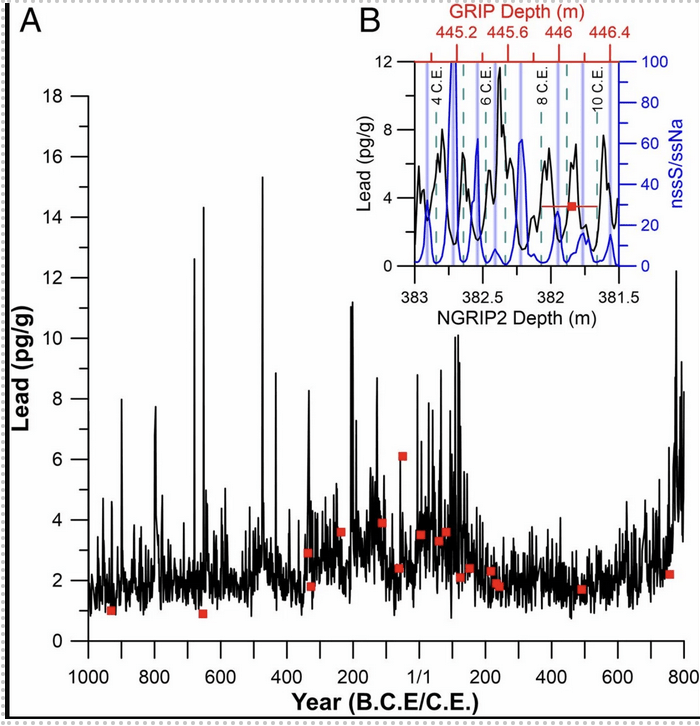


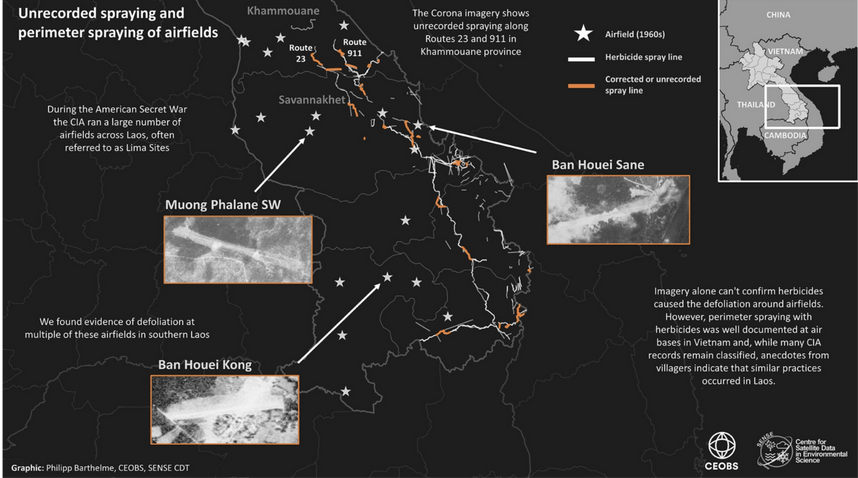



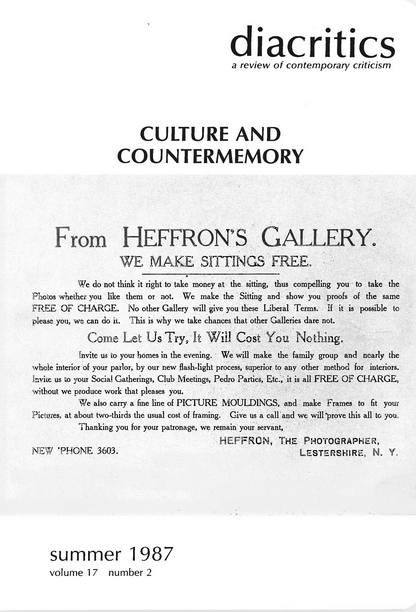



 The Olive Press Review
