The notion of honouring a women has developed into the context of sexual gratification, as the man ceremoniously falls to his knees and the woman lays on her back. While facilitating women’s fantasies and men’s stringent appetites, the basis of ‘honouring’ a women wreaks havoc on our death sentence, representing our last depiction to those in black heels and even blacker ties. The core of women’s struggles lie in the simplicity of ‘honouring,’ as they are tied up in sexual escapades and unwarranted death sentences. The issue remains simple: Eulogies have become overrated.
This opinion is rooted in my identity as a woman. A woman who has a present mother, a known grandmother, a sister, female relatives. It stands in a future of black dresses, wet grass and stained mud trousers, empty tissues boxes, flower-filled tents and an eventual grey headstone. It means those who have surpassed me will come to recognise in shame-filled speeches huddle up at the podium, as they announce to many, or even few, of the latest moments spent together, and while they laugh over our past conversations they imagine I might be doing the same too. Now, ridden with normalcy in this context, imagine a speech of children remembering their mother, their partner coming to the podium, a possible grand-child carefully announcing each word they have written the night before, and while those burdened by grief may push their heads together and tighten their pinky’s, this symbol of unity is entrenched in monologues developed from Pinterest, rewritten in sprawled handwriting where the letter ‘y’ is a straight line, but in their rush they made sure to dot each ‘I’. A blur of monotone syllables, praising the women’s devotion to her family as she managed to self-sabotage, self-slaughter, reinvent, and tarnish her personality and passions and excitement as they made their way through late school mornings and every home-cooked meal. Women, mothers, deserve more than the context of their labor as means of appreciation, as means of ‘I love you and I’m sad you passed‘. The overall lack of change of their level of gratification toward their death degrades each un-slept sick nights and stretch-marked layers of skin, leaving each women’s monetary value to be based on their proficient ability to be a mom, rather than be a person.
Euology Example for Mothers.. from son and daughters, cancers and suitable poems to read in front of others, the issue extends further than this, runs deeper than sudden death speeches and unknown relatives aged 20 years. Why does death and sexual favours all we are promised as women? To some, the issue is ‘not that deep’ nor does it house any relative ground of importance in the matter of death, but I am willing to disagree on the notion that women have deserved more in every single current period of history than they were ever given, and developing such claim as I have now, my digression on reused eulogies stems from a certain lack of empathy, that in some respects explains the debasement women face in socio-political and economic terms. In continuation of this supposed ‘theory,’ it is necessary to acknowledge that these speeches are not the root cause of degradation or inequality women face, but rather a facet to explore, compared to the usual gender pay gap or physical abuse women are to endure in their lifetime.
In some ways I wish to relay the delicacy of womanhood, the grace and pride we hold like the hands of our mothers, to grasp at every crevice of our bodies and show the purpose of each finger and piece of skin attached to our beating hearts while we managed to create the body of another. Maybe, I just wish to bring life into each women carpooling seven children for her third night in-a-row and her dinner’s once again, forgotten. I want to shield the bodies of the younger girls who have known other hands than their own. Often, in my head, such issues regarding the health, safety, and overall well-being of women become redundant, scarily normal, and always a hinderance. I remember each tear shed in windowless rooms, the act of weaving through the sidewalk as I pushed the bodies of my friends away from the catcalls, fisted hands, beer bottles near empty and another in their back pocket. I didn’t have a word for such fear, if it was intended to men as a whole or to those I felt I couldn’t outrun, but in a minute conclusion, the effects of womanhood follows the ultrasound and pink balloons to death and even past the grave.
Furthering the discussion of womanhood, why has honouring women become so hard? To alter the descriptor of the sentence, words such as cherish, accept, uplift, dedicate, heal, might create for an easier conversation but the significance is consistent: The lack of such descriptors above created the narrative that punished women for centuries as their place in society was seen as less than a indicator for respect and more so a position of earned merit. While easy to acknowledge, it is rather hard to digest when force-fed a subservient status out of common place tradition instilled in society centuries, even millennium prior, and so therefore even in present moments, adjusting to the inferiority become the first acknowledgement of being a women, the next step is determining how little you wish to adjust for social acceptance.
I divulge once more into the commonplace ritual of reused eulogies. Expressing the nurture women often neglect toward themselves, a sort of degradation of personal worth in order to uplift their children, or family, or even socially established standards, the daily practice is seen as normal, a sort of rival to hustle culture where you are deemed a ‘mother’ if sleep is conditional, every home-cooked meal takes personal free-time, that by extension you live vicariously through your kids in theme parks, school events, children’s tv programs. While I hate to demean children in such a light, mother’s begin a process of being condemned for their children who cry in grocery stores as they juggle shopping and crinkled receipts as they wonder when they next phone bill hits their account. They are personal chauffeurs in cars oiled in three-week-old fries and misplaced gum dried in summer heat. They become professional cleaners three-months in and juggle coinciding naps, late homework, PTA meetings, and food the kids are willing to eat. All of this is to say, the existence of mother, and by extension women, has been misconstrued, punished, diminished, and blindly encapsulated into a few minor point of gratefulness for their ability to provide attached to a few remarks of their unwavering generosity, are the last words attached to the mother, by their tender impartialness.
Often, scrolling through social media, in this case Tiktok, the movement of slideshows filled with forlorn quotes paired to slowed music meant for the effects of personal devastation and splicing parental issues, misogyny makes an appearance in forms of personal encounters and statements delivered by women congregated in moments of unity, where women can like, repost, comment, follow, inform, rebuild and so on of how men have affected them. In relation to motherhood here is a quick comment, “If you knew as many women I know, who are forced or coaxed into marriages, where the man uses then only for sex, to birth kids, to take care of his parents, to iron his clothes and serve his tea to his friends, with absolutely no regard for her well being or happiness and you saw women just tagging along walking behind them, hands full with kids and a belly full with another one, doing things on command existing as nothing but to serve them, you’d want to set them on fire too.” While strung together from quotes of women’s secret belief of their own insanity, the strange abuse of personhood as a teenage girl, God and his detriment to womanhood, the mourning women shelter for themselves, the background solidifies the present post with Adele’s, “Love in The Dark.” It is the multitude of posts akin to the emotional depth, everlasting empathy, women don and in itself allows women to complain, and argue, throw pity parties and question each intimate detail about themselves on their displayed bodies. Women know what they want, how they wish to be treated, and even more presently the standards they hold themselves to. A resilience unmatched, unwavering, and purely female.
I’ll end this with one simple idea: Eulogies women receive on the day to commemorate their death are too mundane, overworked, and dissolve women personhood to a mere recognition of their labor and ability to cater. Should you ever have to honour a women past the sentence of death or foreplay, may you understand the preconditions their body were forced to handle and should you leave commonplace poems, know that actions become much more complacent with recognition than toleration.
Simone De Beauvoir, an existentialist philosopher whose developed critique on feminist theory enacts a sort of ‘second- wave’ feminism, publishes The Woman Destroyed, whose sentiments and serpentine excerpts enact the lives of three women whose crisis is not a matter of age and lack of youthful-like endeavours but the inability to return to the past, whether their love is castrated by unfaithful husbands or the ‘second-shift’ of tending to their children. What becomes fascinating is each women slowly begin to blend together in relation to such issue. ‘Idiotic Vanity’ Beauvoir deems, the women’s inability to play into such notions that even men who can carry out propositions of love, who play into the term of ‘soulmate’ or anything akin to holding such high regard, are fooling themselves and only regarding their ego. Looking into all three women, Monique’s tumultuous relationship with her husband after his affair becomes a mutual acknowledgement between both, plays into her emotional state early on, outlining the dilemma each women encounters, years past their ‘prime.’
“All women think they are different; they all think there are some things that will never happen to them; and they are all wrong” (136).
The Age of Discretion
Beauvoir removing names as an identifier in conversation, leaves examinations to be marked by titles such as, ‘main character’ or rather ‘woman.’ These sections will be outlined by the term, ‘woman’ ‘mother’ or anything adjacent as means to describe the characters mentioned in the novel. Looking into The Age of Discretion, the first part of the novel builds conflicting emotions of youth, rather the lack of it, as the hands of the clocks continue their journey. The mother, now stuck in her inability to create a novel idea yet untouched by the publishing industry, begins to down spiral when her only child, a son whose intelligence and political opinion is attributed to that of his parents, begins to ‘defy’ his mothers wishes of sticking to education and teaching in favour for a political job, one marked to be for the other side. As youth becomes a heavy subject both by the mothers lack of acceptance and her husbands keen embracement of ‘old age’ conversations become tense, rather shaped on miscommunication and terse engagements. Beauvoir continues to write:
“No. At my age one has habits of mind that hamper inventiveness. And I grow more ignorant year by year” (17)
“The less I identify myself with my body the more I feel myself required to take care of it. It relies on me, and I look after it with bored conscientiousness, as I might look after a somewhat reduced, somewhat wanting old friend who needed my help” (23)
The plight of youthfulness slides among the pages, entrenching each rushed conversation, leading the way a compass might, and in doing so not only creates tension between the mother and her inability to prescribe a closer relationship to her son, but also the confusion of not understanding her husband anymore due to his ill attempt at grasping life like she. The continual regurgitation of the past is felt with the linking of clocks and watches and light turning to darkness allowing a cycle to flourish, leaving the heart stricken mother unable to move forward. The conflict continues, an incapability to align herself with the thoughts of those outside of her, leaves her shameless, often playing into the miscommunication trope all readers feign to hate.
“It was I who molded his life. Now I am watching it from outside, a remote spectator. It is the fate common to all mothers; but who has ever found comfort in saying that hers is the common fate?” (29)
“The two pictures I had, of the past André and the present André, did not coincide. There was an error somewhere” (43)
The lack of dependency by both men here, in this case emotional resemblance, causes the mother to question her role in her sons childhood, an uncomfortable possessiveness pushed in between lines as she tries to reclaim her son as her own. Every girls worst fear – a mother – in – law attached to the hip of her son, and as she loses touch with the ability to control his positions in life, her full-proof plan of comfortability collapses as her husbands arguments find home in the other side. The intimacy in sections of turmoil between each characters made me cringe and possibly awkwardly laugh through her bouts of covetousness as the pondering of emotional incest is not lost within your own mental connections, but the rawness of her grieve and inability to persist without the men in her life, gives way to some viable truth mothers rarely ingest themselves. That their youth is no longer dispensable and to require such efforts toward yourself is unjust. That the feeling of being ‘invalid’ is marked by an empty home where pots are only touched by your hands and grocery trips cover 1/3 of the fridge, and to leave such notion of women’s identity tied to her ability to reproduce and have children and when left with the loneliness of during and after, their present identity is still marked by their past. One of staring quotes wraps up her internal fight toward youthfulness, as she claims herself to be:
“I am not young: I am well preserved” (64)
To end the first section, the last points I wish to digress on are such: how much should a parent muddle into their child’s life and at what point is protectiveness or even support, overbearing and conflicting? and Simone to end this section on a note of hopefulness, a note of contentment and overall acceptance toward her situation and the conflict she felt toward her loving relationships writing, “We are together: that is our good fortune. We shall help one another to live through this last adventure, this adventure from which we shall not come back. Will that make it bearable for us? I do not know. Let us hope so. We have no choice in the matter” (85). Her ending tone of cooperation seems needed after the mother’s long digression with her fear of the future, and while some might find her words lacking with her front of simplicity and good-natured ‘approval’ of her new life, Beauvoir decision to end this act of discretion with a few minor sentences with no defining statement, no established emotion, pushes for a new kind of ‘humanness,’ one where you don’t have to understand your present, so long as your don’t fight against it to reclaim who you were in the past.
The Monologue
Beauvoir second piece, opening with the quote, “The monologue is her form of revenge,” challenges the stereotypes of grammar and the importance of comma’s, as her shortest section delves into the bitterness of a mother who loss of her daughter exhibits reoccurring moments of grief and unnerving anger as she cuts ties with her husband, and later family. Written as a vitriolic diatribe, the movement of anger is a burning vice for the grieving mother, now facing the multitude of affairs that must be acknowledged in her family. Her down-spiral consumes each word in the text, creating a confusing, questionable monologue. While those who pride themselves on their ability to succeed in grammar years ago, Beauvoir’s decision to make the monologue almost unreadable at points, where the reader must return to what the mother is trying to convey, accurately portrays the struggle woman face when caste aside in their own family, a designated role in society. While I can deliver my own monologue of destruction that patriarchy has created, Simone uses a simple forgotten voice of a mother to depict the struggles quite well. As stated above, family is a running topic in this section, the necessity to keep all of them together begins to ruin her identity as a ‘mother.’
“I want to be treated with respect I want my husband my son my home like everybody else” (96)
And her most stirring issue; her daughter:
“I should have won her back. I’d have made her into a worthwhile person. But it would have taken me time” (105)
“Sylvie died without understanding me I’ll never get over it. […] All that effort all those struggles scenes sacrifices — all in vain. My life’s work gone up in smoke” (106)
A fixation on her daughter, creates the parallel that all woman endure: the suffering and struggle the mother encountered and such a cycle impedes the growth of the daughter, hindering and discouraging her from firstly, existing. While the structure of patriarchy is not a key theme in this section, particularly, the passing of anger and/or resentment, and a need for an individuality complex stems from the mother, where her repressed anger, whether produced from that of her husband or the conflicts of society, is further exacerbated by the known suffering she is to endure in the future. While I could be looking to far into this, the relationship present between mother and daughter is established as weary, one caused for escape, and as her daughter enacts suicide, the suffering of the mother is ten-fold, sequestering her to abject loneliness, as her willingness of her husbands affair only falls to the loss of her presence in her son’s life. So as not the spoil most of the monologue, Beauvoir brings up women’s relationships in a few twisted lights in all sections of the novel, the relationships of the mother and her friends becoming a picturesque model for such interaction:
“I had spoken to her out of loyalty women have to stand by one another. Who had ever shown me any gratitude? (112)
“You mustn’t let yourself be eaten up” she tells me. But she’d be delighted to swallow me whole” (113)
Often, in fiction centred around the suffering of women where the root of such is by men, the relationships formed between women become a solidifier, a theme perhaps, where words of wisdom inscribe their conversations and vows of healing, yet Beauvoir’s rejection of this narrative, plays into the whole, ‘I am a women on my own,’ which can be inspiring in some ways, but I don’t think Simone intended this. Being a known feminist activist, this former narrative is built on pity and inability causing the correlation between ideas to fall short. With the quote,
“I was simpleminded — I thought they were capable of turning over new leaves I thought you could bring them by making them see reason” (112)
[continued] it suppresses impotence and replaces it with questions of personal reason and worth. With the position of mother in the hierarchy, she is already diminished and demanded of her value, further creating acceptance of treatment by personally demoting herself in favour of her children, a self-sacrifice if you must, yet after demanding so little of herself, she expect others to see the abandonment of herself, yet this also fails as well. Simone proceeds to characterise this mother as one who has not only lost her daughter, but now her son to a husband riddled with affairs, while also becoming detached with unsympathetic family in order to prescribe the conditions of a woman, whose lack of empathy received by others has granted her an entire thirty page monologue, riddled with forgotten commas and run-on sentences, to show how the sacrifice has evolved into anger. She has made a woman in the only way possible: neglect.
Simone ends this section with two short sentences, a win for all the grammar police out there, and its little movement on the pages provides all that is needed for women forgotten:
“You owe me this revenge, God. I insist that you grant me it” (120)
While the shortest section, this piece enacts the rage of women and the abundance of such emotion we are made to feel. The seamless integration of rejections by those who made her a mother, a daughter, an individual, creates an atmosphere of a women who can no longer prescribe to the very values that made her. Such revenge can only be acted upon in this case and lack of action only leads to the same death as her daughter: suicide.
The Woman Destroyed
Beauvoir’s final part, a needed reference to the title, carries on the varying themes mentioned in previous section, as she delves into a long standing marriage destroyed by the husband’s ever-growing affair. Simon seems enlightened by the psychology of the affair, the steady insanity and conditioned acceptance reinstated by women, drives the narrative as this mother now concerns herself with an internal struggle of moral justification and physical love. The tarnishing of self-worth transpires through her relationships starting with her husband, through her daughters, and to other outside friendships / engagements. Given the multitude of interaction and struggle, the development of many themes and statements arise on surviving grief. The primary struggle, again with the patriarchy, is the ideal that husbands are to grow weary of their wives and so him having an affair is normal, needed even to keep his peace and youth. Such quotes nuture this ideology:
“I have had exactly the kind of life I wanted — now I must deserve that privilege” (137).
“He is lying so as to ease things for me. If he eases things for me that means that he values me. In a way it would be worse if he were quite brazen” (176)
Entertaining such quotes, the sense of patriarchal interference reaks in the entirety of this section with the soothing attitude, “You are lucky he has decided to stay with you and not the other woman.” In this context, the mother’s disintegration develops into a hierarchy of self-examination to all aspects of inter-personal relationships, where the obvious start is that of her husband. As mentioned above, the psychological conditioning of acceptance turns into the questioning of love for both parties, whether he actually did love her or if she reciprocated such emotion enough. Beauvoir’s thorough depiction of regression reminds me of Sylvia Plath, The Bell Jar, in ability to transform to the mental processes of an individual that lead to questions of insanity and death. The mothers eventual progress to questioning key emotions can be noticed when Simone writes,
“I have never asked anything for myself that I did not also wish for him” (135)
“I had to make sure that a man could still find me desirable. That has been proved. And where does it get me? It has not made me any more desirable to myself” (169)
“The question is why did he love my in the first place? […] For my part I loved him when he was twenty-three — an uncertain future — difficulties. I loved him with no security; and I gave up the idea of a career for myself. Anyhow I regret nothing” (195)
While Simone does play into the guilt the husband feels for grief the mother is encountering, the shift in focus to the mother’s personal inability to cope developed no empathy over the husband’s personal afflictions. As the topics of feelings drive this side of the narrative, the range of emotion explored in this piece creates wonderful stability for the mother to be explored from such a psychological hierarchy, even if it was not intended to be so. By stripping the husbands voice, it furthers the notion of woman being able to contemplate the very same existentialistic questions. The shift is not gradual, but rather blended as the women maintain both the perspective of catering to her husband and questioning her self-worth, leaving a few minor infuriating moments as a reader. The hierarchy evolves along with her personal onslaught into the mother’s main identity: her children. Mother-daughter relationships are the foreground to each suffering woman in Beauvoir’s narrative, and in this case, the switching of roles creates complexities as both the mother and husband carry worries, yet the development of all three woman hold ground for positivity, and even empathy despite each other personality. Beauvoir depicts this as:
“Fathers never have exactly the daughters they want because they invent a notion of them that the daughters have to conform to. Mothers accept them as they are” (163)
“If I have failed with the bringing up of my daughter, my whole life has been a mere failure” (215).
“My only life has been to create happiness around me. I have not made Maurice happy. Any my daughters are not happy either. So what then? I no longer know anything. Not only do I not know what kind of person I am, but also I do not know what kind of person I ought to be” (252)
As stated in prior sections, as the mother is defined by her relation to her children, the root, the internal identification of herself does not seem to equal the recognition of motherhood, in so the woman’s capacity to provide rather than the appreciation of the role in practice. The hierarchy continues to evolve as the mother now concerns such worries with herself, as the interest of self-worth becomes a known concern toward the end of the piece. Beauvoir attaches to the emotion of contentment as means of creating a basis for how the mother is supposed to feel. She was supposed to accept her husbands affair willingly, even with a degree of happiness. She had to accept the publicity, lack of familial support, burnout from her passions, lack of self-value all for her husband to continue said affair, yet her jump to self-questioning, while months after the affair started, became the needed ending to the families story. The next section of quotes highlights growth in relation too questioning thy self while also highlighting the emotional struggle woman will encounter in daily relationships.
“I asked Isabelle whether she was happy. “I never ask myself, so I suppose the answer is yes” (140)
“In fact I am defenseless because I have never supposed I had any rights. I expect a lot of the people I love — to much, perhaps. I expect a lot, and I even as for it. But i do not know how to insist” (151)
“But I won’t, I won’t! I am forty-four; it’s top early to die — it’s unfair! I can’t live any longer. I don’t want to die” (223).
“Things have been given other names: they have not altered in any way. I have learned nothing. The past remains as obscure as ever. The future remains uncertain” (209)
The permanence of grief continues, the acknowledged struggle of self-preservation, the understanding the such relationships lived through could in theory be forgotten over time but cannot be wiped away, only shaped and twisted. Throughout the novel, the most cathartic section had to be the last remaining pages of this section, where the self-identification is raw, poignant, and severely needed. The last remaining quotes provide a basis for truth even without a concluding ending.
“‘What else do I possess?’ The heavy silence. I possess nothing other than my past” (214)
“Tragedies are all right for a while: you are concerned, you are curious, you feel good. And then it gets repetitive, it doesn’t advance, it grows dreadfully boring: it is so very boring, even for me” (239).
“I am on the threshold. There is only this door and what is watching behind it. I am afraid. And I cannot call to anyone for help. I am afraid” (254).
To end this sweetly, Simone de Beauvoir’s published text, The Woman Destroyed, can be complicit with those who are struggling with lost youth, who identify as a woman, whose grief is consuming and old enough to have a name. It is one that you process a little week later, prescribed too long, dark nights and blaring music, and you begin to understand the loss of what it means to be a woman and love dearly, closely, and too much. If you begin to question such intimate, particular moments of looking at clocks too closely, reminiscing of clothes to tight, and phone calls never placed, Beauvoir might just be the perfect medication.
Freshman year, Undergraduate; Paris 2023: Iceland v The United States
Keywords: Regression, Reform, Feminism, Political Sphere, Gender Inequality / Equality
Abstract: The United States and Iceland have differing political and legal adaption of Gender Equality for their citizens. As the former is regressing and the latter adapting reform, Nancy Fraser’s Two-Dimensional approach explains the current state of both respective countries.
“Misrecognition consists in the depreciation of such identity by a patriarchal culture and the consequent damage to women’s sense of self” (Fraser 167). Nancy Fraser, an American Philosopher and feminist, developed in her book, Fortunes of Feminism from Women Liberation to Identity Politics to Anti-Capitalism, deconstructed and redeveloped gender inequality women endure in her chapter, “Feminist Politics in the Age of Recognition: A Two-Dimensional Approach to Gender Injustice” supplementing a new system labeled as misrecognition and redistribution to create equality for women in socio-economic and political ways. In this essay, the conferring issues above will be delegated the names Gender Specification and Lack of Egalitarian Distribution in reference to a case on the repression and reform of gender in/equality in The United States and Iceland.
Before addressing either country, the system in which Nancy Fraser reveals her synopsis and eventual reimagined conception of justice toward recognition and distribution for the equal benefit of women is divided into her ‘two-dimensional concept.’ Being frugal in this paper with her description toward this new approach, Fraser utilizes a ‘bifocal’ method to see gender through two different lenses [recognition and distribution] (Further notes, 162). Each being saturated in sexism, both contain ‘political-economic face’ along with ‘cultural-discursive face’ that devalue a women’s established position of equality in relation to that of a man. Fraser solution: 1the principle of parity of participation. Broken into two sections, her conditions outline her eventual reasoning: ‘ensure participates’ independence and “voice”’ and ‘express[sion] of equal respect for all participants and ensure equal opportunity for achieving social esteem” (Fraser 164). From this, justice would be formed in areas such as ‘labor markets, sexual relations, family life, public spheres, and voluntary associated in civil society.’ Establishing the principle of parity, recognition [gender specification] and distribution [egalitarian distribution] are foundational in grasping the inequality targeting women. Causing ‘internal self-dislocation’ for women is androcentrism: an institutionalized pattern of cultural value that privileges traits associated with masculinity, while devaluing everything coded as “feminine,” paradigmatically – but not only – women” (Fraser 162). Obscuring women in this way, denotes women to social subornation, promoting separatism in the favor of masculine idealism, and furthers stereotypes of misconstrued language where the representation of women in media, law, social distinction, economic disparity, etc. become dedicated to ‘valorizing feminism’, a misinterpreted word spurred on by cycles of ‘dominant stereotypes and political correctness’. As both recognition and redistribution must be examined together (bifocal vision), only then would those be able to ‘comprehend both the class-like aspects and status aspects of women’s subordination’ (173). The continuing argument will be situated between regression of women’s equality in The United States and the reform present in Iceland by using Nancy Fraser’s recognition [gender specification] and redistribution [lack of egalitarian distribution] to comprehend the distinctions of gender in/equality between them.
The United States
To begin, the basis in which I will address the regression as stated is defined by ‘returning to a former state or condition; the act of going back’ in which the former condition is identified with the loss of rights that inhibit the female from being viewed as equal to the male counterpart. Such inequality sparked the 19th amendment, Title IX, Roe v Wade, Violence Against Women Act, etc. Examining the legal sphere in The United States, women’s reproductive rights, gender-based violence, lack of equal economic are representational of the struggles women encounter even centuries later. Addressing the United States in this paper, the political sector is to be examined as such laws, bills, amendments, etc. are the foundation toward the repression of such rights, mentioned above.
Nancy Fraser, in Fortunes of Feminism, addresses Neoliberal feminism as “The network society,” the feminist turn to recognition has dovetailed all too neatly with a hegemonic neoliberalism that wants nothing more than to repress socialist memory” (Fraser 160). Delving into Gender Specification, the issue begins to lie in feminist movements lack of development toward Egalitarian distribution for movement on gendered terms. Such issues are seen in the multitude of facets present in feminism that have developed after the MeToo movement, coined in 2006. Liberal Feminism, Radical Feminism, Marxist and Socialist Feminism, Cultural Feminism, Eco-Feminism, and so on (UAH) Focus on the language, structure, and foundations of movements that eventually hinder change within the legal system as recognition produces misinformation and diluted advocacy; Fraser’s interpretation remarks “The remarkable recent feminist gains on the axis of recognition would coincide with stalled progress – If not outright losses – on the axis of distribution” (Fraser 161). The issue continues as Media contrives an image of who ‘Feminist’ are, denoting them to different than ‘regular’ women who are ‘man-hating’ and not associated with the goals of other women, who ‘are constantly framed as deviant sexually, a bunch of man-haters out to destroy ‘family values’ (Wikipedia). These modes of recognition begin to disrupt the women’s ability to self-identify within herself, rather forming a collective idea, that can only be changed once the women forms a new self-representation for herself, one where ‘recognition becomes a positive relation to oneself’ and in this case, with socio-economic and political issues. As the United States begins to lack recognition, in which the general idea of ‘equality’ between gender or the labels defining such causes hold negative connotations in the patriarchy, no redistribution can exist.
In terms of egalitarian redistribution, the United States also falls short leading to such ‘regression’. A key identifier is the lack of ratification of the Equal Rights Amendment. The lack of ratification of the Equal Right Amendment that was passed in 1978 but not used by a state till 1982. Yet it is still only ratified in 38 states, the most recent being Virgina in 2020. Three states have filed an appeal of this ERA in 2021(eand). The United States also refuses to ratify the UN’s conventions for the Elimination of all Forms of Discrimination Against Women – the only countries that fall under this list is Iran, Sudan, Tonga, Palau, and Somalia (eand). Along with a non-cohesive agreement toward gender equality, stripping of women’s rights is a more recently pressing issue with the overturning of 4Roe v Wade, economic disparity, and positions of power Nancy defines as ‘subordination’ as women have to tend to the ‘second shift’ that covers familial dependency, have a lack of healthcare available, and face even developments like the pink tax. To put it as such, Nancy Fraser writes, ““The underlying premise was that gender injustices of distribution and recognition are so complexly intertwined that neither can be redressed entirely independently of the other” (172). Simply, the United States lacks recognition, in this case a primary focus on Gender Specification that leads to harmful connotations and loss of support from a systematic patriarchy, and when the approach fails, redistribution lacks equality in socio-economic and political spheres for women leaving the United States to fail at pushing for any form of gender equality, rather regressing as with a newfound 2oppression against women that becomes a leading posterity for their children. Furthermore, American women are underrepresented in positions of power. 3The US is one of the few countries left that has yet to have a head of state be a woman, along with Congress only being 24% women, yet women make up 51% of the population. The contrast continues in the economic disparity between men and women as the United States, “Gender pay gap narrowed in the 1980’s and ‘90s, but progress has stalled since. The gender pay gap has remained relatively stable in the United States over the past 20 years or so. In 2022, women earned an average of 82% of what men earned” (Pew Research). Within jobs and industries women continue, ‘to be underrepresented in high-level, highly paid positions and overrepresented in low-paying jobs’ (Inequality.org) that will continue to create divides at every avenue for women, as ‘egalitarian distribution’ cannot be noticed, nor accepted, as the United States lacks a firm grasp in recognition of women being naturally equal to men. Fraser ends, “In such cases, reforms aimed at remedying sexist misrecognition have ended up fueling sexist maldistribution” (Fraser 172).
1: Page 164, “justice requires social arrangement that permit all (adult) members of society to interact with one another as peers” Page 172, “The moral here is the need for bifocal vision in feminist politics. This means looing simultaneously through the two analytically distinct lenses of distribution and recognition”
2: South Carolina women who get abortions could get the death penalty under bill (Winston-Salem Journal); No-Fault divorce being reenacted in states (Vanity Fair).
3: Compared to other countries like France, New Zealand, Denmark, Spain, Sweden, etc. they make over twice the political representation than the women in the US. It gets to a point where in countries determined to be ‘poorer’ than the US, women in their political representation equal that of Sweden, France, Spain and Denmark coming in at numbers like Cuba (53%), South Africa (40%), Mexico (48%). The not ratifying the ERA allows them to not have equal rights for women, which puts the men in continual power, continues to establish the patriarchy. (eand)
4: June 24, 2022 The U.S supreme court overturned Roe v. Wade, a 1973 supreme court decision that allowed the constitutional right to abortion for women. This has a huge impact on marginalised groups who already struggle to access health care (Guttmacher)
Iceland
Opposing the United States is the country of Iceland, whose use of reform toward their legal policies, laws, bills, acts, etc. have developed a society where gender equality is the baseline for social practices and relationships of citizens. To open up on gender specification in their reform, the recognition of gender was formed into an act known as the 1Equal Rights and Equal Rights irrespective of Gender (150/2020) “for those whose gender is registered as neutral” this then leads to the1Act on Gender Autonomy (80/2019) “right for persons to define their own gender” which puts the construct of gender at a baseline, that instead of segregating men and women, the general consensus is that everyone would obtain equal rights regardless of presenting or identifying gender. Breaking the stereotypes toward gender, denotes it to not holding severe power over political issues, almost desensitizing gender as not being a needed construct within society to separate individuals. Iceland’s most encompassing Act is 1The Act of Equal Status and Equal Rights of Women and Men (established 2000, revamped 2008), is comprised of 35 articles that desire to “reach equality rights through all paradigms of society”. This Act coincides with the United States’ ERA, but in light of reform the Act is in use and extends to all portions of Iceland society.
As distribution follows recognition, Iceland egalitarian distribution centers around the women and their depiction in society. Following their Equal Status and Rights act, 1Article 23 of said Act states that gender equality must be taught in school through all levels of education, along with the free education the children are to receive. Such teaching causes normalization toward equality, not deeming the other sex to be inferior especially as the child is developing mentally and emotionally and will eventually extend into adulthood as paying for sex in Iceland is illegal. The women are not criminalized for the act as the country considers them to be coerced into physical acts, as consent could not be established in dire situations. This further extends strip clubs being banned, no public advertising belittling either gender, or profiting off of nudity. (Global Citizen). Fraser’s conclusion provides insight as to how Iceland’s reform pushed toward equality more efficiently as she writes, “Only an approach that redresses the cultural devaluation of the “feminine” precisely within the economy (and elsewhere) can deliver serious redistribution and genuine recognition” (Fraser 173). Continuing with redistribution, another Act Iceland instated is known as the 2Icelandic act on Maternity / Paternity Leave and Parental leave (established in 2020, 144/2020), in which both parents have equal leave when taking care of the child. Revamped in 2006, the leave is presently 9 months, which also covers leave for birth, foster care, adoption, and those employed and self-employed. Not only does this not leave the mother with ‘two-shifts’ in daily life, but it also produces the effect that the parents of the child both have equal share in the relationship, supplying that the mother would not be forced into a caretaker role. Compared to the United States stalled pay gap, ‘a decrease can be seen within charts, graphs, and overall a declining difference between the years’ as its original average of 14-18% hit a standard 10.2% in 2021 (Pew Research). And lastly, in terms of labeling the country to a standard of reform past the Acts and bills they have passed, the government automatic decision to reevaluate their system in light of recent corruption that caused a financial collapse in 2009, they passed a bill in which a company must have no less than 40% of people on their board be women. The men involved were sentence properly and women become the solution to the issue (Global Citizen). To end, when addressing reform on Gender Equality, Iceland’s action toward delivering a system to improve gender equality can be characterized as ‘reform’ given the political adjustment and overall improvement toward the treatment of women, compared to the United States.
To conclude, when using Nancy Fraser’s Two-Dimensional Approach to Gender Justice, her bifocal sections of recognition and redistribution provide a functional basis to address and eventually reconstruct gender inequality women face in society, and in this case within their country. When applying Fraser’s approach to both Iceland and The United States, the terms ‘Reform’ and ‘Regression’ are attributed to the country’s advancements toward gender equality in socio-economic and political terms, while also deciphering the major causes leading both to have such labels.
2: In establishing the healthcare women receive from the government, the United States has an issue with women receiving proper care. “Between 2018 and 2020, the US maternal mortality rate increased from 17.4 deaths per 100,000 live births to 23.8. For comparison, in 2020, the US maternal mortality rate was more than three times higher than that of 10 other high-income countries, including Canada, the UK and Germany. A 2022 CDC report suggests most pregnancy-related deaths in the US are preventable. (Knowable Magazine)
“The African-American woman, the mother, the daughter, becomes historically the powerful and shadowy evocation of a cultural synthesis long evaporated – the law of the Mother – only and precisely because legal enslavement removed the African-American male not so much from sight as from mimetic view as a partner in the prevailing social fiction of the Father’s name, the Father’s law”
Hortense Spillers: Mama’s Baby, Papa’s Maybe
Table of Contents
Overarching Essay:
Preconceived Notions of the Black Female Body and their Disruptions to the self
Piece 1:
Harriet Jacob: Incidents in the Life of a Slave Girl; Harlem Shadows, Claude McKay
Piece 2
What My Mother And I Don’t Talk About: Bernice L. McFadden, Fifteen
Piece 3
Hortense Spillers, Mama’s Baby, Papa’s Maybe; The Dismantled Black Family
Piece 4
Lacan, DuBois, Welang: Racialized Liminality, Commodity to Consciousness Linked from the Misrecognition of the Social
Piece 5
Omise’eke Natasha Tinsley: Femmes Of Color; Queer Liminality, The Personal Transition Space
Footnotes
Film and Art: A Division of Black Self-Suspended between Girlhood and Womanhood
Jezebel (2019, Film) “Isn’t She Pretty?” Clip, Netflix (0:00-4:41)
Statistics and Revealing Research: The Fracture of Black Girls Childhood, Georgetown Law
Key Words: Commodity, Girlhood, Womanhood, Liminal Space, Personal Identity
This paper aims to analyze and compose the embellished history of the black women’s label as ‘commodity’ and how this characterization not only became a generational cycle but is reciprocated through mother to daughter. Developed as a ‘Coming of Age’ anthology, the presented pieces develop the black female’s liminality toward Gender, Racialization, and Queerness. Referenced in the title, the objective aim can be concluded to the subjectivity of liminal space and personal identity to redefine the shift between girlhood and womanhood as a black female.
To outline the premise of liminal space presented in this work, the established parameters of this are marked as a transitional period within a person’s life, in this case the black woman. Victor Turner continues the subject defining liminality to be, “divided […] into three analytically distinct phases and during which the individual undergoes a transition from one social status to another, for instance […] when a girl becomes a woman. During the middle phase of such a process the individuals involved are understood to be ‘no longer’ and simultaneously also ‘not yet’. […] liminal personae are “neither here nor there; they are betwixt and between the positions assigned and arrayed” (Turner 1969: 95). Liminality in the context of this anthology is sectioned into three sectors of the black female in the socio-economic and political sphere.
To elucidate the termed use of the word ‘commodity’ in reference to the black female self, the text will reference to the transitional period known as ‘girlhood’, the allotted space before liminality can be addressed, or in reference to the first stage of Victor Turner’s Liminality. Commodity in its use was embedded in the structural foundation of slavery, where they were referenced as ‘transatlantic commodities’ allowing for the objectification and abuse of their body, 1their flesh, but also the complete removal of their self-hood to diminish their bodies as only being able to provide or offer (1). Addressing the history of this term, the paper aims to utilize the relevant historical usage of commodities and their present relevance two hundred years later which can be translated by Iman Cooper’s explanation, “[…] human commodities to market. Over time, the replication of individual choices to capture, buy, and trade African slaves created a societal structure that equalized the value of human life with a market value” (Cooper 2). Applying Cooper’s exposition of a commodity to the context of a ‘Coming of Age’ narrative for the black female self, the encompassing objective of market value / exchange of goods produces the object self [in this case the black woman] to then become a product of material or property. The degradation of the self is not a social consent, but an ingested denomination of themselves.
To further to conversation of disruption, the rationale toward this anthology was contrived by the misrecognition of black women in connection with the abundance of representation from the white public and adjacent to the patriarchy, black men. Toni Morrison advances the subject of exclusivity of black women in her novel Sula: “When I think of how essentially alone black women have been – alone because of our bodies, over which we have had so little control; alone because the damage done to our men has prevented their closeness and protection; and alone because we have had no one to tell us stories about ourselves. […] Because of these writers, there are more models of how it is possible for us to live, there are more choices for black women to make, and there is a larger space in the universe for us” (Morrison, Sula). Morrison’s decision to end her monologue by addressing the ‘possible’ space black women can take, can make for themselves, drives my reasoning for these pieces – this anthology. The lack of representation for women of color, can be examined in legislative roles, social justice movements, STEM environments, leadership positions, and healthcare equity and when restated the intersection of social constructs puts them as “victims of racial oppression, sex discrimination, and class stratification” (OJP)
The theorists introduced in their individual pieces seek to uncover this gap, marked as a transitional and/or liminal space between phase one and three of the black women. In doing so, the historical context of enslavement in the specified pieces and essays continues to codify the current lack of representation and attention they receive. Hortense Spiller’s speaks on the period of the Middle Passage to rediscover gender and further dislocation of the black self, eventually defining the black family, and in this context, the female black self becoming ungendered, furthering separating her from self-actualization by removing the personhood to be used as a commodity. Jacques Lacan, W.E.B. DuBois, and Nuham Welang, rationalize the black self through psychanalysist to deliver the black consciousness in socio-economic and political matters, ultimately creating a distinct “twoness” within the black self. Omise’eke Tinsley take on queerness and sexuality in her novels depict female black love untarnished by the acceptance of one’s sexuality and reflection of thyself.
A desire for this anthology is to not only address the marginalization that black women are to encounter and thus endure, but to also highlight the importance and the need for such transitional space to occur to the black girl. Hortense Spiller, Jacques Lacan, W.E.B. Du Bois, and Omise’eke Natasha Tinsley each present the case of the black female self in reference to the social oppression they are to encounter. My proposal plans to link suppression with liminality, that would in hindsight address the black personal identity which would evolve from such subjugation. As statistics are limited in this anthology, the paper revolves around a philosophical and psychological approach to the identity of a black woman which targets the mental processes affected from outside influences. The goal is to present the ‘self’ and the ‘Other’ as wrongfully coinciding within the black body to produce such questions revolving around black identity.
I hope these pieces can shed to light not only historically – to educate on the horrific and abusive acts women of color faced during slavery and oppression, but how these themes continue presently in law and social standings. Studies, articles, healthcare, law, and movements often put black women in the background asking them to fight but lack acknowledgment for their struggles. I hope to create a piece to recognise the lack of help black women and girls have received to inspire movement for social reform.
What My Mother And I Don’t Talk About: Bernice L. McFadden [Fifteen]
A collection of essays bound by the singular idea of ‘the ways our mothers fail us and we fail them’ Bernice McFadden depicts the cycle of generational trauma and abuse as she beings to replicate the harshness her mother employed in their relationship onto her own daughter. McFadden, an American novelist whose writing can be outlined in her fifteen published books, opened her essay with the establishment of the father figure, one who determines their relationship to be outsourced by his power over her. McFadden writes, “[…] I attended private school and my classmates were privileged white girls who spoke to their parents any old kind of way, and he wasn’t going to tolerate that type of insolence from his black daughter” (McFadden 104). The cycle of power which extends past the mother directly to the daughter, in which the mother avoids the actions of the father for her self-preservation, even at the expense of her daughter, begins to create a lack of need and/or nurture from daughter to mother. The actions of the mother are further solidified when the mother’s continual return to the abusive father leaves the daughter to fend for herself: “Over the years, I ran away again. He was still a drunk, and you still left and went back, left and went back” (McFadden 104).
A relationship now tarnished by the mother’s inability to stand up not only for herself, but for her daughter’s sake, starts the deterioration of their relationship as the daughter natural thought is to mirror that of her mother, a phase outlined by Jacques Lacan, that eventually is adopted into the term “Real Other” – “the maternal figure initially features for the infant as a Real Other —more specifically, as an obscure omnipotent presence who is the source of all-important love” (Stanford Encyclopedia). As the daughter can no longer mirror herself in the mother due to her needs for self-preservation, the daughter will now seek to fight back. McFadden continues this system when speaking of her father, “Yes, I still lived under his roof, but I no longer a child, muted by my age and dependency. I saw myself as a grown-ass woman. Now, when he barked, I barked back” (McFadden 105). The daughter’s emphasis on ‘dependency’ can be outlined in the feedback loop she feeds to her mother, but the lack of change caused her to digress within a state of independence. As the daughter only exists within the world of herself and the family, a differing reaction or action toward those near her will not vary much in practice, as the daughter in this case has yet to know of a more substantial response. The transitional space is outlined between the threshold from girl hood to womanhood, in this case the only substantial wavering of the daughter is her reactive response to her father. Due to her environment, this space lacked movement as the daughter grew into motherhood before reaching womanhood, therefore not allowing a need transition to a developed personal identity.
As the daughter now has borne a daughter of her own, the lack of attitude toward interpersonal relationships like that with her children and family have not had the time to alter. Omise’eke Tinsley paper, “Making Lemonade out of Marriage, Motherhood, and Souther Tradition” depicts Beyonce’s album ‘Lemonade’ by piecing together the stories each song delivered to recover black queer identities and a critique on patriarchal norms, excluding alternative arguments toward the woman’s struggle. Tinsley recovers the abuse black women face in motherhood due to social norms affixed to white women to follow compliancy, she writes, “In her devastating study of black battered women, Beth Richie finds that black women who idealize their mothers are more likely to form abusive relationships – that emulating the “perseverance,” “discipline” and “strong sense of morality” they admire in their strong black mothers leads them to stay with violent partners, believing real women are strong enough to “take it” and do the “right thing” by keeping fathers with their children” (Tinsley 48). That the abuse in this relationship not only covers the mother, but the child [daughter], who is to witness the mistreatment of her mother, knowing that it could extend to her. Tinsley puts the theory into practice as she delves into the lipstick the daughter would use with hopes to become her mothers, Tinsley explains, “’You find the black tube inside her beauty case where she keeps your father’s old prison letters. You desperately want to look like her. You look nothing like your mother. […] But — like the slave quarters visible behind the garden as the blonde girl comes up the path – a hint of disquiet shoes through this home scene as the narrator advises: “You go to the bathroom to apply your mother’s lipstick. Somewhere no one can find you. You must wear it like she wears disappointment on her face” (Tinsley 52). The lipstick becomes synonymous with the mother’s compliance toward the father mistreatment, a patriarchal incarceration, which becomes synonymous with the daughter’s desire to become her mom, to wear the disappointment, and to do so behind her back and the generational cycle continues.
Continuing with Bernice McFadden, her depiction of enacting the emotional turmoil her mom previously treated her with, she delivers her response to humiliating her daughter writing, “On the phone, I loudly berated her to friends and family, hoping to shame her into submission […] When her normally stoic and unbothered façade crumbled into tears, I felt vindicated” (McFadden 106-107). Her daughter followed in the footsteps of running away, of missing classes, leaving with other men, until Bernice’s own mother pleaded to not turn her daughter into jail, like her mother did. The cycle has not failed her, as each daughter, woman, and mother all were facing the same fate: compliancy toward mistreatment in every personal relationship. Bernice was the only one to delve into 1self-confrontation, so her daughter did not have the same fate. The mother-daughter relationship displayed in Bernice McFadden’s, Fifteen, depicts each daughter’s desire for personal identity only to be constricted from their mother’s lack of developing her own. The liminal space between ‘girlhood’ and ‘womanhood’ has no indicators, rather the girls adopt motherhood before a transitional period can be enacted: “You were expected to get yourself up, dressed, fed, and off to school. Back at home, you finished your homework and started dinner. You were nine years old” (McFadden 110). 2The lack of development for black girls to womans can incite a systematic nature in which the woman is to bend in childhood and adulthood, to familial and personal relationships for the supposed ‘betterment’ of their present life. The generational cycle will continue unless one is willingly to be admonished for their own self-actualization.
_________________________________________________
1‘Self-confrontation’ in Achille Mbembe: Afropolitanism, 210
Harriet Jacob: Incidents in the Life of a Slave Girl; Claude Mckay, Harlem Shadows
Harriet Jacob, an African American abolitionist, wrote her narrative, Incidents in the life of a slave girl, depicting her life in slavery and the sexual history while a slave. Jacob’s first chapter sets the scene of the injustice black families 2(see Spillers) endured while enslaved, declaring her present status in the beginning, “I was born a slave; but I never knew it till six years of happy childhood had passed away” (Jacob, Childhood I). The intricacies of slavery in this context revolve heavily around the commodity of women, in particular, sexual engagement for survival. Harriet’s childhood is outlined in her first chapter, Childhood, that carries a tone of sympathy for an adult perspective, recounting details like, “I was so fondly shielded that I never dreamed I was a piece of merchandise, trusted to them for safe keeping, and liable to be demanded of them at any moment,” (Jacob, I) where her consciousness has been developed to understand her body to be akin to ‘a piece of merchandise.’ The commodification of enslavement is engrained in their existence as the parents struggle to buy their children back from their masters. (Jacob, I). The devaluement of Harriet accompanies her with her growing age as the forefront of reproduction toward black women starts in the early years. Hortense Spiller’s addresses the injustice of reproduction as the 3ungendering of the body into property allows them to become quantifiable commodities, legitimizing racial violence and torture as the subject has not legal or social ground to dissuade. Spiller’s also continues on the basis of sexual encounters by quoting Harriett Jacob’s encounter with a white woman by writing, “Since the gendered female exist for the male, we might suggest that the ungendered female – in an amazing stroke of pansexual potential – might be invaded / raided by another woman or man” (Spillers). A precedent recently centered around being used for sexual pleasure by a man has now integrated women to enact pain onto the flesh of black women.
Returning back to the novel, Harriet Jacob displays a personal narrative of apology for her actions when involved with another white man as means for protection. Fred Moten, an American theorist and poet exploring critical theory and black studies, develops the speaking commodity off of Karl Marx, where the subject speaks in order to 4critique the notion of the commodities value. Harriet Jacob’s view of her condition turns to become a criticism of capitalism and her devaluement as a commodity as she writes, “Women are considered of no value, unless they continually increase their owner’s stock. They are put on a par with animals. This same master shot a woman through the head, who had run away and been brought back to him. No one called him to account for it. If a slave resisted being whipped, the bloodhounds were unpacked, and set upon him, to tear his flesh from his bones. The master who did these things was highly educated, and styled a perfect gentleman. He also boasted the name and standing of a Christian, though Satan never had a truer follower” (Jacob). Jacob’s respite develops into sincere apologies for her entanglement even with her disgust toward capitalism and the treatment they face in society. Her 6consciousness toward her treatment of livestock, of the value placed on her reproductive capabilities as a woman, furthers 5Hortense Spiller’s conceptualization of the ungendered body for capital gain of the master. Harriet Jacob delivers an apology to the readers for her actions as written, “Pity me, and pardon me, O virtuous reader! You never knew what it is to be a slave; to be entirely unprotected by law or custom; to have the laws reduce you to the condition of a chattel, entirely subject to the will of another” (Jacob). The position of the slave, denied citizenship and human rights due to their race, defending their sexual encounters and expose with the white man to their readers, addressing themselves as a victim with desperation for her case, passes W.E.B DuBois concept of Double Consciousness by correlating with Nuham Welang Triple Consciousness. Harriet Jacobs is not only aware of the power indifference of race as she is ‘unprotected by law or custom’ with the man but also her identity as a woman who is reduced ‘to the condition of cattle.’
Along with Harriet Jacobs, Claude McKay, a Jamaican poet during the Harlem Renaissance utilizing sonnets to create a language for black lived experiences. His poem, Harlem Shadows, features young black women in Harlem surviving as sex workers. McKay’s depiction of the women, often seen as little, creates inquiry into the commodity of young girls, the overt sexualization they face due to their race, gender, and age. He writes in his poem, “I see the shapes of girls who pass / To bend and barter at desire’s call. / Ah, little dark girls who in slippered feet / Go prowling through the night from street to street! (McKay 3-6). The imagery of the scene is not lost on the young girl’s duty to ‘bend and barter’ on the streets to escape their current situation. Returning to liminality, its function for the young girl becomes untouched, her identity diminished to the personal objective to enact sexual pleasure for the opposing man. The nature of this anthology was centered around a ‘coming of age’ theme, where the young black girl would be ranked as a commodity before an adapted consciousness took root toward the self. McKay’s depiction of these young women highlights the boundaries of free will for their action and the youthfulness in which they carried themselves. He denotes, “Through the long night until the silver break / Of day the little gray feet know no rest; / The dusky, half-clad girls of tired feet” (McKay 7-8, 11). Personal identity, and lack thereof, cannot be established as the girls regard to survival depends on their ability to perform, the money they are to make for the use of their body, and rather than denote the girls to ‘property’ they become prostitutes. McKay eventually outlines the premise for their action as he states, “Of poverty, dishonor and disgrace, / Has pushed the timid little feet of clay, / The sacred brown feet of my fallen race!” (McKay 14-16). In piece one, Bernice McFadden outlines a generational cycle between women, mother and daughter, and when dissecting McKay’s piece, the generational cycle continues past enslavement toward recognition where citizenship is granted, yet no resources are given to dimmish their present due to the eradication of their race in the socio-economic and political sphere. With poverty and the dishonor they hold due to their flesh, they are stuck trying to develope stability in society, for the women, the outlet continued from years prior as a commodity for physical pleasure. This space in which African-Americans were left to create their own stability is what i allocate as being a liminal space. One that was previously tarnished due to their race and gender.
_________________________________________________
3 Spiller’s class notes, Dr. Sneharika Roy
4 Moten Class Notes, Dr. Sneharika Roy
5 Hortense Spiller: Mama’s Baby, Papa’s Maybe, Piece 3: The Dismantled Black Family
6 Reference to Jacques Lacan, Mirror Stage to further the context of Harriet Jacob’s consciousness toward her past experiences.
Hortense Spillers, Mama’s Baby, Papa’s Maybe; Ungendering Liminality – A Conscious Relationship between Mother and Daughter
Hortense Spiller, an American critic and literary scholar, published article, Mama’s Baby, Papa’s Maybe, argues the lack of an established black family while enslaved. Her distinctions lie in not only the inability for the family to be formed due to their classification of being property, but also the ungendering of the female self as they are denominated to a commodity. Spiller’s argument of women not being able to co-exist within their familial relationship and within the self, creates the loss of identity for the women. Spillers writes, “’femininity’ loses its sacredness in slavery’, then so does “motherhood” as female blood-rite /right. To that extent, the captive female body locates precisely a moment of converging political and social vectors that mark the flesh as a prime commodity of exchange” (Spiller 75). Removing the label of woman from the female self, leaves her with no identifier. She is not the self because of her stripped label as being a ‘woman’ and/or ‘girl’ and she is not the Other because she no longer is identified as a woman in social terms. As the ‘woman’ no longer exist within the terms of her existence, she is denoted in this case to a commodity due to her race, and therefore her being is regarded only for the value she can provide. The other facet to both past and present circumstances was the importance of reproduction as an identifier of women, or their responsibilities.
While enslaved, the black women were stripped of their title as ‘women’ or ‘female’ and utilized for the ability to continually reproduce, enabling the masters to not have to outsource slaves financially. The stripping of titles toward the women places her ‘self’ to be based on her ability to reproduce, continuing the trend of her being a commodity. Spillers elaborates on the use of reproduction as she writes, “[…] we do not read “birth” in this instance as a reproduction of mothering precisely because the female like the male, has been robbed of the parental right, the parental function” (Spillers 78). The flesh becoming a signifier of commodify for the women diminishes her parental function, but also her label of a ‘birthing’ mother, which then compares her existence to that of an animal – one stripped of humanization from outside sources and used for their reproduction value. Moving forward the relationship between the mother and child is tarnished, wholly impossible as, “The offspring of the female does not “belong” to the Mother, nor is s/he “related” to the “owner,” though the latter “possesses” it, and in the African-American instance, often fathered it, and, as often, without whatever benefit of patrimony” (Spillers 74). Nahum Welang introduction to Triple Consciousness, a byproduct of W.E.B DuBois theory on Double Consciousness, proposes that ‘black women view themselves through three lenses and not two: America, blackness, and womanhood’ (Welang 1). Intersecting Spillers to Welang, womanhood is a crucial part of the black woman’s identity, where the oppression not only lies within their race or nationality but also their gender. A link between the mother and child is further advocated for by Spiller’s as, “The destructive loss of the natural mother, whose biological / genetic relationship to the child remains unique and unambiguous, opens the enslaved young to social ambiguity and chaos” (Spillers 76). A cycle can be appointed directly from Bernice McFadden’s Fifteen, as generational cycles are outlined from mother to child through emotional absence from the parental figure. As the cycle continues, the removal of labels toward gender and bodily autonomy [reproduction, free will], will eventually eradicate a known conscious self that is inhibited by external forces i.e oppressors, creating a lack of value toward oneself. The slave mother cannot legally own property [her child] as she is property herself, entrenching the child into slavery further as there is no ownership from neither parent nor master, creating a constant loophole for 3monetary gain from the mother as she is reaped of her child and of her humanity.
Brown University continues the argument toward the political and social gain the oppressors are given when ungendering the black body writing, “One way white supremacists and segregationists ungendered black women was desexualization; often the same women underwent this process in different contexts. One way black women were desexualized was through the 2commoditization of their reproductive capacity” (Brown University). Further removing black women from legal recognition, the inability to gain citizenship or to be married meant the black family could not hold any ground, legal or social, to protect or provide for their children as they have no viable standing, meaning no black family can exist within enslavement. Spillers speaks of the economic gain toward commodification, her shorts words expressing the unjustifiable system: “[…] bound and determined to destroy them, or to preserve them only in the service” (Spillers 75).
To end, Hortense Spiller, a black feminist scholar – an American literary critic, elucidation of the powerless black family during slavery, provides a liminal space to digest the ungendered black body and its effects on the black woman. The space contextualizes the lack of labels for an accepted perceived notion that devalues black women on the basis of their race and gender, renaming them as ‘property’ and ‘commodity.’ The space can be a state the black women will be trapped into for the utilization of their body, a crossroad that devalues the self, while also converging with a marked value in financial gain for the oppressor.
2 The Virgina Law of 1819, “that which is brought forth follows the belly (womb)”
3 Brown University, The Ungendering of Black Women, Clara Pritchett
4 Jezebel, ‘Isn’t she pretty clip?’ Netflix
Lacan, DuBois, and Welang. Commodity reaches Consciousness: The Link between Fetus and Eventual Motherhood, A Racialized Liminality
Jacques Lacan, a practicing French physiatrist and psychoanalyst, became known for his influence on Freud’s work, bringing such influence to France in the 1930s. Lacan’s work is entrenched with the root being ‘the unconscious’ of the self, in which his theories start right at the development, or neo-natal. When discussing Lacan with liminal space and personal identity, his theory of recognition and misrecognition evolved. It is known as “a process of self-identification in which a subject assumes an identity they mistake for their own […] the young child sees itself in the mirror and mistakes that image for itself” (Oxford Reference). Known as the Mirror Stage by Lacan, the child’s three phases of identity formation are the Real, the Imaginary Order, and the Symbolic Order. The Real is identified as the helplessness the child experiences, a state centered around the needs of the child that when being satisfied hold no separations between themselves and the person attending to them [parent]. The Imaginary Order, 6 to 18 months, delivers the stage of recognition and misrecognition for the child once their ability to perceive themselves separates them from the caretaker. Lacan supplements, “This initial state of helpless “motor impotence and nursling dependence” entails the infant experiencing a swirl of negative affects: anxiety, distress, frustration, and so on. To the young child, motivated by these negative affects, a crucial component of the enthralling lure exerted by the fascinating image of his/her body is this image’s promise that he/she can overcome his/her Hilflosigkeit and be a unified, pulled-together whole, an integrated, coordinated totality like the bigger, more mature others he/she sees around him/her-self (Stanford Encyclopedia). The Symbolic Order, 18 months to 3 years, finishes the development as it incorporates languages, where the child can integrate others into personal identity after their grasp social rules and limitations. Returning to phase two, the eventual misrecognition solidifies not only the bond between mother and child as she becomes ‘5an obscure omnipotent presence who is the source of all important love’ but also develops the first step toward consciousness within the child. Advancing on the latter point, the consciousness the child is to inherit revolves in this anthology on race, in specific black girls, that can develop Spiller’s perspective on the black subject being a ‘commodity’. As the young black female becomes conscious, her identity becomes aware of the label, ‘commodity’ where the intersection of recognition within herself and misrecognition toward social labels creates a moment of 6Nausea. Frantz Fanon, a psychologist and philosopher from Martinque, develops Nausea as a state of blackness that one is 7forced into by a preconstructed identity. Fanon elaborates, “I existed triply; I occupied space. I moved toward the other… and the evanescent other, hostile but not opaque, transparent, not there, disappeared. Nausea… I was responsible at the same time for my body, for my race, for my ancestors. […] I was battered down by tom-toms, cannibalism, intellectual deficiency, fetichism, racial defects, slave ships” (Fanon 84,85). The Nausea experienced within the black girl when she reaches consciousness toward the identifier of a ‘commodity’, presents a personal liminal space as the young girl develops what W.E.B DuBois coins Double Consciousness.
American sociologist, W.E.B DuBois’ novel, The Souls of Black Folks, develops the concept of an 8inward ‘twoness’ experienced by African Americans from racialized oppression and devaluation in a white-dominated society, leading to the term Double Consciousness. In the novel, he writes the concept to symbolize, “It is a peculiar sensation, this double consciousness, this sense of always looking at one’s self through the eyes of others, of measuring one’s soul by the tape of a world that looks on in amused contempt and pity. One ever feels his two-ness, – American, a Negro; two souls, two thoughts, two unreconciled strivings, two warring ideals in one dark body whose dogged strength alone keeps it from being torn asunder.” (Stanford Encyclopedia). A distinction is made between the personal self and the socially constructed version as the black girl and/or woman, that is not “inherent, accidental, nor benign: the condition is presented here as both imposed and fraught with psychic danger” (Stanford Encyclopedia). As it is not inherited, it is rather taught and given the position of the mother toward the child, as Lacan concludes the child to rely on and depend on the maternal figure, then double consciousness would be taught from mother to child, the passing of consciousness between generations. With an emphasis on a maternal figure toward the black child, Nuham Welang overrides DuBois in his theory of Double Consciousness stating, “The social identity of double consciousness attempts to find some semblance of power and equality within the framework of a political, linguistic and ideological American paradigm that dominates societies affected by Western Protestant civilization and refuses to take into consideration the multiplicity of fragmented cultures and identities catalyzed by this very domination” (Welang 297). Welang approach uses the fundamental concept of “twoness” of the black identity but adds on the inclusion of women that are instead seen from three lenses, instead of two: American, blackness, and womanhood. He advocates for black woman as they are not seen in DuBois concept for the lack of representation toward the varied and complex’s interest of black women. (Welang 298).
To conclude on the theorist mentioned above, the development of the black girl when reaching consciousness, creates a liminal space as her personal self becomes misaligned with the social ‘Other’, the label of ‘commodity’ becoming an interference between ‘girlhood’ to ‘womanhood.’ As personal identity is developed in the mirror stage, DuBois’ Double Consciousness reinforces a coming into age for the black female to past the transitional phase where the ‘self’’ becomes established for the black woman.
5Stanford Encyclopedia, Jacques Lacan – Mirror Stage
6 Frantz Fanon, Black Skin White Mask, pages 84-85
7Fanon Class Notes, Dr. Sneharika Roy
8Stanford Encyclopedia, Double Consciousness
Omise’eke Natasha Tinsley: Femmes Of Color; Queer Liminality, The Personal Transition Space
Omise’eke Tinsley, a professor in Black Studies at the University of California, is accredited in her work on African Diaspora. Publishing, Beyonce in Formation: Remixing Black Feminism and her latest, The Color Pink: Black Femme Art for Survival her sexuality becomes a forefront in her work. Dissecting her essay, Femmes of Color, “Femmes de Coleur”: Theorizing Black Quer Femininity Through Chauvet’s “La danse sur la volcan,” Tinsley develops her identity as a femme woman, a marginalized queer community, and incorporates her race as another level of oppression that is lacking from other women who identify as queer. Tinsley addresses in her essay, “When femme politics embraces pleasure and eroticism that fetishizes and normalizes white femininity, it risks liberating femininity for white woman and from women of color” (Tinsley 134). When addressing Queer Liminality, the intersection between race, sexuality, and gender causes a spectrum of marginalization from society as it does not fit the quota of a white, cis-het male. Due to this, Tinsley’s writes “I want to suggest that in order to speak with femmes of color, femme-inist theory needs to delve into complicated histories of race, gender, and desire rather than summarily liberating us from them” (Tinsley 135). Nuham Welang conceptualization of Triple Consciousness applies toward queer liminality in the transitional space it provides black women to accept and adjust to, but also provides allowance for more space, such as queer black women. When put in a position where acceptance toward open sexuality is not positively accepted by the majority, an internal self- reflection supplements 7self-actualization as the subject must then question their structural integrity of moral acceptance, internalising negative connotations from the other and therefore leaving them to regress into their personal identity, creating a liminal space of transition. Tinsley spins Queerness in her writing to hold positive experiences, her love for other black women opening her essay, “Black women learning to provide mirrors for each other… com[ing] face to face with the possible eroticization of such love” (Tinsley 131). Mentioned in Hortense Spillers, Harriet Jacob, and Claude McKay the sexualization of black women is prominent through media not only due to the commodification but the denomination of ‘property’ making black women out to hold value solely from their body. Tinsley depicts the love toward black women onto each other that is consensually and mutually understood by both women, whose past of being sexual providers and fantasies now exist between two women who choose how they wish to sexually interact. Tinsley dissection of, La danse sur la volcan, to provide a more overarching representation for black queer woman, her attention spans between the clothes, the houses, the jewelry the queer woman are adorning in the novel, leaning toward her label as ‘femme’ to celebrate a more feminine leaning style and energy not molded by patriarchy but rather themselves. Tinsley building a conversation on queering femininity is centered around clothing – madras wraps, a personal identifier and way to expresses themselves sexually. Tinsley response: “But the possibilities for what wrap could signify open many ways to think about what ‘queering’ femininity – that is, reformulating it outside of hegemonic norms – might mean for women of color in the Americas. […] It can also mean creolizing femininity, Africanizing European norms of dress and womanhood at its base and crown with well-adorned bare feet and high-flying headwraps that defiantly proclaim: talk about me all you like, I’ll do what I want. And certainly, it can mean resisting the way the racialized and gendered social restrictions attempt to limit women of color’s erotic possibilities to reducing sex to work” (Tinsley 139). Omise’eke Tinsley addressing sexuality to coincide with personal identity, the patriarchal history that interfered with black queerness, and developing oneself to explore femme culture past social constructs, allows for a liminal personal space to exist for black women when discovering sexuality.
The Combahee River Collective was a group of black feminist lesbian socialists that were active between the years 1974 to 1980. Their focus was on the lack of support during the Civil Rights and Feminist movements, leaving behind sexuality, specifically Black lesbians. They are most known for their documents, The Combahee River Collective Statement, that is summed up in their words, “The most general statement of our politics at the present time would be that we are actively committed to struggling against racial, sexual, heterosexual, and class oppression, and see as our particular task the development of integrated analysis and practice based upon the fact that the major systems of oppression are interlocking. The synthesis of these oppressions creates the conditions of our lives” (Combahee River Statement). Their development of identity politics and the way in which they are harmfully used by organizations and theorists, introduced the concept of intersectionality toward gender, race, sexuality, etc. Interesting liminality with such concepts, the transitional space can then be mental and physical for the black person. A study on queer and trans identity with liminality writes, “Liminality as a concept brings together queer ways of thinking through unboundedness, spillage, fluidity, multiplicity, and processes of contingent, non-linear becoming, as well as the relations of power and regulation that seek their stability or closure” (Sage Journals). Fluidity and multiplicity can be adjacent to DuBois concept of Double Consciousness and Edouard Glissant opaqueness. To fully encompass queer black sexuality, the black female identity intersecting with queerness develops a personal liminality from social conceptions, allowing personal identity to develop the black girlhood to womanhood through reflection of the self.


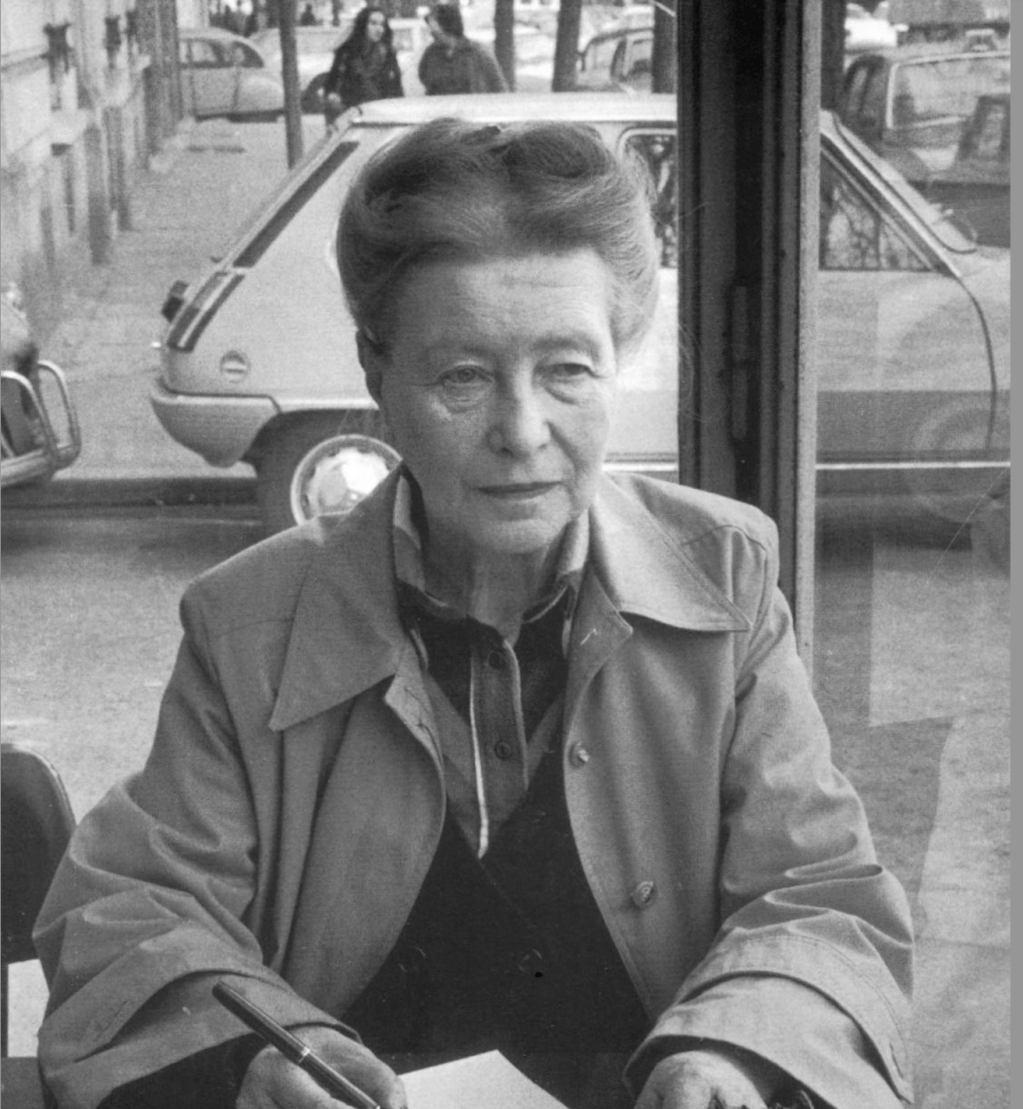


 The Olive Press Review