Judith Butler in Gender Trouble (1989) develops the relationship between gender and space through a cultural discourse. An unprecedented work, Butler’s aim shifts the reflection of gender to the corporeal – the body, and by relation, the space in which the physical and mental are shaped by social intrusion. When addressing Alexander Pope’s, The Rape of the Lock, domestic space becomes a cultural and social inscription which is repressive toward women and an unexplored political playground roaming with the women’s plight toward sexual purity. Domestic space shapes the repressive nature spurred by class and patriarchal objectives until chastity defines the characteristics of a women.
Re-worked alongside theory, domestic space leans into dichotomies that allows for cultural inscription, a feat best represented by the Oxford Dictionary as they characterized the space to exist as, “The apartheid system dichotomized physical space into masculine and feminine categories, marginalizing the feminine1.” It is practical to notice the dualism, which must be addressed, where women’s domestic space caters to expansion, possibility, and subversive positions which warrants the growth of children, partners, and their developing passions, leaving the mother, daughter, or wife to cater excruciatingly to a force- fed oppression: “Women were relegated to the inferior physical and social space of the homelands where they were expected to farm, raise children, and care for the sick and elderly2.” In replicating the domestic space in The Rape of the Lock, Pope’s execution becomes fluid and satirical, relegating Beauty as a willingly, yet violent adornment alongside the female body, whose vain rituals profess an innocence not yet known to the woman.
Revisiting Butler, her suggestions of ‘cultural inscription’ and the body follows Pope’s domestic space of marriage and class, a notion summed up as,
“Space is never neutral but always discursively constructed, ideologically marked, and shaped by the dominant power structures and forms of knowledge… space is both created and articulated through cultural discourse, including gender discourse. Thus, we cannot grasp space outside a socially meditated perspective.3”
Pope drives the perception of wealth and space satirically in one excerpt, denoting the jewels and objects adorning the main character, Belinda, as a foolish desire the wealthy place on insignificant items. Class is seen as:
“Whether the Nymph shall break Diana’s law, / Or some frail China jar receive a Flaw, / Or stain her Honour, or her new Brocade, / Forget her Pray’rs, or miss a Masquerade, /Or lose her Heart, or Necklace, at a Ball;/ Or whether Heav’n has doom’d that Shock must fall.4”
Represented by ‘frail China,’ or her ‘new Brocade,’ the objects surrounding the female character shapes both a metaphysical and domestic space aligned with conforming to beauty practices upheld from a ‘socially meditated perspective,’ whose yearning for marriage is a presentation of ‘her Honour.’ In mock-epic fashion, Belinda’s description of wealth pervades human protection, as the Sylphs surround the embellished and objectifiable lady, leaving Pope to pursue the permeation of the body through the adornment of wealth and established performativity of gender roles: “Form a strong Line about the Silver Bound, / And guard the wide Circumference around.” (ii.121-122) The fixation on the ‘Necklace’ and a ‘Heart’ situate the body and the material in the same category of space – domestic, as Belinda unconsciously indulges the prospect of her situated repression – a decision by Pope, which posits her outside a space of volition and feeds into the class-act of marriage and wealth. The ‘circumference’ of Sylphs surrounding Belinda introduces the skin as a mode of space, a quality capable of permeation and personal condemnation, whose association to gender discourse, brings about the plights of the domestic space, as a limit to the female self:
“What constitutes the limit of the body is never merely material, but that of the surface, the skin, is systemically signified by taboos and anticipated transgressions indeed, the boundaries of the body become, within her analysis, the limits of the social per se5”
Now, the existence of space from the self to the social creates a distinction of physical limitations; performativity rest upon the beauty of her skin, its likeness to grace and wonders distinctive of innocence until the body performs its own objectivity – she enacts her own gender discourse through a desired cultural inclusion.
The significance of the domestic space is rendered to the adequacy of the female body, the forced objective beauty that is: “Th’ inferior Priestess, at her Altar’s side, / Trembling, begins the sacred Rites of Pride.” (i.127-28) Pope’s verbal control toward terms like ‘sacred’ and the aforementioned ‘pride’ by extension must exist in the domestic space of femininity – exemplifying the required attention the body must hold for the women. It is a space worthy of adoration and touch, where ‘rites’ signify the opportunity the woman holds, leaving the ‘trembling’ as Pope’s chosen dichotomy in the sentence: does the sacred nature of feminine rituals driven by excitement of reenactment or nervous acceptance toward her guarded purity and vanity she must act upon?
Ending physical permeation of the female body, one last signification of the domestic space is the internalization of the female body and young girls. Introducing Braidotti, Lois McNay states simply, “The internalization of representation of the female body by women is fundamental to the formation of the feminine identity.6” The formation is drawn clearly in Pope’s text, compared quickly alongside Belinda’s evolving vanity, and one which characterizes the female body as less, due to the directive nature one must adopt: “’Tis these that early taint the Female Soul, / Instruct the eyes of young Coquettes to roll, / Teach Infant Cheeks a bidden Blush to know, / And little Hearts to flutter at a Beau.” (i.87-90) Pope’s reference to ‘taint’ corresponds with his mock-epic attitude, drawing upon the absurdity of social adherence, the forceful nature of desire, seduction, and innocence that must be catered to, even when innocence is all the young body holds. The domestic space is manipulated, so much so that the submission must be unnatural – formulated for social coherence and the uplifting of gender roles, and in Butler’s simplest words, performative, until the body is lacking in space completely.
Hovering in the realm of the metaphysical, the metaphorical ‘rape’ of Belinda exposes the manipulation of the domestic space and repression of the female body by means of chastity. When positioning the ‘natural’ alongside the female body in Pope’s mock-epic, it becomes “…a device central to the legitimation of certain strategies of oppression,” until it lacks the signification held toward beauty and ornamental jewels of the self – a disruption to the desirable objectification of a ‘body [as] a site of conquest.7”. Belinda’s honed acceptance must follow and indulge toward repression, of self and sexual identity, until she foster’s the decoration of her own virginity, as Pope writes, “Fair Tresses Man’s Imperial insnare, / And Beauty draws us with a single Hair.(ii. 27-28)” The dichotomy rest in Belinda’s internalized and furthered materialized objectification of her beauty – a cultural process spurred by a patriarchal body, while also characterizing the male self to egregious behaviors akin to ‘rape’ and ‘insnare.’ The permeation of this dichotomy rest internally for Belinda, and it is only until the ‘rape’ of her lock is orchestrated by the Baron, does the domestic space wither: “So long my Honour, Name, and Praise shall live!” (iii.170) From her rage-filled declarations, the representation of the female body loses touch with feminine objectification when it eventually becomes ‘conquered,’ or when the honor and name have been stripped of pure, virgin innocence. The woman assembled through mock-epic fight scenes permeate a physical domestic space, where skin contends with its own internal and external oppressors and moral plights induce the voice of women such as Clarissa, Thalestris, and Belinda.
Quickly, Foucault’s revaluation of women and their bodies produces a hierarchy of their repression, noted as, “…individuals as docile bodies has the effects of pushing women back into the position of passivity and silence8.” The construction of metaphysical conceptions like honor, pride, and vanity develops what domestic space is and its significance to the female self; It was a rite of passage and a representation of women’s suppression, generational to “her Mother’s hairs/ Which long she wore, and now Belinda wears.” (v. 95-6) Pope references these facets of identity in multiples, contriving, “He spoke, and speaking, in proud Triumph spread / The long-contended Honours of her Head.” (iv.139-140) The hair as a metaphor for rape, or seizing, delineates ‘docile bodies’ enacting ‘passivity’ genealogically, until the unitary movement of the body, the objectified female self and the space in between becomes “a construction, a product of the effects of power.9” This ‘construction,’ lies within the critical nature of man described by Pope, as the female self internalized honor and pride and vanity on man’s decisive rule, yet it was used against them for their sexual identity and objectifiable pleasure.
Domestic space is arguably a metaphysical conception, overarchingly dependent on the women’s existence and played by Pope to represent the potential reversal of power between men and women. Canto V redefines the significance of domestic space, as women “killed him with a frown / She smil’d to see the doughty Hero slain” (v.68-9), or the echoing of Belinda’s rage-filled desires, “Restore the Lock! She cries; and all around / Restore the Lock! the Vaulted Roofs rebound.” (v.103-04) The female body, in the domestic space, warrants voice past the expression of honor or virtue but rather violence shed from lack thereof, and rather utilizes the metaphysical to create what can be termed a new ‘domestic space.’ Foucault redefines this shift as a“discourse [which] transmits and produces power; it reinforces it, but also undermines and exposes it, renders it fragile and makes it possible to thwart it.10” Pope’s decision to ‘thwart’ the systematic power over women, to alter the significance of the domestic space, is delivered by Clarissa, whose moral address is noted as such: “Think not, when Women’s transient Breath is fled, / That all her Vanities at once are dead” (i.51-52). Sequentially, the women’s consciousness and further assertions toward their vain plights recognizes space as its own body, capable of change and fluid movements must death alter the current inferiority of the female body, and rather renders the domestic space in favour of their own, personal space. Naturally, the power is seized from men the moment Belinda’s lock of hair tumbles into space, or what Pope denotes as “the shinning Sphere!” (v.143-44).
The figurative “domestic space,” the female body encounters welcomes a navigation not only through the construction of gender and sexual identity, but its interaction with metaphysical space and personal identity. Through Alexander Pope’s, The Rape of the Lock, and philosophers such as Judith Butler and Michel Foucault, the significance of space can be critically analysed through cultural inscription, and as a result, the spatial and social begin to develop the performativity of gender past the dichotomy of a domestic space. It is through these articulations that the female self is positioned past the theoretical to the present, capable body, much like Pope’s Belinda.
It’s past seven. I have broken my sobriety twice, if the first time didn’t count enough, and the cider beside me reeks of berries. I can only stomach fruits these days. My body burns, terribly so, each eye hums till the tulips double in sight and each finger becomes diminished by the slight intoxication I gave way to; my shoulder’s ache past relative relief and so in the intolerable heat of fermented cider, the shirt must come off. I am a woman once more. The breasts lean forward, the stretchmarks are abhorrent as they are lovely, and when I fall upon the corner of the shower, I can only find adoration in the body I can call my own. There is much I could say, defiantly, upon every marker of humanity and history and achievements and abilities, yet in a state where the alcohol has marked my singular body as a conscious being capable of love and generosity, each sip pushes me to the conclusion toward this feminine mind and artistic hands and moveable body. In some short, painfully illiterate way, here is everything I once felt about my co-existence of a woman, with a kissable mouth and rough skin.
i. I cared willingly, fervently, and when religion struck upon my mind, I prayed, in an odd stance and with sweaty hands, about all I could not heal. It was painful in such a small body, poised to know the ruinous emotions and overwhelming fixation of love, yet not act upon them. My body was theirs unknowingly, and rather irresponsibly, and by natural law, I enacted my own child-like persecution, where I dreamed one could read my mind and such unnecessary devotion would be met with consistent understanding; I homed confusion. Still, my sacrifice meant something to me, in tiny jersey’s and shoeless feet, and from this I had come to know of such strange intimacies we pursue so willingly. I was tender as every nine-year-old is, and in big ways, I never knew how to say ‘Thank you’ at birthday parties and on Christmas days, but in some small ways, I knew of you, which meant I still knew how you felt eight years later (and the way you made your breakfast each morning). If I think about this matter at all, it does little harm to know I have never been in love at all, but simply by the condition that I do love, and therefore it must exist.
From this, as a woman, fundamentally, the simple notion of love seems relatively simple for all the emphasis I put on making sure it was known; most people already know the love you feel for them, its awkward escapades and horrifying experiences are congratulatory. You love well enough, I should say, if doubts toward the softness of your hands ever claimed such tender inabilities, look in your medicine cabinet quietly, you will find all the remedies you salvaged just to save yourself once more.
ii. We believe we are crazy, sometimes excitingly, as if the blood on our teeth was as clean as water. War-like screams, collapsing chest and mascara tears, all we know coincides with all we’ve felt. It feels structural, as if each cell holds its own grief, some lingering territorial part of longing, until each atom lacks in further development. I could uphold every name given to me, should you question if I have cried harrowingly, devastatingly; it is similar to cell division sometimes, while others fail to beat out by odd laughter. Completely, it is simple, all of this is simple, we cry, scream, puncture, scrape, melt, sing, must we remember how they felt. We wish to know of the devastation, and if we are smart, remember what brought us to strikingly still.
[the window knows only the cold, the beating of wind upon its frame. I wonder if the heat will melt its body this summer.]
Girlhood. (!!!)
pajama parties. makeup and the use of our faces as dummies. princess dresses and our mom’s high heels. press on nails till our fingers bleed and glue that sticks to the sofa. the fear the first time we shaved; the liberation which follows; the begging of people’s hands upon hairless legs. our dad’s oversized shirts as nightgowns. hot, burning, blurring showers. rosy cheeks near the ocean and hopeful eyes in the forest. fashion shows and the swapping of clothes. showers of compliments in the bathrooms at bars; lipstick stains on each mirror as we walk out. the hugs, the touching shoulders, the grabbing hands to pull you into stores. mirrored grief and lack of apologies. selfies and videos and moments all hung upon the wall cased in spotlights. code names of the fruit we ate that morning to the boy we desperately look for. calendars, post-it notes, to-do lists, weekly chores and monthly meetings. the cheeky feeling of the hand over our mouth as we spill our secrets. matching outfits. spilled nail polish, wine, tears, dipping sauces, car keys, ice cream, white pants. the obsession of virginity and the relief that followed. journals and photo albums and burned letters. the synced nausea and white underwear that follow the cramps, panadol, hot water bottles, muscle relaxers, and the eventual fetal position. the anger turned to sadness we held toward our moms; they were girls once too; they could have still been girls now. telling everyone the price of our new shirt we got on sale. flowers, in excessive, in every color, on some continuous loop which holds the remnants of heartache away. our intelligence and the dreams that follow. holding love between the skin on our fingers, knowing it was enough, in some way, in some light.
[Pause, once more, the shirt is coming back on. I digress.]
GMT 21:00, Apartment 1, City Center
(the difference in name is by want and honed acceptance.
the mind has always been more flexible than the body)
ME
Is it pleasureable? You know,
(pause, some sort of exasperated sign)
was any of it pleasureable?
MYSELF
Were you happy? I am failing to understand the question. Were you happy with the outcome. Was this what you wanted?
ME
(confused in the manner of her question, she can only lean upon the frame of the bed)
That is not really a question. I am happy all the time, you know that very well. I don’t see how any of that matters when it is pleasure I am seeking to understand. I don’t think where this has any place in our conversation. It is unknowing, like some spineless creature with no care of those around them. You can’t want if sacrifice has to exist.
MYSELF
(always smiling knowingly, she knows herself so well)
What do you want? Think slowly, like some spineless creature, as you call it, and if they had no care in the world, what would they want?
ME
(her pause is predicatable and depressive. rather inconsolable in the possibility of the question)
I would think of them as greedy, selfish probably, with to much attention to themselves. Maybe sinful to some people, I wouldn’t know who to hand my desires over to. Its some overflowing laundry basket, and quite frankly, I don’t have the time to seperate all the colors and whites. What’s the point anyway, if they are my wants, they could live in the same soapy water, for all I care.
(pause. she is conflicted ones more. her body turns
away from the speaker, a clear line to the city outside.)
Should I care?
MYSELF
You could. I am in no position to point out such cares for you. Ultimately, your desires will slowly die with you, along with each passion and secret dream you have written about in your journal, and while you think you are doing some justice to the world, maybe even to yourself, you are too big to fit back into the box of self-repression as a term of endearment. You are older, not as malleable as a child, yet not old enough to simmer in lost opportunities, and while you think your life is over because everyone else has moved on, you still have to fend for yourself. How are you going to do that? You could care, unabashedly about everything and everyone, but what do you want?
ME
(she paces, clear on what she wants, but one more question must be answered)
What about my mother? What did she want? Could you tell me?
MYSELF
(She should have known such a question would appear.
All she can do is smile kindly)
Such questions hold irrelavance, my dear. If you can do my the favor of answering the question, I fear my time is limited. All I wish is to hear all that you have wanted. Could you give me something so little?
ME
If I must. I want to be nice.
MYSELF
(astonished, she interupts seemingly frustrated)
That can’t be…
ME
(Interjects)
And weirdly strong, like you look at me and you wouldn’t know all that I have went through. And I want to love myself, annoyingly might I add, that I make myself blush when I look in the mirror. Oh, and maybe a little greedy, where I am the first to take a shower, or eat, and maybe I leave the dishes in the sink overnight, because who else is going to do them or really who cares? I wouldn’t really know what to do with myself. [pause] I think I would be happy then, brilliant even, and even when time did sculpt my face and make me knarly per se, I would know who I was. I would enjoy all the time in the world with myself. Who wouldn’t want to be someone so radiant?
MYSELF
Then, everything will be pleasureable. Or, by the way you’re looking at me, I am guessing you want to know if you feel the pleasure, am I right?
[slight nod]
Well, that I don’t know. Maybe you have always felt pleasure and never knew it. Maybe it has never left you like you thought it did.
[a quiet smile]
You know, you never left yourself? You were always here. What is to say about those desires to not wash dishes tonight? I don’t think that was spontaneous, nor do I think you have even recently felt like that. You, the person in front of me, has continually smiled and dreamed of momentous events and found ways to feed all the clothes you currently own. You were never not whole. You were you.
(They both stare at each other. ME can only nod, gently, before she begins to look for her stuff, gatheringher phone and keys upon the bed, as she stands up to head to the door)
MYSELF
Oh, and before I forget, when you asked me what you mom wanted, she was very short with her answer. She just wanted you.
[The cold has gotten to me. I must leave quietly, tonight.]
Standing at bus stops, pulling apart my groceries in self-serve checkouts, a cafe run only achieved once, traveling to cities to merely see a performance — I am a woman saddened by natural inabilities to know of their existence, or rather the knowledge I would not see them again, not in this context at least, and so therefore I would never know them at all. The endpoint of loneliness has become a gateway to basic emotions, an allowance to decenter the disturbance of our own existence to allow relationality to develop. We nod, pat on backs till both are comforted, and then our feet catch upon another sidewalk as all we felt fades back once more. We as humans all condone the inevitable action of self-wallowing, the disgust that is simplistically natural, but action is not even limiting in this field, we as humans grieve over everything… Maybe I just do.
There is an imprecise grief that comes with December, an unknowing baggage of words and feelings I will not admit to myself. I am alone and have been for a handful of years and while I should not be shocked by my inability to persevere past continual crying, I appear to collapse upon myself each year when people are willing to hold you longer or feed you more. I am not sixteen anymore and it’s December and while I thought my life was ending four years ago when my walls were chalkboard black and I couldn’t run from my mattress on the floor, I am diminished with the knowledged I can never go back, never once, no matter how loud I shout.
I think of death a lot. I am not precise in eventual conclusions, nor have I created any foundation suitable enough to not fall apart when speaking on this issue, but simply if I were to pull apart my skin until I am a slight movement of my soul, I might understand all I have ever loved. I feel ashamed of my inability to pinpoint any current state of passion, whether I ponder on the embrace of romance or the sum of my debts, and so my lacks become more concurrent with this present baseline of ‘what if’ and it is clear I am struggling. Oversharing is a must, so I will leave it at this: Love can be more than what you are giving it. Yes, it can be brilliant and toe-curling to where you question if you were only in pain because you were fifteen and not because your scars didn’t heal, and while you ignore your family for the tiny minutes you feel you now live with as you lay by their side, there was always beauty in knowing that love can be a sacrifice of death, that even though they had passed away three years ago and you happen to drive by their gravestone on the way to work each morning, you always honk your horn and laugh till you can only smile, and somewhere in the distance a horn hocks back.
I feel too human. I should laugh at such a statement knowing that empathy is bound to exist in this body, but I am simply too scared by how damaged it makes me. By this I become territorial of my own grief, the inconsolable sadness proctored by my very own hands and situated beneath clothing far too loose for my liking. It is through this identification, I run. My knees are raw and aching so I must account for the bruising and muscle spasms, but I repented, I apologized, I told them I was sorry, please laugh with me once more, I am bound to wonder how that sounds next to me at night. We all looked like the moon and it was hard not to whisper that you held the light more, it seems the universe sings only for you. I should have fought harder.
When you first decide to die, you thank yourself. It becomes peaceful to hear each breath as water only purifies and no longer burns. You apologize simply and your hatred no longer feels like a target but rather a confidant. An inconceivable normalcy is bound to exist with your unruly decision – you did not mean to be cruel, the harshness could no longer be contained to just yourself, your hatred was leaking and your fingers couldn’t mend all the holes; you were a good person, whose was young and possibly war-torn but the labels weren’t necessary so even if you were a good person sometimes you weren’t kind; you loved, and you still do presently but you have gotten confused with longing, so any concluding feelings all felt too fanatical and eventually too weak. I was dripping in love, encased in recognition that if I were to succumb to my own heartbeat, I had experienced what it meant to be drunk and still feel the flush on my cheeks hours later. It was devotion wrapped in a needed idealization that I was simply a body and you made me feel as if I never needed one to be loved by you.
Eventually, when thinking about religion, I thought of death to be carved from love. That, we as humans, held too much devastation and not enough hands to encase their body, they developed heaven and any type of afterlife where suffering is unknowing and peace was necessary, so their own very hearts did little ponder what it felt like still. They mourned before sickness, graceful in their decision that their love was never to be questioned, that reconciliation was possible when death was only a measure of time separating them. So, they prayed, and sung, and prepared the body as faith in their goodness was never argued and their love for them by default would never be a separator. What is love but not grief persevering, hmm?
In my all too serious, extremely lacking fantasy I should someday harbor about my life, it seems fair to acknowledge that there is no ‘another universe.’ This is all we got, all we have been given, and I am a little lost in making it seem worthy enough. I note that we are everchanging, ruinous creatures, sticky in shame and aching before collapse, but I wish to change so I am not as ruined as I thought. (?) I fail to link a future me in some present form of desire, a possible ‘what if’ on success or stability, possible love, yet there is not even a face to be formed, she is expressionless, bound by time and most likely debt, so I do her the honor of committing and she continues to brush hands with death, and the recycling of old tasteless haircuts and burdening effort will administer the same end.
I have loved exceptionally, greatly, magnificently to those I never received a name from, whose home is empty and whose last names are changed, and I wonder who is holding their body now, if they have been graced with warmth. I guess in most ways, if we are to assume life is our greatest tragedy, it is to be noted that love was there. That it is still there and that while it didn’t change anything nor did it save anyone, it mattered because we were alive and shared this vibrant emotion. A repetitive cycle of varying combinations of ‘If I could have loved you enough, I would have stayed” and “I envy even the earth that covers their body” until death can only mean love. Humans understand that death is a fundamental ending and still choose to love anyway, so in some twisted, pessimistic way that maybe could be positive in overcoming the fear of death, know that death could only be born from the love fostered to make the body, and the body never forgets, nor can you forgot how to love.
We all know of the grief when our mother can’t attend our own funeral.
Thursday Brunch, a small table just left of the opening doors to the cafe. Your friend was late by 15 minutes, yet you remembered just how they liked their drinks. You have forgotten yourself once more, what a shame.
“…”
I have yet to learn how to be quiet. Or rather, when given moments to announce bitter emotions or too much space has existed between the conversation of those in front of me, the urge to belittle the wrinkles near my eyes, insult the form of my body, degrade my speech, is past perfunctory, it is expected.
I perform in the shower, a certain nod over the shoulder or head tilt to a point I know covers what the mirror can’t, and once again I allow my body to overshare, to conduct its own persecution. I gather the pieces of skin less valuable and pull till red and loose, so if I must allow laughter to befall this body, it is me who has initiated it. Melancholy strums from the phone hidden beneath towels and I must gather their grief to understand how I know mine, but my sadness never held the attitude of ‘correct,’ so the soap must burn and scratch and tear until hopefully my body knows the right way to grieve – scared and starving.
I knew the bed too intimately, which means, I grasped at its softness and learned of its warmth, but I still never thought long enough to look underneath and read the tags littered at the bottom. Discovery rested in the bi-annual practice of turning the mattress around till I was given a new space to re-learn. For days, I am left contemplating how little warmth you leave me.
Could I profess a suitable amount of anguish? It might not matter, it seems I have already told you before. Maybe you had forgotten, or I simply wanted you to know, but either way when you sit in front of me and there are two cups between us, while yours is nearing its end and mine have only found needed warmth to purple fingertips, might you not question it. Might we find ourselves here next week, as the warmth spreads to your heart and I cover my shaky hands.
The papers are overflowing and I am sick. Sick, sick, sick. The curve of white porcelain comforts exhaustion as fingers push past the resistance to relief. Hands, other than my own, race across closed doors, leaving behind utensils and empty pens, to slide down the wall with me. They mock the untouched corner near the bathroom sink, a mistake unknowing and wholly alive. It is only then, when the toilet settles and the shower drain slows in its movements, do I contemplate the life of the walls around me. Who cared enough to hold them, fill them with bleak colors, furnished till suitable. It’s functional, but damaged; covered and touched. My hands have only furthered this violation.
I am shaking once more, I declare this my condition to love, the possibility that if such an occasion were to arise, I could finally step up. I love you or I possibly could and I notice the blood pooling at our hands, but mine are stained and dripping wet, must you always wash yours off? You always have a safe pair of hands.
Passion grows embers barely pulsing, announcing its final breath, must it resemble its itch to gulp the lack of oxygen, I steadily feel. Death only comes to join the simple exhaustion of delicate air, pausing at the table beside me, a head pushed down admiring the unused matches scattered across the wood. He seizes the one closest to me, a countdown to his final collection.
I am careful, so I dream. I paint points of intersection, dissect the old attic of a grandmother never held and hope the passing of stuffed animals from mother to daughter would suffice. It is important to have a routine, you must announce your presence but do so causually, a small nod or smile is pertinent, but don’t overdo it, the shock of such happiness can blind, or annoy, it is relevant to know who you are speaking to.
Have a person of special importance peel an orange for you. Make sure you are in love with them before they dig in — it is messier when you can remember their kisses, a special kind of rich you desire in chocolate. Never eat an orange after that, or condemn the fruit to your sharpest knife, lest you learn what their hands felt when they cared for you.
You allow certain moments of desire to be dreamed of with long showers, meditation, a handful of vitamins, someone’s hand wrapped around your waist, maybe you would feel full then of powdered supplements and a warmth you can only copy on clothes warmed twice. You cannot let your body feel such a touch, it is only when you are complicit in your singularity, war-torn and saturated, can the emergence of possibility reach its climax.
Understand you are a daughter, someone’s child, so you have murdered your own childhood. You will wield the knife, in secret, when the blood tricked from your stomach to your cunt. You become your mother, let her demean and cradle your emotions, coddle resentment and gauge your anger; you are a woman now, keep the shirt loose and the joy brief. Your last name will only be worthy enough of middles, be smart.
Tell every one of your grief. Bake it into pies, sew into hand-me-down clothes your daughter is to wear, don’t feel scared to leave behind a note shaming all you can not hide. Write. Everywhere. On your shower walls, restaurant menus, an old bus pass, the length of your throat. Remember if you are to scream, such words are to make you known. Be courteous to the ears around you.
“…”
“…”
“…”
I am afraid I have spoken out of turn, was I too loud? I apologize for the inconvience, the exhaustion must weight heavy for you tonight. It is all dust now, nothing two hands can’t dispose of.
If you’re not careful, the newspaper will have you hating the people being oppressed, and loving those doing the oppressing
Malcolm X
Eight thousand seven hundred and eighty bodies. Three thousand three hundred children. Murdered, bombed, martyred. Nine hundred and five civil families were ripped off of the civil registry. Murdered, bombed, martyred. Israel’s violence takes on many forms: genocide, apartheid, ethnic cleansing, colonization, terrorism, same action, different name. If there is one certainty, Israel’s actions cannot be deemed synonymous with war, or retaliation, as it would imply either side is fairly equipped, suitable in means of protection and weapons and food and electricity and water – I can go on. Rather an occupational state, Israel has funded relations, security, weapons of mass destruction, under the guise of what? Why has Israel been funded by billions of dollars from Western countries? There is the religious cause, an abundant desire for a theocratic ethno-state, or even their argument that the land belonged to them before Palestine on religious identity. Yet, fallacy was proven time and again, and once more the revelation that a genocide has been apparent for seven decades and the world still can’t condemn the killing of Palestinian children, of women, of elderly, of every Palestinian who lives. Genocide has always been easy for those who are white.
“First of all, if you’re gonna talk about a revolutionary situation you have to have people who are physcially able to rage revolution, who are physically able to organise and physically able to do all that is done..
Angela Davis
A Tumultuous History
Nabka, 1948. Catastrophe in Arabic. The displacement and dispossession of over 950,000 Palestinians from their homeland, from their homes. Marking the start of settler colonialism, the Palestinian refugee crisis was left unsolved by its own perpetrators, and as the campaign for ethnic cleansing continues, a genocide marked by a tiring 75-year-long occupation leaving 1.7 million Palestinians displaced, where they are subjected to an onslaught of bombing, torture, and death. With the expelling came the seizing of land and formally maps out what is now Gaza and the West Bank, two plots of land characterized by population density or the ‘open-air prison.’ Meaning Israel has 78% of Palestinian land, and those native, those born as Palestinians on Palestinian land – they hold the last 22% of their homeland. While it will be hard to encapsulate the severity of this genocide, I want there to be an underlying understanding of how little the Palestinians are left with, how much suffering they have experienced, how frequently maimed and brutally targeted they are by Israel, and the little help they have received.
IDF soldiers recount the tragedy of Nabka, rather pleasantly, highlighting just how easy it was to kill Palestinian civilians: “For the first 3-4 months, I was a murderer… If there was a classroom with their hands up, then on the same day if I would see this, I would ‘cut’ everyone down.’ ‘How many people do you think you killed like that?’ ‘I didn’t count. [laughs] I had a machine gun with 250 bullets and I shot. [laughs]. I can’t count.” 15,000 Palestinians were killed in the Nakba6. Another IDF soldier proudly states: “Of course we killed them. We killed them without remorse. No qualms at all… The soldiers took flamethrowers in their hands, chased the villagers, and set them on fire… One of the soldiers raped a 16-year-old girl here [laughs]… He gathered them (Palestinians) and put them in a cage and killed them.”
As I often recall when speaking of the United States’ history of brutality and death the Native Americans experienced on their land, it is understandable an environment is to be fostered with the same reenactment of violence. Israel is no exception, with a mindset toward a ‘pure race’ and ‘exceptional mental qualities,’ the Zionist awakening in the last wave of nationalism in Europe took on an impossible task – ‘to forge a single ethos from a great variety of cultural-linguistic groups, each with a distinctive origin.’ By inciting violence, here are the major conflicts Israel spurred with Palestine since 1947:
1948 Arab-Israeli War, also known as the Nakba, that was commenced at the establishment of the State of Israel. 15,000 Palestinians were killed, tortured, and displaced. Palestine was annexed with West Bank belonging to Jordan and Gaze belonging to Eygpt.
1967. Six-Day War, Israel gained control of the West Bank from Jordan and Gaza from Egypt resulting in 20,000 Palestinian Casualties and fewer than 1,000 Israelis. 350,000 Palestinians were displaced and 100,000 Syrians fled from the West Bank.
2000 -2004. Second Intifada, U.S. President Clinton interjected on behalf of Israel for a peace treaty, that sparked Camp David Peace Treaty. Palestine rejected on behalf of no negotiations toward land, settlement, and security. It was a deal to keep Palestine quiet.
2006. Hamas won the Palestinian Parliamentary election. Israel imposed sanctions unless Hamas agreed to accept Israeli-Palestine agreements, forswear violence, and recognize Israel’s right to exist, Hamas declined.
2007. Battle of Gaza, Hamas took control of Gaza and Israel imposed a naval blockade
2008. Operation Cast Lead, a 22-day-long militia leaving 1,338 Palestinians killed and billions of dollars in damage. Use of chemical warfare. Ceasefire was noted in 2009.
2014. Gaza War, Operative Protective Edge. Complete devastation to the Gaza Strip after Eygptian ceasefire. 2,200 Palestinian deaths, 11,000 injured, a civilian casualty rate of 75%, 500,000 Palestinians were displaced, and 17,000 homes were destroyed. The UN-run schools, Gaza’s power plants, and civilian buildings were the main targets of Israel’s bombs.
Palestinian history has been tarnished since 1947, ever since they walked to the ships the Jews disembarked and welcomed with open arms. Shlomo Sand wraps up the conflict simply; “To achieve this aim, the Zionists needed to erase existing ethnographic textures, forget specific histories, and take a flying leap backward to an ancient, mythological, and religious past7“
“More children killed in Gaza than in global conflicts annually over the past four years”
Save the Children
The Present and its Ongoing Genocide
There is much I want to be clear about and that is the statistics of this genocide. To reference the onslaught of bombing Palestine has faced in the last seven decades, I want to bring attention to the amount utilized by Israel. Currently (1.11.23), Israel has dropped 18,000 tons of explosive bombs, which is 1.5 times the bomb dropped on Hiroshima1. Along with this staggering number, chemical warfare has been essential in operation for Netanyahu, as Israel is using white phosphorus during their rounds of bombing. This is not the first time the chemical has been used, as Israel also admitted to using white phosphorus in Operation Cast Lead2, leaving 1,417 Palestinians dead. Furthermore, after destroying 85 government buildings, they also “[Israel] demolished 47 mosques and inflicted significant harm to three churches. The attack has resulted in over 200,000 damaged buildings, with 32,500 of them rendered uninhabitable, 203 and three schools have sustained major damage, and 45 schools are now completely non-operational1.” Hospitals like Anglican Hospital, Turkish Hospital, Indonesian Hospital, and Al-Dorra Hospital just in 2023. Refugee camps, like Jabalia Refugee Camp, which has been bombed profusely over the years and as of 31.10 was bombed twice in 24 hours later being known as a ‘children’s graveyard’ leaving brains outside of the skulls of children and skin melting off of bodies.
Next, is the war crimes, the many of them. While it is easy to deduce the funding Israel receives from the Western powers, i.e 158 billion dollars from the US, the MYOU spanning 2019-2028 funds 38 billion in military aid and as per the MYOU2023 Congress authorized 520 million for joint US-Israel defense programs, the terms of the MOU congress appropriated 3.8 billion for Israel with addage to military power12… bigger questions are examined when Israel has yet to receive consequence for the enacted war crimes onto Palestine. To keep it short here are the crimes committed: Geneva Protocol, Common Article 33, 2B1 of the Geneva Convention, 2BV, 2BIX, 2BXXII, XXV, 2EIII, XIII, VIII, IV3. Consequences would be an appropriate response, right? As the UN fights for its sacredness toward being ‘united,’ little action has been done, or rather none, and so what becomes of this? Simply, if Western powers commit war crimes without punishment, then to them genocide has no consequence, they are lifted from the moral obligation to care about those outside of themself, and likely it will continue past what we are currently witnessing on an international scale.
Focusing on the West Bank briefly, it is imperative to break down the atrocious conditions of Palestinians living in what is known as ‘an open-air prison.’ Restrictions, as it is put, where the villages and towns inside the forced territory are now blocked by military checkpoints, earth mounds, cement blocks and iron gates4, allowing for no movement between Palestinians. Angela Davis delivered a speech at the SOAS, stating, “The Israeli military made no attempt to conceal or even mitigate the character of violence they inflicted on Palestinian people. Gun-carrying military men and women — many extremely young — were everywhere. The wall, the concrete, the razor wire everywhere conveyed the impression we were in prison. Before Palestinians are even arrested, they are already in prison… one can be transferred from an open-air prison to a closed prison5.” In hindsight, the terminology is simple – forced into precise cuts of land where one is surrounded by fences, IDF soldiers, blockades, etc. while simultaneously controlling and removing freely food, water, electricity, trade, mail delivery, access to fishing ports, medical supplies or assistance, and contact from the outside world. The houses of Palestinians are bombarded, ransacked, and overtaken forcibly until they are forced out onto the streets. The eastern wall, which expands from the north to the south, is estimated at 200 kilometers in length. This wall allows Israel to isolate and control the Jordan Valley area, which is considered as the food basket of Palestine and the main source of food for the Palestinian people6.
When speaking of the present, or rather any attack Palestine has encountered from Israel, here are some proponents that cannot be seen:
Dust: Every time a bomb is dropped on a civilian building, a refugee camp, a hospital, the building becomes dust, which is inhaled without a mask and left in the body due to a lack of water. (97% of Palestinian water is contaminated right now). This is something that can’t be documented, only felt.
Noise: There is no break from noise whether it be the bombing, firing from weapons by the IDF in both the West Bank and Gaza, the ambulances, mothers and fathers and children screaming for help, crying as their loved one is stuck under rubble or they hold their dead child in their hands. There are no breaks.
Decay: There are at least 1500+ bodies trapped under the rubble, Presumed to be dead. The smell of dead flesh fills the air as 8,796 Palestinians are killed. After the ice cream trucks could no longer hold bodies, they started for mass graves, where the children played and exclaimed how they would one day be in this ground.
Waste: Trash, blood-soaked clothes, food scraps, and waste get piled up in huge piles with no one to collect them, no sanitation practices. Women are delaying their periods with pills so no infection could incur.
Flies: With decay comes flies, an uncontrollable amount. They bite the living as well as the dead. They land on the trash, the food, the rubble, and what very water is left.
Insomnia: Palestinians are recording three to four hours a night if possible due to the constant bombing. Fear, despair, and trauma rack their bodies leaving them in a state of exhaustion. With this comes slow reaction times and a weakened immune system.
As I am writing this, explosives of white phosphorus were dropped into a UNRWA school, and while brave Palestinian men immediately rose into action to cover the phosphoric acid, it is recognized they most likely will not survive within the next 24 hours due to skin falling off the body or internal shutdown. After bombing the highest concentrated refugee camp, Jabalia Refugee Camp, killing 400 instantly, the camp was bombed once more in less than 24 hours. It is known as the ‘graveyard of children.’ To be clear, it is a war crime to bomb a hospital, refugee camp, or school. Israel has bombed 1211 hospitals since 2014 (relentlessly), 1011 schools since 2008 (multiple times), and 2411 refugee camps since 2012 (sometimes 4 times a year), and yet they are declared the brave ones, the ones who need help, the ones who are suffering and trying to discover ‘peace.’
“The struggle between the children of light and the children of darkness, between humanity and the law of the jungle”
Prime minister of Israel
Israel and Its Racism: The First Step Toward Radiclization
There was always talk of a ‘pure race.’ The ‘founding fathers’ of Zionism, Buber and Jabotinsky, contrasted significantly in their political values when forming such nationalism, yet they agreed on one particular hypothesis: ‘Jews have a distinctive blood that sets them apart from the other people.’ While I will be lacking in insinuation, the foundation didn’t lack racist ideology, and when determining that religious metaphysics could not forfeit Palestinian land, they turned to biology, or more specifically the breakdown and eventual segregation of race. As the present-day marches in Israel support the murder of Palestinians or rather Arabs in general, there is much to be said of the lack thereof for change toward a Eurocentric outlook. With this, Ruppin, another leftist Zionist, envelops key declaration of Israel and zionist followers: “The Jews have not only preserved their great natural racial gifts […] Other nations may have other points of superiority, but in respect of intellectual gifts the Jews can scarcely be surpassed by any nation.7“
Shlomo Sand, author of The Invention of the Jewish People, summarizes the desire for purity writing, “The purpose of Jewish biology was to promote separation from others, not actually to be purified of them. It sought to serve the project of ethnic nationalist consolidation in the taking over an imaginary ancient homeland.” The disapproval of ‘intermarriage’ would create a loss in ‘race-character’ traits the Jews naturally possessed and ‘remarkable gifts’ were to be lost if one did not marry within the ethnicity. Simply marked down by eugenics, the dispossession and killing of Palestinians is redefined by order of “one ethnic majority, one religion, and one language” and a hunger “to produce anew the Philistine type in Philistia.”
For this I am going to play into the ritual destruction identity politics offer, an available mechanism that creates urgency for a new nation-state. Eventually, with the connection of the Bible to the Palmah to state-taught education, racial exclusion was a proponent to their ideology, leaving generations of students who believed wholeheartedly in their racial ‘uniqueness.’ Chanting ‘death to Arabs’ was natural with the Israel flag in hand, watching Palestines being carpet bombed on top of a hill while enjoying dinner, clapping each time a bomb dropped down on Gaza, spitting on Christians in Palestine, rejoicing on the death of Prophet Muhammad, desecrating Mosques, it continues. Then, ‘Jewish Genetics’ materialized. Funded by Western science, with constant conferences and academic research, it was clear a distinct separation must be made between ‘Ashkenazi’ and ‘Sephardis’ Jews to prove their racial superiority. There was no conclusion to support Jews having been descendants of the ancient Hebrews, but rather, “still indicated that the Ashkenazi and Sephardic Jews were related, only now they did not resemble local Arabs, but rather the Armenians, Turks, and chiefly, as noted, the Kurds7.”
In comes the UN, declaring there to be a “Jewish State” and an “Arab State” as the United States refused to take in any Jews after 1924 and rich white countries closed their borders, it was easier to solve the ‘troublesome’ Jewish issues in a faraway land not connected to them. As the international community has witnessed for the last seven decades, the violence enacted by Israel was never short of fatal, always constant, never once welcoming, and you are left to question to absurdity of the situation. It is easy to declare that white, rich, European countries lack empathy toward the Middle East, easy to assume that such a situation falls upon them [colonizers], whether it be the countries previously colonized fight back for their rightful land, they would never allow the co-existence of ‘two states’, but I become hysterical when arguing about liberation and freedom to the same people willing to wage wars for their own country. I am dumbfounded and I often feel tricked with a lack of empathy in the masses. The videos of Palestinians being tortured, taken from homes, killed, with flesh burning off the faces of children and bones protruding out of legs with tearless kids. When I hear the screams of mothers that ring into my nightmares and every shower, meal, bus ride until I sit at a desk like I am now and feel hopeless like I did fifteen years ago. I was a child, just like they are children, yet I was never pushed out of my homeland, killed or maimed, hell even threatened by such atrocities and the simplest conclusion I can make is that the bravery Palestinan’s have will never match mine.
If you are to take a single idea from this section let it be that peace was never part of a resolution, nor way of co-existence. They were never silent about their desire to kill, why should this be such a surprise now? If you are questioning how one group that has experienced genocide possibly reenact such actions onto another group, must I leave you with this quote: “Suffering doesn’t make people good. It just makes them suffer.”
“Standing neutral when a fire is raging is standing with the ones who lit it.”
Funding and Boycotts
While speaking on funding, the money is extensive and nauseating. Of course, statistics are to be vital in this section, but the frequency of money leads to inconceivable devastation. As the United States names Israel to be its closest ally in the Middle East, vast military apparatus is funded, and while it is to be known that once you are 18 and living in Israel your hands now hold machine guns and rifles, Israel finds its necessary to have 300,000 IDF soldiers stationed in the Gaza Strip, a 12-mile piece of land home to two million Palestinians. Must I indulge in a quick breakdown of Israel’s funded military: 169,500 active personnel (465,000 reserves), the Iron Dome, 2,200+ tanks, 530 artillery, 5 submarines, 49 patrol and coastal combats, 142 helicopters, 339 combat capable aircrafts (309 fighter ground attack jets)9. To be frank, how is by definition, this a war? By which I mean, the 263 billion dollars the US has given Israel in the last six decades, funding military and civilian healthcare, what is Palestine to fight back with? Coming ahead in military spending from the United States, 3/4 of Israel’s imports come from the United States amounting to 2.1 billion, the rest coming from Germany with 546 million. Even with breaking The Leahy Law, US weapons, funding, deals, are brutally massacring Palestinians. There are many stances to the situation at hand. It can be noted that the US government entered a shutdown after failing to compromise on the overall spending for the next fiscal year, a fight between the two parties yet unsolved, and still the United States president drew up a 100 billion dollar deal that would send over 14.3 billion dollars in aid to Israel after October 7th (Edit: The United States approved of the bill to aid Israel in the 14.3 billion dollars on 2.11). A country lacking in healthcare, homelessness, food deserts, education, livable wages, etc. funds a country founded on a pure race and hatred for Arabs. Maybe they have more in common than many thought.
In terms of boycotting, the list is once again, extensive. Due to conglomerates, companies like Nestle, hold the American food chain by its neck. Therefore, three companies were targeted: McDonald’s, Starbucks, and Disney +. The former giving free meals to IDF soldiers, a matter which can only be done at the death of Palestinians. Starbucks sued its union for standing with Palestine. A simple action to defund Israeli occupation still faces backlash, but we are simply doing what Israel did to Palestine multiple times: inducing sanctions.
All parts of me question why there is no ceasefire, hell why is there no call for a ceasefire by the UN, an impartial union of leaders from around the world who deliver consequences when breaking international law, yeah that UN? As I am a pessimistic girl at heart, I think it to be fair to state that politicians, international communities, governments, are inherently corrupt. For example, Catherine Russell, the executive director of UNICEF is married to Thomas Dillion, the chairman of Blackrock Investments. To be clear, Blackrock Investments is the biggest shareholder in weapons manufacturer, Sturm, Ruger, & Company, shares that bring in 200 million dollars annually. Or in 2019, articles featuring Palestine covered one specific topic, the title speaks for itself, “The Unrealized Potential of Palestinian Oil and Gas Reserves,10” an article published and founded by the United Nations Conference on Trade and Development. It was shortly followed by the words, “The Economic Cost of Occupation for Palestinian People.” All old desires fester.
Why must Palestinians fight for your empathy? It was never about the children being shot dead in refugee camps by the IDF, as steel missiles bombarded their buildings, as their olive trees are set on fire and their food is taken, no, they had to prove their innocence first. They had to declare, condemn, ostracize, and beg for a spared look at the massacre of their people, their homeland.
To all that wish to have families, big and abundant, loud and full of life, know that your silence aided in 905 families no longer existing, wiped off the civil registry, martyred. What makes your family so special?
There is much I was not able to say, or know, and by this I say to go and learn. Support your Palestinian friends, protest, march, sign, donate.
To end, I leave with the indomitable faith of Islam, of Palestinians, and their trust in Allah, sallallahu alayhi wa sallam:
“If Allah lifted the veil for you just 10 minutes and you could see the sky of Palestine, you would see a sight of wonder. Waves of angels racing to ascend with the souls of the martyrs to Allah in a special celebration. I swear by Allah besides whom there is no god, but him. The sky is filled with the scent of perfume. These people have completed their test in this world, so there is no need for them to stay in this world. Allah has chosen them for. You see the painful images, don’t you? But my messenger and your messenger Muhammad Sallallahu Alayhi Wasaallam swore by Allah that the martyr will not experience pain, except that of a pinch. So just as if I pinch you by the hand, do not fear for them. I know you are saddened, so remember that the messenger Sallallahu Alayhi Wasallam said, “No one in this world dies and wishes to return to the world except the martyr. The martyr wishes that they would die for his sake, 1000 times, to keep dying gor his sake and come back.” I am now seeing things in Gaza that if you saw them with your own eyes, you would die of joy. These martyrs are alive and eternally provided for by their sustainer.”
When a real and final catastrophe should befall us in Palestine the first responsible for it would be the brisitsh and the second responsible for it the Terrorist Organization built up from our own ranks. I am not willing to see anybody associated with those misled and criminal people.
2: Operation Cast Lead: Three week armed conflict between Gaza Strip Palestinan ‘military’ groups and the IDF that continued for 22 days before ending in a ‘unlitateral’ ceasefire. Israel intiated the conflict with Hamas defending the land, afer the IDF attacked police stations, military targets, and political and administrative institutions. It is to be deemed illegal under international law of the ground invasion and use of white phosphorus. Israel was never codemned nor accounted for in their war crimes during this invasion.
3: Prohibition of the Use in War of Asphyxiating, Poisonous or other Gases, and of Bacteriological Methods of Warfare, Collective Punishment, Taking of hostages, Attacking or bombarding towns, villages, buildings which are undefended and are not military objects, Internationally directing attacks against building dedicated to religion, hospitals, education or where there are sick and wounded, Committing raoe or any type of form of sexual violence, Intentionally issuing starvation of civilians as method of warfare by depriving them objects indispensile to their survival, Intentionally directing attacks against building materials and medical supplies, Destroying and seizing of property, The deportation or transfer of all parts of the populations occupied territory within or outside that territory, Intentionally launching attacks with the knowledge it would cause loss of life to civilians widespread or severe damage to the natural environement.
11: Hospitals: Al-Aqsa Hospital (2014), Al-Shifa Hospital (2014), Beit-Hanoun Hospital (2014), Balsam Hospital (2014), European Gaza Hospital (2014), Indonesian Hospital (2021), Al-Asqa Hospital (2015), Al-Awda Hospital (2021), Al-Dorra Hospital (2023), Indonesian Hospital (2023), Indonesian Hospital (2023)
Schools: Islamic University (2008), Islamic University of Gaza (2014), University College of Applied Sciences (2014), Jabalia Elementary Girls School (2014), Beit-Hanoun Elementary School (2014), Ragas UNRAW School (2014), Al-Quds University (2022), Islamic University of Gaza (2023), Education above all Foundation (2023), Al-Maghazi School (2023), UNWRA School (2023)
I am desperate and brandished by such public thoughts and I try to find God in everything. Which is to say my conclusions never differ. I am honest, moderately good on such terms I should know what ‘good’ means and if I happen to have forgotten that day, then I am strictly good. I pray in the shower, in my head, consciously, precisely, categorically, which is to say I don’t pray at all. I pretend to have not considered the simple acts of opening shower doors, cafe orders, restaurant menus, my positions in line, lest I not obsess over the horrifying act of falling asleep every evening. I wonder who is more me? That which commits elementary acts or one who thinks before the birth of such thought? I am malnourished, must I open myself up, may my flesh understand the desire for death, may resolution turn to salvation. Time must pass and I want to be good and healing and holy many times over, but who would I be without acknowledgment of my scars, what would my scars be then? I lack a purpose, which means I am human, and I could also be alive and held, so an orange must suffice, peeled by hands untouched and a mouth too clean, lost in the covers of a bed far to small. Who am I now?
When has pleasure absolved me, fed me, nourished me? When have I experienced pleasure at all?
I.
I need to cleave apart my ribcage; would you find me inside? Would you know of desperation or do the claw marks already show themselves? Who am I to write? Does the question mark make the sentence, or do you already know my unfailing confusion? Or Anger. (?) Or Fear? (.) Do you know of my desirable pleasures? Could you write it down for me. (?) Would a notebook be sufficient, are there enough pages, or am I consistently short, do I have any desirable pleasure at all? Is it desirable to you? (!)
My eyes have redden, bruised and scratched, and held between fingertips, wet and squeezed. They are the lonelinest parts of me I have come to know. I have never felt more understood in their presence. Knowledgable in all it passes, memory hardly fading as it contains faces and maps and your favorite buildings, it sits beside itself unknowing of similar company, similar passion and hunger a mere inch away, just as empty. Must I introduce them? What has loneliness done but fester on desire. I fear any hunger might kill you.
II.
Is it possible to fantasize too strongly? By which I dream too much, and my past never became present and the future was always a reaching, self-sustaining possibility, and so I never had a possible, remarkable existence. Maybe I should dream of waking up safe, start at roots, fracture, divide, make myself simple, easily digestible, with an extensive ability to mold, re-create, diminish my capacity and feelings and desires and myself. It would be nice to have two chairs, next to one another, where you could touch my hand under the table and I can turn to you and smile, and you can see food in my teeth because you are close enough, but you simply smile back and move closer. You know I would never hesitate to lean in.
III.
The oxygen hasn’t hit my lungs since I had been seven. The morning was dutiful and so was I, and water was more curteous to nature, more healing, lavishly generous and all-knowing. It was to similar to my mother. Maybe, I knew God after all. I became embarrassed with my name, its utterance failed me, sequestered me into moments of hallway banter and marked water bottles, my shoes squeaked on the way out.
IV.
I could present my hand and by that I mean, I should. I must. I might. You laugh and it ripples and I feel movement near my heart and you start to smile and I wonder what mine would look like next to yours. I think of the stars above us, past the bedroom ceiling, guarded by the sun, and how we have become our own pair of unflinching light. I smiled at once and only desired to take a shower. I never knew how I should act.
V.
I imagine my laughter to ring in my childhood home, my teal bedroom, our empty dining room table. Was it high-pitched, loud where one wished to cover their ears faster, was it ever pleasant to hear? Must I even know the answer to this question? Would you hold me then, pull the jacket over my shoulder and teach me the dilemma of tying my shoe laces? I still must tuck myself into bed every night.
VI.
In my head it is still April and it’s not to late and I can speak clearly and I don’t want to cry, so I must be happy. (?,!) A birth must occur, I should become holy, renewed, sacrifical, but the rain lacks any hunger and silence is my only objective. I must cry now, I have looked in the mirror, and the faces are new in the super market, and the fruit has been bruised and touched and I know such dirtiness, and the lights are flourescent so I must be naked to those around me, and I wonder what my favourite ceral was a decade ago. Must I be polite in my sadness, (?,!,.) can I ruin this for everybody? I seemed to have already ruined me for me.
My memory has become disgustingly indulgent and I appreciate it. I favour moments forgotten when mentioned, lest any knowledge of my desires become too public, might you start to understand me, know the younger me, know of me. May I find regret with you. Shall I reminice once more on our past conversation, would envy be lacking, and I could be led by all that you remember instead. Might my regret be surronded by all I never told you. I am still here.
Your existence was always a fallacy, one of intentional need. As a little girl, love was a cornering concern, a harsh, biting, embarrassing rue where hugging embarked desires to flee and eyes to shut me out. I felt I needed to be protected from love. I never failed to look past intertwined hands, necks, touching foreheads and lips and shoes. Notions of my incompetence were a clear statement, marked by highlighter and covered in white-out, and I never knew what was possible, or rather bitterly, I could not think of myself apart from love. I knew of such raging, bursting emotions vibrantly accompanying many childhood escapades, but questions of my inability, my second-hand nature of fleeing, became my conscious personal identity. My imagination was a dwindling ideology of my impotence, my forthcomings, tantalizing perceptions of my obscurity until moments of regularity seemed impartial, outdated. I grew out of myself before I even had the chance to grow. My identity has come to rest in my irregular confidence, cost-worthy desires that leave me breathless in my weight and biting sores in my mouth, an urge to speak just to feel my mouth overflow and trample into the silence between others. I could pray for [what? I am never particularly sure(?,!,.)] comprehension, possible reconciliation should I ever speak to my younger self, love (!,?). Have I become lethargic in every pleasure?
Oh, how much love I needed to free.
VII.
Sometimes, in brief moments of solidarity, I believed that I am going to save my life a little. A slight pulse between my breasts is a guaranteed breath I can never be angry at for too long. I have another bookshelf to fill.
I must consume myself if I wish to breath (?,!,;).
I could rot in this room forever. (.,!)
I have never been more beautiful.
Oh God, maybe I have alwaysloved. Maybe I always could.
Trigger Warning: The following content contains graphic details of the brutality women have faced. Rape, assualt, murder, and abuse surrond this topic. Due to the nature of article, no explicit reference will be made to minors due to the often cruel nature of the crimes. Read with caution.
To every women who is reading this, I hope you never feel sorry again.
“Globally, women are much more likely than men to be assualted, raped, or killed by a current or former partner. Intimate femicide most often occurs within relationships where there is a history of intimate partner violence”
The Female Body is transparent, designed of shapes descended from goddesses, who lay in bundles of leaves and wine-muddled nights. Rich, almost decadent, women have an assembly line of face products, body-only lotions, oils meant for skin and others poured for sweet-smelling vapor. Each wardrobe is lined in ripped pantyhose, men’s large jumpers, and socks dedicated to zoo animals. We come from backgrounds of standing long periods of time, automated with battery-powered lights should the ones littered on our bodies die out, with performative rules and an abundance of sticky notes fallen at our feet. We are made of eight PM curfews, turned nine, turned to always have a friend with you just to make it out alive that night. Must our body be shown on diagrams, littered on magazine covers and male-teenage posters for their new band, a distance must be enacted where their hold on my left hand is forced down their body, and my right grasps to the holes he feels is his right. We were never told it was possible to save some things for ourselves. Our bedtime stories told of the unkempt bedrooms, messy hair, moments of responsibility that resemble the dirty piles of clothes, the forgotten linen, why don’t you start dinner tonight, hunny? The existence of motherhood is stationary, a knowing duty we must fulfill when blood is seeped between each thigh, a mother’s guiding hand on the small of the back barely touched by summers of sunscreen, will begin to gather fingertips spread to bruise and hands meant to cover. The female body is to spin, rotate in abnormal ways only picturesque by men, worthy of a spot in their camera roll. We are of bent knees, commercials selling liquor, a mouth to hold a cigarette, a few crinkled dollars bills, but deprived a moment to eat, a conversation to speak in, their hands our down our throat, covering the expanse of our skin, our moment of pain is their moment to cum. We must be held on a leash, a room dedicated to collars and whips funded by the bank of the patriarchy, must we hold the hand of a male relative and accept the compliments of our beautiful, adult body on our thirteenth birthday. On every cover of a bad sex novel, we become the breast meant to hold the hand, a sticky brain muddled by a common voice, a symbol of the patriotic, a body once more conquered at the existence of a dick and two hands. The female body is a natural resource, stripped of her own kingdom, by her designated ability to provide, whose only measure of success is her potential to avenge her own mother and every woman who has come before her.
The Sexual Nature
In wake of this atrocious headline, I want to first suggest a plausible foundation that induces psychological depravities linked to intimate murder. Subreddits are ‘moral’ intersections of the internet and unethical desires, a forum to divulge in fantasies that come with mutual suffering and forced introversion, yet due to the unlimited access children and adults with respectable careers have, taboo ideologies infiltrate our soppy brains, muddling each personal belief until one is subservient, a hanging tongue and arched back, to their own wrong-fuelled desires. Horrific examples remain as such: 44(m) I jerked off to the thought of my daughter away at college. I admit I’m a dad cuck and I obsess over the idea of my daughter with men. She’s in college now and I know she’s probably getting up to all kinds of ‘fun’ which simultaneously scares me as her father and gets me so turned on.
When it comes to pornography, we make horrific use of it. The love for debasement, raunchy moments muddled with sweat, weak-kneed seconds pushed against walls, counters, washing machines. There is a known objective – the woman to be on her knees, a bearer of handcuffs and rope, suspended, thrown, shoved, until she folds onto herself, a noticeable moment of her youth, an unconscious plea to protect the beat between her breasts. She is to become nothing more than a still in a photograph, her hair splayed across the whitened sheets, her mouth slightly parted with the needed occasion to finally breathe since he came in contact with her. Yet, the noticeable ‘softness’ outlined above exists on the baseline of violence women accept in intimacy, a simple surrender or enjoyment of sexual escapades, and men’s intimacy lies in a psychological debasement, a voiced approval of ownership, of inequality, and eventually the sexual nature of men relies on an inherent need to exterminate the existence of women, because they are women. It developed taboo concepts, of the immoral justifications attached to such ideologies, of sexual encounters centered around incest, engaging with animals or minors, etc. because men can assert power to those who were once stripped of any voice at all. It leads them into moments at night with a lit-up screen centered close to their face, a closed door and lotion on hand, any link to violence, cruelty, a moment to laugh at falling tears and heartfelt screams, lead to dopamine rushes and chasing highs. The emotions are turned off as quickly as their laptop screen is shut, the display of a woman trapped behind his dirtied display, her pain to be felt for his next time around.
Imagine a world in which thousands of men band together, united by a common code of vitriolic rage, demonizing and railing against evil, soulless, greedy women, graphically plotting their rape and destruction in a glorious bigoted uprising. Imagine a world in which some men actually enact such fantasies, killing women in mass murders, leaving behind manifestos explaining the ideology that drives them to commit these acts of terrorism2. While society dances around labels, rather regurgitating such atrocities could only exist to ‘other’ men, the ‘lone’ wolves, the ‘deranged’ ones, accountability becomes an intentional fallacy, existing outside of the mention of masculinity, of gender stereotypes and inequality, until the action of murder upon a women leaves him an outlier, an aberration, and she, another statistic. The degradement of women cannot be complete without the mention of incels, whose forums, posts, articles, etc. compile to form their own personal victimization toward their lack of sexual intimacy, creating a community of men lonely in action and marginalized to be ‘involuntarily celibate’, indoctrination becomes a safe desire, and responsibility is once more placed on women to perform, a characterization which coincides with split-gendered societies. An ideology molded by internet rhetoric, spewing accusations, anger, their sexual frustration, containing the same arguments, claimed by 13-year-old boys and men four decades older, quotes the same false statistics, claims, allegations until their philosophy is governed by the hatred of women in every facet of life. With this, the threat toward women’s lives are consistently the same, until the violence simmers, boiling into the same question, why is men’s first threat to a women rape? A rather disturbing fascination with her genitals, the crux of a woman, an identifier between herself and a presenting male. Could it be a symbol of feminity, antithetical to masculinity, leaving it sacred to our own identification of ourselves? A compulsion to demolish the barrier of consent by the act of taking with insertion, a need vice for domination? Even with the consistent threat of rape, the question of our honesty is always negated, a pathway to corner us as liars of the very thing they hold over our heads. Inferiority, victimhood, lack of relation, will eventually condemn women to the same historical inequalities we were once targeted with.
“Since they deserved to [be] raped, I cannot concern myself the pain rape causes them”
Comment on an Incel Forum2
The Political Nature
Globally, 137 women and girls are killed by a family member or intimate partner every single day. The result is more than 50,000 femicides each year.
I find it necessary, in the constantly published articles and news stories, to divulge the nature of their crimes by way of their titles. Only the names of the women affected are mentioned alongside. They go as such: [French husband ‘spent ten years drugging his wife at night and filming at least 83 men raping her after finding them on depraved ‘Without her knowing’ website dedicated to sex with unconscious victims’] Françoise, 70 [A drunk man was arrested while raping his minor daughter in the street of Saint Quentin. The victim indicated that she has been raped by her father for most of the day] [Mum and daughter, 6, shot dead and dumped in the basement after row over PS5] Aisha Nelson, 31, and Harper Monroe, 6. [Man jailed for 10 years for raping a girl who was later murdered by her brother] Amber Gilson, 16 [A Florida Man is charged with murder in the death of his wife, whose remains were found in the suitcase] Aydil Barbise Foutes, 80 [Brian Walshe killed and dismembered his wife Ana Walshe and disposed of her remains in dumpsters because HE wanted to end their marriage] Ana Walshe, 39, Mother of 3.[Iranian Man sentenced to eight years for beheading his 17-year-old wife] Mona Heydari, 17.
The death sentence is all the same, the consequence barely wavering. Almost like a teacher’s pet, men come in late, lacking culinary skills and responsibility, filled with laughter and some need to throw things, no pencils nor backpack, the teacher will gaze around, a subtle cue to tone it down, to sit in their seat, but no work is ever done, no given consequence. As a society, we can acknowledge that femicide is a crime, constituted under the common law of murder, but it becomes tolerated by public systems, officials, government operations on the notion of it being a gender-based discrimination. If we are to lead closely by definition, the target of femicide coincides with terrorism, no? Creating intentional violence and fear to achieve political or ideological aims seems accurate, already plausible. Must we conclude that such nonreaction is an answer in itself, that to embellish and recreate new laws, women have to be invited at all. Where women lead only 13 countries out of the existing 1933, nine of them being the first female serving leaders their country has seen, in which capacity could our voice be heard without death or injustice being a needed cause to finally listen?
Here are a few laws where women lack legal protection against violence and equality: The Equal Rights Amendment (US), Equal Pay Act (US), certain provisions in the Civil Rights Act of 1964 (US), Overturning of Roe v Wade (US), Section 76 of the Serious Crime Act (UK), Domestic Abuse Bill (UK), Title VII Civil Right Act (US), Slapping Law (Russia), Malta’s Criminal Code of 1854 (Malta), Hostile Environment Policy (UK). The European Parliment writes, “In a summary of the global extent of violence against women, UN Women has estimated that of the 87000 women who were intentionally killed in 2017, more than 50,000 (58%) were killed by their own family members every day. Adult women account for almost half (49%) of all human trafficking victims and 75% of child trafficking victims are girls. In total, 72% of trafficked people are female. It is estimated that there ar 650 million women and girls in the world today who were married before the age of 18, at least 200 million women and girls aged 15-49 have undergone FGM and approximately 15 milion adolescent girls (aged 15 to 19) worldwide have reportedly experienced forced sex (including forced intercourse or other sexual acts) at some point in their lives. Although these abuses are not femicides, many femicides are linked to or precipated by them” Naturally, the list will continue, destructive in their creation, minor in legal disruption, where prevention v response is lacking in either reaction, and seeking justice or legal equity is often not initiated by women who experience rape or abuse, whose only blame is our legal system to being with.
The expansiveness of the term, femicide, leads to various issues due to its inclusivity, marking a greater region of violence not yet acknowledged or fought for, the term includes such: Intimate partner femicide, killings of women due to the accusations of witchcraft, so-called honor killings, killings in the context of armed conflict, dowry-related killings, killings of aborginals and indegious women, killing as a result of sexual orientation or identity, etc. Children are to be included in this term, yet due to their inability to have ‘rights’ in the legal system, nor any physical or emotional experience, their mistreatment and abuse are incredibly hard to target, due to the power of the ‘adult’ voice. Henceforth, we have a standard of violence, marked in the fields listed above, where enacting or participating in intentional brutality has rarely any legal consequence when their relationships are considered, leading to previous acts as such: Property Crime charge if a woman was to be raped, and affected the status of the father due to his claim of his daughter being ‘property’ rather than the violence enacted onto the women5. The treatment is the same, with widely circulating Twitter threads quoting, “the phase where you slowly start hating your girlfriend is crazy,” (Twitter, @sk1tguru) “Three ways to consciously manipulate women before they subconsciously manipulate you” (TheRedPill Archive) “The most efficient and benevolent method of extracting the desired value out of the interactions you have with females is to punish and reward her by giving and withdrawing your attention,” (TheRedPill Archive) “it is ‘evolutionarily advantageous for a 40-year-old man to hit on a 15-year-old girl. Just because there’s a law doesn’t mean 15-year-old girls were always considered out of bounds (subreddit r/TheRedPill, republican lawmaker Robert Fisher)6 “I have never concealed my intense dislike for the devolved creature, the ‘woman’” (Comment on MGTOW forum, Men Going Their Own Way). With such widespread opinions, how do you differentiate a solution? The issue can be labeled as too expansive, broad, lacking shape, and due to its widely accepted nature, one must become fanatical about change. It delves into the corruption of systems, institutions, cultures, social policies, government bias, etc. and while there is change women have enacted through socio-economic and political protest, (i.e Suffrage Movement – the 19th Amendment, Act on Equal Status and Equal Rights Irrespective of Gender – Iceland, Women’s Anti-Pass March, 1956), the lack of action in judiciary courts leaves women to the same denouement: death.
To keep this short, as a daughter, there is a high possibility I can die at the hands of a man, of a relative, walking down the street or shopping in the mall (Ecole Polytechnique Massacre, Elliot Rodger7 – Isla Vista Massacre, etc.). I could lose my mother, an aunt, my two sisters to misogynistic violence, hate crimes, to hands other than their own. Every single one of them will have a mother who weeps at the tragedy, the brutality, the amount of blood and lack of life. Their situations could become comparable as they share the pictures of bruises and scars, the warning signs or the lack of them, of the fear and anger as each of them thought their own daughter could have a better chance than them. Women of Color, Indigenous Communities, LGBTQ+ women, will rally and extend warning braches of caution, of fear, of experience, of mistreatment, prejudice, injustice and no voice to carry over the hurt, blame, contempt, and one more missing daughter.
TheOpinion
How much should I give of myself, which is to say, if I were to hand over my body for the use of the man’s pleasure, there would be nothing left of use for me. I could simply not object, repress and sequester my simple, soft body, but what peace offering could I possibly give when they already take with none? My relationships have become perplexing, often muddled, diluted enough to allow myself interaction with men at all. I could be labeled a misandrist at times, my words coarse and unwelcome, usually the first to point at the flaws, pinpoint the horrifying nature of their actions – (not contained by a simple time period, but rather a baseline to our timeline of humanity). I could complain of the wrongness of their normalcy or their marked persona of inability in relationships and personal development. It might rid me of such headaches, hands clenched between keys, over cups, grasping each hand of our friend as we make way to the bathroom, laughing with hands over mouth and smiles hidden behind each finger. I would lose my identity as a woman the more I deny the violence of men.
We are not guaranteed life, might I argue women are denied even more, given even less, forced to breathe on the occasion it contains the context of ‘help’. If we become women, which is to say we are thirteen with three children around our hips and dinner on the table, may we cater to another load, wash three sets of hands, make each single bed without worry to ours. They hold each day in their cat-filled calendar, three years overdue, packed with glitter x’s and school field trips, neatly stacked in their ‘box of memories’, a needed burial to attend such nightly duties. They become 25 before they are 16, which is to say, they have been catcalled, groped, assaulted, bled, wiped clean three times over and dirtied the next four. You no longer look like a child, so you must be a woman – their attention will never make it past your breast. You will drink, lay on the bathroom floor, huddled over toilets and steering wheels, constantly folded down must we cover the breast that protects the heart. Your life will become a long line of “fine”. You are closer to death than any man ever was.
Should such a conclusion be viable in terms of my words? I have little to offer other than experience, of feeling, of contempt, of anger, of fear, of bruises, of memories. I am rocked by men who have surrounded me, fostered me, held the tiny hand, the small toes, the children’s books, and the baby food. What am I to make of them on the subway, on sidewalks, in grocery stores, their own house, who am I to become by knowing them? Lessons become finicky over the centuries, a variation, a fracture, a division of sacrifice over practicability, I get lost in the knowledge that a before and after must exist in situations, but there has only been strange, ordinary middles and simple known verities. Must we put a moral truth on the death of women, might we begin to question the existence of men, at all. Might we finally become women.
1 Stockl H., Devries K., Rotstein A., Abrahams M., Campbell J., Watts C., Garcia Moreno C. (2013). The global prevalence of intimate partner homicide: A systematic review. The Lancet, 382, 859-865.
2: Men Who Hate Women, Laura Bates
3: Pew Research Center, “Fewer than a third of UN member states have ever had a woman leader”
4: European Parliment, “Preventing, Protecting, and Providing access to Justice: How can states respond to femicide?”
5: “The Government Has a Long History of Controlling Women — One That Never Ended”, Brennan Center for Justice
6: Reddit’s TheRedPill, notorious for its misogyny, was founded by a New Hampshire state legislator, Vox 2017
Trigger Warning: The following extracts depict sexual assualt. Be cautious when reading.
Journal Entry 1 –Cafe #114:13
Fatalism is concurrent with the present. The objective remains active in every part of our life. We can love unconditionally to death, eat to death, dance, sleep, the connection is simple. Knowing this, what am I left with? Any action can be painless, rudimentary at best, or at the root, my own hands can bring upon the fatalism. I can be the mechanism, the driving force, the consciousness needed to sustain deliberate actions. Still, the thought of personal brutalism is not as manageable as it seems. A revelation like such is natural, a consequental choice one harbours in their teenage bedroom dreaming of desirable fantasies, developed on the basis of needed control which in actuality, we as people, lack extensively.
I am too self-aware, too knowledgeable of my own self-mutilation. Each dark-filled shower, open-window-peering to those deemed ‘neighbors’ leaves me aware of my loneliness and ultimately futile existence past the borders of my convoluted consciousness, which is to say, I understand I am human.
There are walls around me filled with faces, intimate moments documented for the price of four pounds, outlining the groups of many heads stuffed into a mere two inches, a series of faces developed from childhood pranks and secret moments with our siblings. Their joy is loose, unlimited, and occurring while they all share the same space. They simply are being human.
My thoughts have become a revolving door of regular customers, customized orders specialized with their names, a designated seat in the corner of the cafe, with its own expectant wait times, which is to say they don’t exist, they were already expecting you. It knows its flaws, consequences, its terms for being stationary, or rather obsolete, that the gray lines developed into barriers as you hover over the edge of intimacy where you are knowledgeable of dog names and family photos but lacking in personal trauma and work issues. I like to say I know myself intimately, yet the moment his hand pulled upon my left breast, I wanted to detach from the symbol of femininity in order to be free of his touch. My hands cannot undo all that he has stained, they cannot compete, and the moment of reprieve I allow myself, I now question what it means to be a woman at all.
Jounral Entry 2- Cafe #215:23
Do his hands naturally diminish who I am? The obvious answer always remains as stated in pamphlets or articles, yet as his hands managed to slide and grope right over my heart, for a split second he knew what my heartbeat felt like. He took the intimate moment I was guaranteed, stripping my body for the pleasure of his naked hands. I was diminished to a byproduct for his self-indulgence. Memory is a sacred commodity, unable to be erased but possible to alter, and while I sink into inescapable briefs of sadness, I can feel it penetrate into each level of skin cells until I am merely made up of blood and skin. My normalcy breaks then as an acknowledgment of my insignificance is apparent. Who am I now, when I am simply another body, another voice, an option to feel or disown? The feeling of human connection has grown exceptionally since last night, the understanding that the warmth I carry is unable to erase all that pains me. My arms have failed to wrap around my body, carried by some unknowable need to not stop moving.
On my second cup of tea, I found myself soothing the cup in front of me. My hand strokes each side, the other comforting the lid so the liquid has little room to escape. I picture myself as a child once more, her importance highlighted more now than who I was before. The simple effect of my failure to not be perceived leaves me inconsolable. Should I tell her about her own future? She could of had more time to prepare, diminish, compartmentalize, secure down each leg, arm, section of skin on her body to seize as her own. She might rename herself as strictly her property unknowing of the many unwanted hands that have touched her since. She would be a different girl with different experiences. I still never know which one I prefer in this sense: present acceptance or reconciliation of my past.
I needed to be loved more than I wished to live, but their intertwining consequences leave me distraught and aching until the questioning of either is far easier to digest alone.
Journal Entry 3 – Cafe #316:09
I forgot how pliable the memory is, or rather, how willingly we suppress acknowledgment. A young family sat before me, molded by the young daughter whose hands would reach into the center of the table, aching for the shared coffee cup split between all three. Weathered and tarnished by the mouths of others before them, each partakes in their own enjoyments: the father faces the door, a book positioned so both he and his daughter can appreciate the words lining the paper, his whispers quietly and while you wish to be knowledgeable in their interaction, if he is willingly reading to her, his eyes stay glued to the black ink and his head doesn’t turn. The daughter listens as she once did half a decade ago, caged by youthfulness and her developing brain, she reconciles her past with her present action, a head tilt toward the shoulder of her father to see the words better. The mother is content, a sign of security as her back is to the door, her head pushed down toward her phone, a restful posture and performative hands. An expression of love, traced from the position of their heads falling inwards toward the other, a show of each foot pressing into the other, intertwining until skin can be touched. A warmness should appear at such a scene, but this ordinary show of affection leaves me bare of raised cheeks and stretched lips. I should feel more than this. The rain has been the only object to touch my skin today, but no purity, no salvation has been gifted to me. Why must a God be in control of every action and why do I have to beg in anguish for the disgust I never wanted to feel? Should I reject purity and desire my bones to be heavy instead? Would salvation be granted if I crumble into my bed, unable to bruise each knee in a trance of reverence, and only then when the skin is malleable, dirtied by its own cycled existence, might I derive a moment of peace, where their hands haven’t been able to touch me. I could be the one to squeeze, grasp, pull until the blood resembles the color on my cheeks and the warmness is brought on by the pain of each hand than the fingertips of another. Would I be pure then? If the mutilation was from the self rather than the other? Does pain circulate, can it be passed on, rid of, covered up like layers of clothes until you have a new meaning, a new reason for absolution? My eyelashes have been dry for three hours now, rid of the black tar I willfully drown each eye in. Joy has become a solid being now, one standing in front of me as a mother with caring hands extending outwards, yet one cannot replace the existence of comfort their mother has once brought them, and to take the hand of a creature rid of her scent, her aspiration, is cause for only more decay. Joy will eventually return, like we all do to seek out Mother once more, but I must wait, and in that time must I imagine the scope of her brave hands instead of those that pulled the night before.
An intellectual challenge, a disregarded philosophical objective, bred from laziness and narcissism, our ecosystem is dying and once again, humanity is obsessed with submission. Often weak, weaned off in the late stages of early childhood, the human deceives itself by creating a warped sense of power, instilled by their innate agility, possible flexibility, until the muscle broadcasted on their arms assembles a mental hierarchy where they think they can wield a weapon faster than the bite of a lion. An ego thoroughly compromised and inherently neurotic to its very core, the psychological debasement of the human ego1 has driven clear distinctions of dismantling ecosystems and institutions highly regarded to human wellbeing. Looking at Animism and Anthropocentrism, the latter can be concluded as a harmful, marring objective humans slipped into to create a similar power dynamic they have with their own god, which is to say they like being at the centre of things, especially in the realm of this universe.
To quickly digress into both conceptions, it becomes clear how Animism and Anthropocentrism are antitheses to each other when practiced upon. The former, developed by Edward Tylor in 1871, can be identified as “the general doctrine of souls and other spiritual beings in general,” also known as- everything that exists in nature has a soul and to bruise, destroy, mutilate, or kill such organisms would be in relation to killing the soul of another human being. The whole practice is a needed route for humans to understand empathy past the borders of their own convoluted consciousness but also redirect their immediate desire for power to a relative understanding that equality is a shared commonplace between himself and nature.
In my strenuous moments of chaos surrounding this topic, the primary reason for deficiency was our vicious ego. Self-centered, arguably psychopathic, the Ego is an undemanding answer and simple at best when speaking of ourselves. Twisting the simple connection of Ego to emotional irregulation or unethical reasoning, independent ideas are rather a common motivator for change, especially when the self is promised undeniable good. To be clear, Religion was the ‘promised undeniable good.’ Having been born with free Sunday schedules, and even fewer modest dresses, the infiltration of religious ideology never shaped self-defining fears, moral perspectives, and the self-mutilation that occurs when you exist outside of principles built on ‘eternal love.’ Given this statement, my opinions have not wavered after obscure church services I went to at eight years old in order to have a sleepover the night before or to please your relatives who attended church on Christmas Eve with no knowledge of the contents of the bible. So from my standpoint, the Ego exists as such due to the infection of religion that has strewed ritualistic social contracts, existing baselines of ethical reason, even the simple, concise action of death – a practice centred around the existence of one man. To take Animism to the now-present form of Anthropocentrism, the many facets surrounding religion hold reasonable cause to many warped perceptions, the main cause being the savior complex.
When thinking of ethical, a complicit synonym can be ‘good.’ It prescribes that on the baseline of given values, to be ethical is ‘to be more than’ and the ‘good’ would then surpass the goodness of just one person to all of the natural world. And so, to define anthropocentrism as ethical, it defaults to a weak claim, as the idea deviates from utilitarianism, the considered benefits for the greater good fail to include the natural world or any division of nature, but rather the comfort of humans. The innate complex humans have to protect their species from those with the same quality to life can be dedicated to an Ego that has developed over centuries when diseases can be cured, food is not aligned with hunting, buildings hold beds and working lights during the night. We have evolved, along with our conscious, bone structure, emotional intelligence, and knowledgable ego considerate of the power we could potentially wield not only against other species but toward ourselves. Our demise is centered on a natural feeling, a dopamine rush and a satisfactory smile of our ability, yet a deform can be detected in the brain and the triggers, once related to empathy wither, and we end up like the conclusion of the Stanford Prison Experiment.
For a brief moment, the development of the ego and religious consciousness will be explained in reference to one’s relationship with Biblical faith so that explanations toward Intrinsic Value and Environmental Ethics hold appropriate connotations. Cobb explains the detriment well, writing, “Where Biblical faith has dominated, pure autonomy can be attributed only to God. The human ego develops and gains heroic independence from the world through its relation to God. The relationship is purely dialogical. God calls, and the ego responds. The ego that is formed in this dialogue need not cut itself off from emotion and from caring about what happens in the world, for in its relation to God it transcends the world while sharing God’s concerns for it.” The psychological phenomenon is easily digestible, the relationship more one-sided in terms of physical attributes, yet the ego is starving, only able to assert itself on its own fear and isolation, eventually becoming power hungry when its contents cannot be reached by those around them. It is in itself another person, rid of a body and powered by perceptions until autonomy is established and its decision moves one’s hands and feet. In short, if the ego is fed from an external force, the mind will no longer be conscious of its own autonomy, rather reverting such power to said external being until actions are dictated on being led and acceptance of immoral ideologies become a knowing practice. The key part lies in religion being psychological, leaving the involvement of another body outside of the followed being, will not be heard as ‘the God calls, the ego responds‘
Intrinsic Value
An anthropocentric value theory (or axiology), by common census, centres intrinsic value on human beings and regards all other things, including other forms of life, as being only instrumentally valuable i.e valuable only to the extent that they are means or instruments which may serve human beings.
Callicott, 1984:299
Value is subjective, no? Should we place a baseline, say that as humans we are inherently more valuable than inanimate objects, than constructive ideas and social determination, but naturally below anything holy whether that be a church, biblical words, and of course, their god. You see, hierarchies are how we establish the prominence of wealth, love, power, tenacity, to redefine our personal identification of position in society. While a lot of this is unconscious, our brain programmed out of fear and rejection, creates a multitude of bias, redistribution tactics, a sort of filing cabinet where we can dissect each document to our present status, our well-being, and our personhood. This intimate breakdown is how we form an identity, which in turn develops the ego, and we continue this cycle of influence by way of our relationship to religion, language, appearance, experiences, political affiliation, etc. as they begin to confirm not only a basis of thought but an allowance to pamper our own personal desires. Loneliness will always become a feeding ground for needed power.
Running with Callicott, anthropocentrism redefines intrinsic value, which if we are to play ‘devil’s advocate one might say, ‘it’s good to put yourself first, healthy even’ in which I [unfathomably, might I add] desire to reply, ‘who was disrupting us from being healthy, but ourselves?’ But I must go quietly in this sense and elaborate that considering yourself for your own benefit is not classified as redefining your species as the center of the universe due to an increased power-hungry ego that slowly mutilates your relationship with nature and all that exists around you for the simple benefit of security? comfort? pre-planning for world domination against animals? The fact of the matter remains: deliberately denying the natural world an equal spot on the food chain not only wreaks havoc on our own perception of ourselves but allows for the destruction of ecosystems and the foundation of our existence to continue without an ounce of empathy.
Now, this all seems fairly reasonable in terms of innumerable ideologies we have ingested, thrown up, and redesigned as personality traits, so when dealing with our pesky ego it is to be addressed that we have thought ourselves superior, enduring, beings and our biblical relationships show for it. God’s warriors had a ring to it a couple of centuries ago, spurred by war, torture (and the terrifying methods developed from this feeling), of course, power, men have managed to redefine their identity as humans to transcend spiritual dimension (or psychosis, whichever seems more edgy), and be in close relation to their own god. As mentioned above, ‘when God calls, the ego responds,’ the human mind grapples with this secret knowledge of holy connection, leaving to a development in their mindset, one Callicot defines as, “[…] rules not only over the body, the emotions, and women2, but also over the rest of creation [and eventually history].” A clear separation is formed in which humans do not view themselves as being part of the environment but rather as a contributor or even the centre of it. They cannot humanize nature to hold the same weight of existence that would require empathy and the lack of interference toward its growth.
That is all to say a level of hypocrisy has to exist. If we are to start with animism, slowly venture into barely pulsing societies, unaware of trade or even the existence of other empires, where in the timeline did we digress fundamentally, morally, ethically? There are still waves of animism in spiritual religions like Hinduism, Buddhism, Sikhism, so maybe it is a colonizing form of Western thought, overruled by religion? Yet, if one is to believe in anthropocentrism, rather ‘being the center of the universe,’ your placement in the natural world, you naturally reprimand your own kind [the natural world] for their inability to gain power. This seems far off in hindsight, that from a very broad scope, animals and plants are inherently different than us as humans. To many who don’t believe in evolution, while I am worried, the clause that we didn’t originate here as told in the Bible or by conspiracy theorists is only the millennium-long era of storytelling us humans adapted from language, simply nothing more. We are nature by birth, by ability, by heartbeat, and by existence.
To ramble once more, our current inability to quantify the intrinsic value of the “priceless” life-supporting services of ecosystems might be due to our reliance on valuation approaches that are simply not capable of representing their economic worth4. As the Ego becomes stretched loose, a boundless pit, impetuous to external systems dissimilar to themselves or God, necessary emotions are replaced, leaving submission a mandatory action expressed in religious ideation and projection of obedience to intersect the relationships humans have with the natural world. This is often a starting point of war.
Environmental Ethics
We shall continue to have a worsening ecologic crisis until we reject the Christian axiom that nature has no reason for existence save to serve man.
Lynn Townsend White, Jr.
All forms of life modify their contexts. Human civilization has become a breeding ground of negative impacts, particularly on biodiversity and needed ecosystems. There are newspaper articles, particularly long novels on our careless actions, photographs, movies like Rio, Finding Nemo, Avatar, protests, etc. depicting the emergent crisis of our climate. Bleaching coral, overfishing, pesticides, urban development, fast fashion, fossil fuels, deforestation, pollution – The list can and will continue. Yet, the call to action is minute, rather a complicity stunt often negative in proposals deemed worthy enough of possible reversal to our actions. We could say the easiest solution is to revert back to before the Industrial Revolution, turning all major cities into cottages and forests, rejecting modern materials and STEM practices to follow a much more ‘natural’ way of life. I can feel the eye roll from here. I bear no possible solution given the rather strenuous upkeep of the population, of notable crisis in every single institution, of continuing wars decades later, of the forgotten homeless, foster care, and asylum sectors, any conclusion could only account for a small few with a mere billion strapped to their last name.
To keep this short, Lynn White, an American historian, develops his claim that Christianity was ‘the most anthropocentric religion in the world’ and as such it bears a ‘huge burden of guilt’ for our current ecological climate. An essay widely acknowledged in Christan rebuttals and testimonies, his claims in 1967 still spark debate decades later and for good reason, especially when he writes, “Both our present science and our present technology are so tinctured with orthodox Christan arrogance toward nature that no solution for our ecologic crisis can be expected from them alone.” Ending on the route of religion, I digress on a few mere fragments of opinion. Everything that exists, has existed, or will come into being in the future subsist in a system. Under the conditions of submission, obedience, and control, we are in our being, a system controlled by another system. Not only does this drive the foundation of anthropocentrism, but it allows us to be weak-kneed vessels sustaining one fundamental while derailing another. In this drawn-out argument, my words have been concise on the matter of the constrained relationship between religion and the ego and its damaging effects on the environment, yet I could have dropped such subject for the industries that test on animals, meat manufacturing that abuses chemicals to fatten and redesign, the 700+ species that have become extinct during our period of existence on just historical data alone, the fashion industry and the considerable damage it produced to landfills, and every single industry that has capitalized on the environment to have a little change in the bank account of their seventh company. The argument will stay the same, the evidence tedious and lingering, the environment still depleting.
I would argue for ecocentric5 values in the same manner I argue for women. Which is to say, no scale or relationship should deem its importance or role for its mere existence. Like most conclusions I tend to have, my opinions lack room for argument but rather a place of expression to make claims. I saw points of intersection as Lynn White did six decades prior, and in one conclusion to the many in our environmental crisis, a factor can be the implementation of Christianity. In every end, it is merely what people do to their ecology that portrays what they think about themselves in relation to all that surrounds them.
Recognising the ego as “me,” as embodying and representing an authentic, private, unique selfhood that is most genuinely my own, is tantamount to misrecognizing that, at root, the ego ultimately is an alienating foreign introject through which I am seduced and subjected by others’ conscious and unconscious wants and machinations
(Stanford Encyclopaedia)
1: Jacques Lacan, Stanford Encyclopaedia of Philosophy
2: The submissive role of women is a common role established by the church evolving from their rival with the Pagans. Callicott opens the Ego with: “To obtain his masculine identity, the boy child must break this bond. Whether the departure from this “home” is physical or psychical, it is the basic crisis of growing up. Anxiety about falling back into infantile dependence generates in men fear and even hatred for women. Yet biological need and social pressure demand an adult relation to women. This is achieved by aggression and domination. By turning women into possessions, the male deals with his dear of being possessed. Thus the hero, or the male ego, has as his primary task breaking from the dominance of the female and returning to dominate her. This gives primacy to the need for heroic independence or autonomy, and it leads to a difference between the self-understanding of men and women in out society” (74).
3: After Lynn White: Religious Ethics and Environmental Problems, JSTOR
4: Farrell KN, National Library of Medicine
5: Nature has value in its own right, independent and separate from human uses, and would not rely on any scale nor relationship to deem its importance. Nature would then inherent value even if it does not directly or even indirectly benefit humans. National Library of Medicine.
The patriarchy is worn-out, stretched, and damaged. A barely pulsing body, decrepit and diminished by its own apologist, its limbs prone to mutilating, marking – with an obsessive need to draw arrows, the signage to slut around the stomach and tally marks on the back, a fixation on destruction, disuse, demanded submission and god-like role-play, the depiction of ‘whore’ seems sufficient with how easily it passes itself around. A bandwagon for fantasies, harbouring hero-like storylines, their designated role in Wall Street or Billionaire Row, continual handshakes / head-nods / shoulder pats in each suit-laden room, a tight women where each portion of her body is symmetrical, poised, ‘natural’, obedient. It is submissive to its own system, bruised knees, mulled minds; they fall short in uniformed lines, spewing guaranteed words of success, originality, their uncanny appearance, until each body is the same, and each single, warm thought is wriggled out of their body, loose tongue hanging out.
The worst name anyone can be called is a cunt. The best thing a cunt can be is small and unobtrusive1. It is best to be tight, unaware, innocent but seemingly knowledgable of his body and afraid of yours. To be forced forward over a couch, pushed back against a wall, head fisted back until the hair snaps from their scalp – the tinge of blood and petrified screams only fuel his movements. He likes the torture, the burned wrist, bruised thighs and reddened knees, rather he likes the submission, the forced obedience – which he only seeks gratification if you acknowledge your inability to escape. A one-sided sexual relationship, where his need to perform rest on the approval of your aftermath, of the applause from the lads in the other room, of the body he leaves behind.
It often starts off light, the mistreatment, that is. They see how far they can grip your shoulders in year 5, how much their hand can slide up your leg before your skirt has rises and your tinted cheeks burn in embarrassment. They leer in shops, whistling, clapping, imitating dogs with characteristically loud barking and a need to get close. They crowd in rooms with defined names of ‘locker room talk’ where their announcements focus on who they managed to fuck over the weekend, who their next prize is, how good it all felt for them. They grow up with their parents covering up each slap, shove, degradation of a young girl with ‘Boys will be Boys’ and ‘If a boy hits you it means he likes you’. High strung, their obsession evolves into images, videos, poorly written dialogue where the women needs help, and the only thing that can make her feel better is if he fucked her. They make for quotes where women feel like such: “[…] Her stomach tightens with terror and revulsion; her face becomes contorted into a grimace of self-control and fake awareness; […] She knows that they will not physically assault her or hurt her they will only do so metaphorically. What they do will impinge on her. They will demand that her thoughts be focussed on them. […] They will evaluate her market price. […] They will make her a participant in their fantasies without asking if she is willing. They will make her feel ridiculous, or grotesquely sexual, or hideously ugly. Above all, they will make her feel like a thing.”4 (The humiliation of catcalling)
Andrea Dworkin, a radical feminist and known activist toward ‘analysis on pornography’ presents her case on the male subject with her outline of the powers men have claimed, a common ritualistic antithesis to the existence of a woman. Her carefully strung words, introduce her work, written as such: “The power of men is first a metaphysical assertion of the self, an I am that exists a priori, bedrock, absolute, no embellishment or apology required, indifferent to denial or challenge. It expresses intrinsic authority. It never ceases to exist no matter how or on what grounds it is attacked; and some assert that it survives physical death”. The comprehension of the self, the male self, is vital, and as Jacques Lacan’s evaluation of the self from birth creates a potentially devastating Ego whether it be in the Mirror Stage or in the later production of life from social institutions, a man’s crucial identification of asserting the self relies in their ability to take, as Dworkin states, “[…] it is entitled to take what it wants to sustain or improve itself.” A self-righteous conviction to sustain themselves leaves them as a ‘unselfconscious parasitism’ where the first women they reap is their own mother, and the next is every women after. Dworkin’s basis of the metaphysical self later drives the man’s interaction with other powers, known as: the power of self, physical power over and against others, the power of terror, the power of naming, the powering of owning, the power of money, and the power of sex which in their entirety contribute to the appalling confluence of desirable pornography.
An internal issues driven by external factors, pornography at is simplest is ingested social conditions of power and pre-determined means of recognition at crucial points of development. As I love to mention Nancy Fraser at any given moment, her two-dimensional approach to gender injustice naturally aligns with men’s developed desire of violence and sexual abuse toward women. In Norman Mailers, The Prisoner of Sex, his objective seems misrepresented, a rather underdeveloped opinion on the scope of women’s struggles that would always unconsciously be overshadowed by the existence of a man. His references, harboured by radical feminist, unwittingly proved his point on the Women’s Liberation movement, rather the need for such a movement, as pulled quotes like, “In order to improve their condition, those individuals who are today defined as women must eradicate their own definition. Women must, in a sense, commit suicide, and the journey from womanhood to a society of individuals is hazardous” (66) connect back to Fraser developed approach mentioned above. Her approach to recognition is in favour of rejecting androcentric values of femininity for a women’s approach on their own self-representation in every global institution, creating ‘a positive relation to oneself’ while ‘obscuring links to sexist maldistribution’ (as recognition and redistribution cannot exist without both working simultaneously). Releasing the connotation of women having to reconfigure and/or redefine their internal identification of themselves, the viewpoint should shift once more to the development of the male self.
I often choose to be vulgar in these terms. There is no ‘love-making’, no ‘sex’, not even any sexuality, rather an action where the man assess what he can take from the girl for his benefit. His relationship with gaining control, often fronting his obsessive needs, he dehumanises her each time his skin makes contact with hers. Dworkin writes once more, “He fetishises her body as a whole and in its parts. He exiles her from every realm of expression outside the strictly ale-defined sexual or male-defined maternal. He forces her to becomes that things that causes erection, then holds himself helpless and powerless when he is aroused by her. His fury when she is not that thing, when she is either more or less than that thing, is intense and punishing”. The women becomes the root cause of the man’s erection, his rightful reaction he clings to, as it is not fair for her to have a body and not offer any hole or pit for him. His anger only continues when control is reaped from him and asserted to her, for a person granted no self should not have the ability to take, reap, or deny.
In collaboration with Dworkin’s power, the fifth tenet, naming, piques such interest when addressing the psychological effects of men desires and further actions. Dworkin goes on to write, “The male does not merely name women evil; he exterminates nine million women as witches because he has named women evil. He does not merely name women weak; he mutilates the female body, binds it up so that it cannot move freely, uses it as toy or ornament, keeps it caged and stunted because he has named women weak. He says that the female wants to be raped; he rapes. She resists rape; he must beat her, threaten her with death, forcibly carry her off, attack her in the night, use knife or fist; and still he says she wants it, they all do.” Such atrocities exist within the misrecognition of the female self, a central line to the deliberate naming of women’s appearance, attributes, personality, etc. to gain better control of their obsessive need with submission and power. They redefine the existence of women to the action of ‘serve,’ turning sexual abuse into supposed pleasure for both, and to what Tuana writes as: Woman have been defined sexually in terms of what pleases men; our own biology has not been properly analysed. Instead, we are fed the myth of the liberated woman and her vaginal orgasm — an orgasm which in fact does not exist. What we must do is redefine sexuality.2
As I have mentioned Norman Mailer frequently, I felt it was necessary to insert pieces around the male perspective on sex, moments where he also happen to be refuting Kate Millet, once again. Mailer declares, “[…] All part of that huge revolutionary statement that all fucking high or low, by any hole or pit, was pleasure, and pleasure was the first sweetmeat of reason. Whatever stood in the way of reason was foul. ” I have left behind talking about the objectivity of women due to its reoccurring and expectant nature in any socio-economic or political institution, yet Mailer’s words easily define such treatment. In terms of this novel, heterosexuality is the basis for relationship to where the ‘hole’ or ‘pit’ describes in his field of pleasure cannot even be granted the rights of being called a women, let alone female. It is to be automatically assumed that the root of reason, its link to pleasure for the male, is any hole that exists on the body of a women, not just those willingly “presented.” His speech on sex is expectant in its vulgar nature, continuing on the ideology that the ‘reason’ for the male derives in his ability to have sex: “Sex is reason, sex is common sense, sex is ego and prudence and scum on the sheets as the towels is missed on the pullout, sex is come by your kink, and freak will I on mine, sex is fifty whips of the clitoris pinging thought will all the authority of a broken nerve in the tooth, poor middle-class bewildered plain housewives’ libido coming in like an oil well under the paved-over barnyard of a bewildered cunt, modest churchgoing women with plastic vibrating dildo.” If I were to continue Mailer’s abhorrent monologue it would follow the lines of ‘Sex is for men. It is the duty of these plain housewives and modest churchgoing women to serve, loose cunts out, sprawled out on the bed next to the whips. They are to be given to men with their ego, their rationality, every ounce of common sense with a warm thanks after each hit to their browning body.’ Reflecting on text written by man on this topic, I often hate how effortless, even straightforward sex is. I frequently feel redundant in my statements, where each rebuttal to their statements are the same universal understanding for women: We are an object, a prize, some golden ticket that is warm enough to make them feel pleasure and easy in their decision to massacre the same body.
Valeria Solonas, author of the SCUM Manifesto, feigns that men have ruined the world and by nature women are the only solution. She proposed her manifesto as a resting guide on how to overthrow and eliminate the male sex. With its many criticism and even further terse history for Solonas herself, there was quote from the manifesto I thought to be relevant in the psychology of men and their explicit behaviour mentioned above. She writes, “In other words, the male is an incomplete female, a walking abortion, aborted at the gene state […] The male spends his life attempting to complete himself, to become female. He attempts to do this. by constantly seeking out, fraternising with and trying to live through and fuse with the female, and by claiming as his own all female characteristics — emotional strength and independence, forcefulness, dynamism, decisiveness, coolness, objectivity, assertiveness, courage, integrity, vitality, intensity, depth of character, grooviness, etc. — and projecting onto women all male traits — vanity, frivolity, triviality, weakness, etc. […] Women, in other words, don’t have penis envy, men have pussy envy” (SCUM manifesto). While Mailer finds it necessary to devote pages on how the average man doesn’t experience pussy envy, rather falling short on the whole argument all together, Solonas decisive categorisation of personality traits and attitudes leaves little interpretation, a feat I quite appreciate. While the SCUM can be perceived as misandry, there is a noticeable truth in her work, a more inquisitive approach to man-hating, if you must.
Digressing once more into pronography, Dworkin serves as a guide by reverting back to Ancient Greece, a time of prostitution and degradation, delivering a needed monologue of porn and the women becoming such: “In the male system, women are sex; sex is whore. The whore is pornē, the lowest whore, the whore who belongs to all male citizens: the slut, the cunt. Buying her is buying pornography. Having her is having pornography. Seeing her is seeing pornography. Seeing her sex, especially her genitals, is seeing pornography. Seeing her in sex is seeing a whore in sex. Using her is using pornography. Wanting her means wanting pornography. Being her meaning being pornography.” Progressing to modern times, the women left to prostitution, sex work, a rotating body on a pole for those to throw money toward, the exchange between money and sex is hardly dissimilar. It leads to a very simple pathway: The women lack a declared self by the male, she is stripped of human authority and objectified for the budding fat on her body, she is homed near fathers, uncles, distant male relatives to comment on the shortness of her skirts and mothers always forcing them to cover up, she acknowledges in every institution where she lacks a penis she is valued only for how she can service his, her suffering becomes their pleasure, a turning point to get off at, and so she is once more categorised by her family issues, her clothes tailored to her profession, even her hair colour and the way it is parted, until every action she does is labeled worthy enough to jack off to, to video, to enjoy. A summary by Dworkin is written as such: “The word whore is incomprehensible unless one is immersed in the lexicon of male domination. Men have created the group, the type, the concept, the epithet, the insult, the industry, the trade, the commodity, the reality of women as whore. Woman as whore exists within the objective and real system of male sexual domination.”
Simon De Beauvoir makes an appearance once more, a reference to her novel, Must We Burn Sade?, where she declares Sade’s sexuality to be akin to that of ‘autistic,’ which can better be defined as, “it is violent and self-obsessed; no perception of another being ever modifies its behaviour or persuades it to abandon violence as a form of self-pleasuring.”3 In connection to Mailer’s claim on the voice of reason being pleasure and to intervene on pleasure is to remove reason, the connection stands in the male’s pleasure of violence toward to women, being an allotted raison d’être as the inability to achieve one leaves the other faulty and displeasurable.
To wrap this up, I digress into the personal. The first day I entered middle school, it was mandatory to take a sex-ed class. Deciding to get it out of the way, I was in a trailer for five days a week, covered in artificial light and decaying carpet with my enthusiastic gym teacher whose monologues rides the line of professionalism and her experiences often exacerbated for our enjoyment. The boys took home on one side of the class, their remarks and intentional laughter, drove us girls on edge. Frustration was a common symptom when diagrams, videos, painful personal stories drove the class lectures, yet reflecting back almost a decade later, it is painful to know how us young girls never laughed, each hand always raised to answers on body parts, a sort of unity, formed by a needed convulsion to stay together when each class began. As mentioned before, external factors play significant roles in the way men develop an obsession for pornography, mostly that of abuse and violence, but their internal factors spurs by such exterior notions, became our external experience. That is to say of the talks mother’s have with their young daughter if someone has every touched them in their ‘no-no square,’ of conflict toward what shows the least so you don’t get followed home by the viewpoint of your collarbone, of the knowledge that you can harbour more scars upon your skin if you deny your first date a hand to your body, following an even more common occurrence of death. It all drives one another until the mere knowledge that you wield a vagina become the only currency of your needed existence.
While I should have some extensive, meaningful conclusion to all that I have managed to write down, I personally don’t think a solution can be granted. More so, I aimed to capture the loss of humanity women are granted at the need for men’s pleasure, and how such a facet concludes the lives of each women in every single institution, industry, and path in life.
To be a woman is to know death so intimately you live it a thousand times over through the existence of the life, handed to you by your mother and ended by the moving hand of every man you encounter.
1: Norman Mailer, The Prisoner of Sex (ibid); Great Sex-pectations, Isabel Owen
2: Nancy Tuana, The Speculum of Ignorance: The Women’s Health Movement and Epistemologies of Ignorance
3: Andrea Dworkin, Pornography: Men Possessing Women
4: The Woman and Her Mind: The Story of Everyday Life



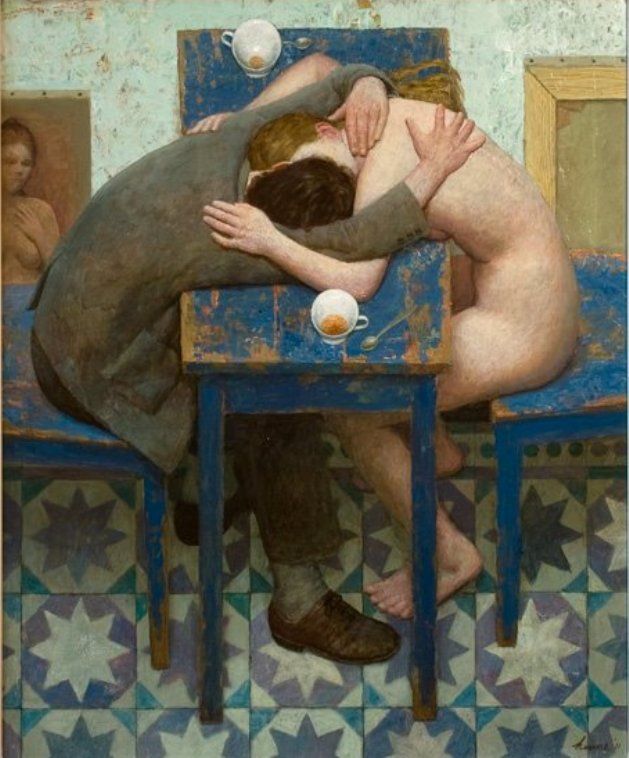



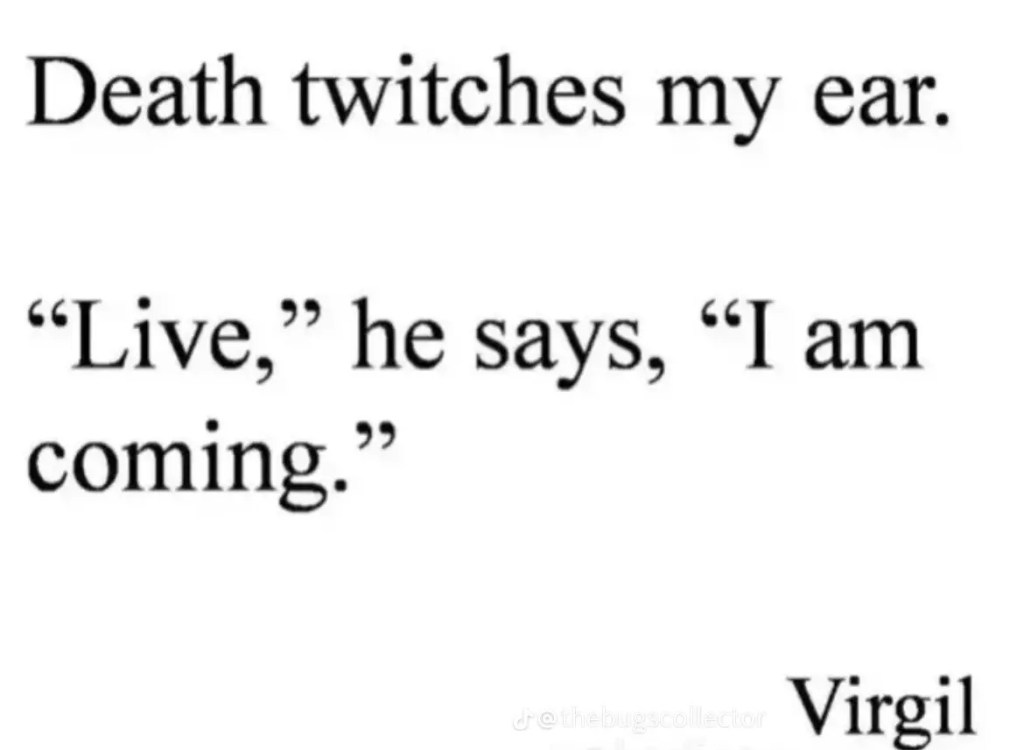


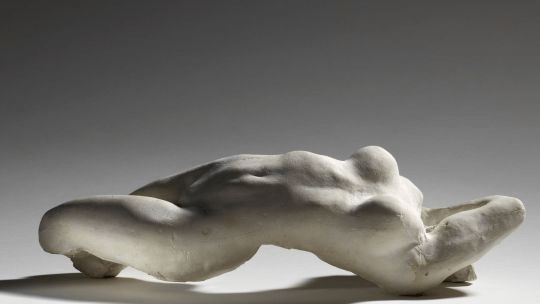
 The Olive Press Review