Grade: A*, First-Class Honours / Pagan Religions of the Roman Empire, Term 4
Roman cults centred their religious, political, and social beliefs, around an anthropocentric system, as it captured ritualistic practices and lavish temples, establishing a metaphysical hierarchy. As Rome expanded into East and Western territories, the integration of regional ‘Other’ cults, their campaigns struggled to integrate Roman belief as Persian Magi, human sacrifice, and the presence of esoteric traditions threaten the sanctity of their established empire. The purpose of this essay is to address the dualistic approach and cultural dissension toward the Persian and Celtic-Gallic regions, as the construction of the ‘Other’ is formulated by literary narratives and political agendas.
The ‘Oriental Other’ is textualized through a tumultuous history of the Persian and Roman Empire, as six centuries of conflict and religious distinction end with acculturation of regional cults. Notably, my approach to the Eastern Empire will rely upon strictly Roman textualization due to, “a paucity of Persian sources and the prevailing Western orientation1”.
The Persian Magi existed within the semantic field of ‘philosophical-religious magic2’, of which presentation toward their wise character and a ‘hereditary priestly clan’, conspired a Roman literary tradition to interpret, and further demean, the tribe. The practice of Magi was fearsome by its ability to subvert the metaphysical hierarchy, eliminating the position of the daimon, a role necessary for communication to Gods in Roman cults. Herodotus and Catullus remark on the practices of the Magi, declaring, “the Magi as ‘employing enchantments’ when sacrificing white horses to cross the river Strymon3.” and “[…] regards them with contempt especially for the incestuous conjugal customs4 Ibid.”. Running concurrently with contempt, the fear displayed threaten political certainty through expansion and war. Augustus revaluation of the tribe left him to, ‘equate it [magia] with goetia5’. The degradation of the Persian Magi could be linked to the ‘Oriental Other’ the Romans utilized to address foreign cults, yet the Romanic approach to ‘magus’ solidified their dissension toward the Eastern Empire.
Furthermore, the complexity of their conflict expands from the Roman-Persian Wars, 54 BC – 628 AD, defined by contradictory literary and religious rhetoric:
The opponents whose despotism, slavishness, luxury and cruelty were the exact opposite of all the virtues of the Greeks. At the same time, though, they had been highly impressed by the Persians and in many spheres of life busily copied them6
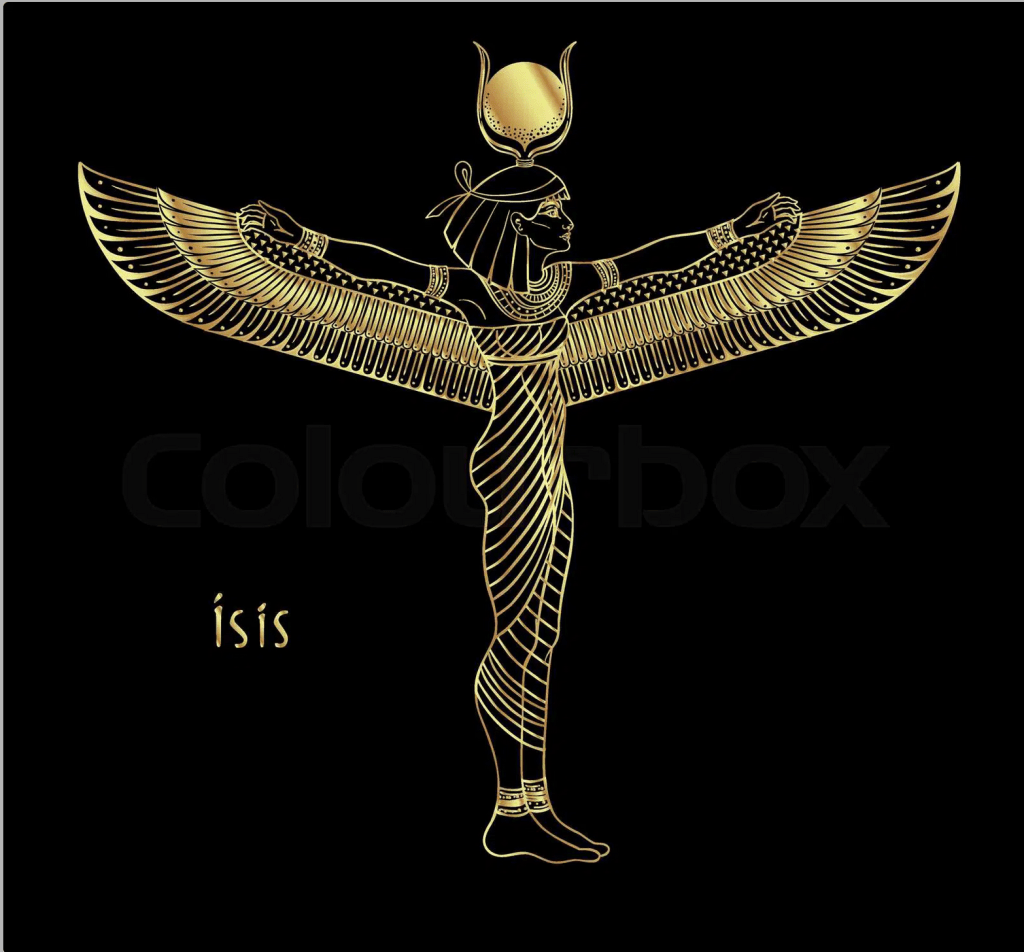
To a greater extent, the (‘opponents’) integration of Isis* and Osiris into the sphere of Roman cults exacerbates my dualistic approach, as the Hellenistic world’s apt attribution to religious acceptance marks a defining cultural modification. I aim to briefly capture the Romanization of Isis, as an Egyptian and Iranian cult figure, with literary compositions from The Metamorphosis of Apuleius and a modern explication from Susan Walker:
*Upon feedback, it is to be noted that the importance of Isis within a Roman context, as she is not an Iranain diety, and can be furtherd through necessary integration of sources support my claims of Roman response.
The dedication of a statue of Aphrodite to Isis surely indicates by the Hadrianic period Isis had taken over ground that had been sacred to Aphrodite. The record of the marble stele (4) shows that the two cults were unconnected in the first century B.C. By the second century A.D, Isis had become predominant7.
Isis is re-positioned, re-constructed, and re-developed within Apuleius narrative until she succeeds power over the Roman god, Fortuna, and is reborn into the service and ‘the providence of the highest goddess8. ’ by the Numidian poet, Apuleius. The worship of Isis constitutes shrines, statues, and altars amongst the Capitol, through demolition, inauguration, or banishment of the cult by emperors. Figure 2 displays her sanctuary built in the early 2nd century, headless, and draped in Hellenistic garments, elucidating a dualism of permanence toward her standing statue, surrounded and covered in Romanic architecture, yet a by-product of dissent as her bodice is all that upholds the ‘Oriental’ other in Roman belief.
Additionally, Roman approach to the Gallic-Celtic cults and Druidism, sustained a literary tradition of depreciation, demanding their practices were inhumane or impure through “barbaric forms of sacrifice and divination in [the] Gaul9”. Insistent on the devious nature in the Gallic-Celtic region, Lucan writes in his text, “[…] ceremonies of the gods / barbarous in ritual, altars furnished with hideous offerings, / every tree is sanctified with human blood10”. Specifically, the orientation of goetic magic was enriched and dramatized for literary enjoyment, drawing upon the visceral violence and human sacrifices (’sanctified with human blood’) the tribe seem to partake in. Consequentially, as Roman cults prohibited human sacrifice, deeming the action to be impure, the Druid rituals are deemed improper by cultural dissension, and therefore pose risk to Romanic religion through centrism and the transactional relationship with their Gods.
The negative approach employed is fastened to political agendas — that which posit the Gallic-Celtic empire as foreign land critical to the expansion of the Roman Empire. Druidism, by association to the Gallic, parallels the harsh connotations of previous ‘Other’ cults, through political sovereignty and “intimations of the occult11”. The aristocracy of the Druids ‘united the Gallic tribes in a loose religious union12’, persisting alongside the Western territory during the Gallic Wars. Declared a political danger by Claudius, the metaphysical power posed critical advancements for the Romans, aimed toward the elimination of the Druids. Referring to Figure 1, David and Monnet place a Roman soldier at the centre of the sketch, depicting his stretched-out arm as an order, conducting the pointed finger to a fatal sentence for the Druids, tied upon a stake, to be punished to death by fire.
Alongside the anti-Roman rhetoric of the Druids, the Gallic and Celtic Western regions encountered Romanic cultish belief during their period of expansion, as the convergence of differencing produced cultural dissension amongst Roman literary rhetoric. Classified as 1313 Strabo 1923.structure of the Romanic cult. “witlessness and boastful[…]13”, the character of the Britons was ultimately reconstructed as Roman cults approached their regional religions. The Celtic and Gallic territories faced submission through the integration of their land, relinquishing the nationalistic, political shape of a religious belief that ultimately threatened the
Overall, Roman approach to ‘Oriental’ and ‘Other’ cults offer insight on their cultural dissension and a distinction in literary rhetorical dichotomies. The Persian Empire’s religious integration, yet belief and proceedings in Magi present contrasting Romanic approach through their six centuries of conflict. The Celtic-Gallic and Druids depict the general atmosphere of Roman expansion in foreign or regional lands, as political and cultural immersion shadows the Britons past of Magi and

Figure 1. A Roman soldier is ordering the burning of the druids who are tied to a stake. Etching by F.A. David after C. Monnet

Figure 2. Temple of Isis. Delos Island, Greece, Schmuel Magal, Sites and Photos
1: Ehoward 2006
2: Costantini 2019: 25.
3: Costantini 2019: 26.
4: Ibid.
5: Costantini 2019: 27.
6: Bremmer 2008: 243.
7: Walker 1979: 248.
8: Apuleius 1998: 226
9: Last 1949: 3.
10: Lucan 1992: l. 403-407.
11: Dewitt 1938: 320.
12: Tamblyn 1909: 22.
13: Strabo 1923.
Bibliography:
Apuleius. 1998. The Golden Ass or Metamorphoses, (London, Penguin Books).
Constantini, Leonardo. ‘Exploring the semantic complexity of the voces mediae: magus, magicus, and magia’, in Volume 1 Words and Sounds, ed. by Nigel Holmes, Marijke Ottink, Josine Schrickx and Maria Selig. (Berlin, Boston: De Gruyter), pp. 21-32.
DeWitt, Norman J. “The Druids and Romanization.” Transactions and Proceedings of the American Philological Association, vol. 69, 1938, pp. 319–32. JSTOR, https://doi.org/10.2307/283182. Accessed 20 Mar. 2025.
Ehoward. 2006. ‘The History of the Roman-Persian Wars’ < https://www.historynet.com/roman-persian-wars/.> [Accessed: 15/3/2025]
Last, Hugh. “Rome and the Druids: A Note.” The Journal of Roman Studies, vol. 39, 1949, pp. 1–5. JSTOR, https://doi.org/10.2307/297701. Accessed 20 Mar. 2025.
Lucan. 1992. ‘Book 3’, in ‘Lucan: Civil War’ ed. by Susan H. Braund. (Oxford: Oxford University Press), l. 399-411.
Monnet, Charles, 1732-1809?, and David, François-Anne, 1741-1824. A Roman Soldier Is Ordering the Burning of the Druids Who Are Tied to a Stake. Etching by F.A. David after C. Monnet. 1 print : etching, with engraving, [1784]. Wellcome Collection, JSTOR, https://jstor.org/stable/community.24887652. Accessed 19 Mar. 2025.
Strabo, Geography 4. 4. 5, Volume II: Books 3-5, trans. by Horace Leonard Jones,
Loeb Classical Library 50 (Cambridge, MA: Harvard University Press, 1923)
Tamblyn, W. F. “British Druidism and the Roman War Policy.” The American Historical Review, vol. 15, no. 1, 1909, pp. 21–36. JSTOR, https://doi.org/10.2307/1835422. Accessed 20 Mar. 2025.
Temple of Isis. Built ca. 166 – 88 BC. Sites and Photos. Artstor, JSTOR, https://jstor.org/stable/community.15229763. Accessed 19 Mar. 2025.
Walker, S. (1979). A Sanctuary of Isis on the South Slope of the Athenian Acropolis. The Annual of the British School at Athens, 74, 243–258. http://www.jstor.org/stable/30103562

 The Olive Press Review
Leave a comment