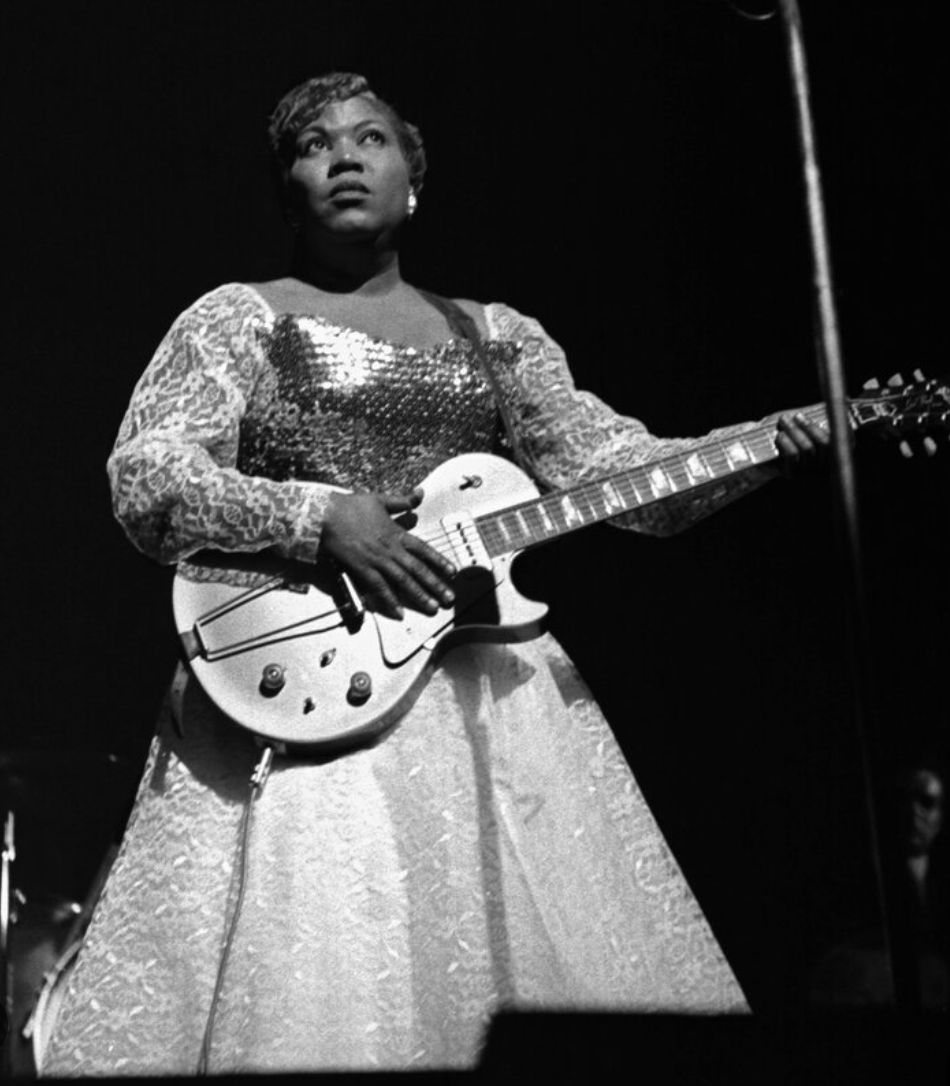
“The jazz man must lose his identity even as he finds it.”
Paul Gilroy, The Black Atlantic:
Modernity and Double Consciousness
A rupture, a cultural fracture, and a vocal disruption of the white voice, jazz embodies the subjectivity and integral expression of the black body. Drawn from the blues, the genre found movement in New Orleans, centred in Congo Square, as the slaves gravitated toward their own markets, grounds of dance, and the necessity — a moment to sing. Decades later, the migration from southern plantations to northern cities, facilitated the Harlem Renaissance[1], whose emergence in intellect, the arts, and political scholarship, shaped black culture, and most importantly the black voice as it encounters modernity and its afflictions.
“There is little social protest in the blues… There is complaint, but protest is stifled… The oppressive weight of prejudice is so constricting that it is not surprising to find little protest in the blues.[2]” Charter’s study is hardly surprising as criticism became intrinsic to black expression, yet it draws upon Agamben’s, Bare Life[3], and in this context Fred Moten’s, Aunt Hester’s Scream, of the black voice being commodified, stifled, unwilling, or impossible. Mutilated, their ‘protest’ of speech signals the lack of conveyance the black voice carry’s as Charter’s denotation of ‘complaint,’ summarizes societal treatment, ridding their identity of repression and rather rife with indignation, instead. Paul Oliver slew of targeted language adds to such harmful notions: “That the number of protest blues is small is in part the result of the […] acceptance of the stereotypes that have been cut for him[4].”
Posited as “The Empress of Blues,” Bessie Smith tonally situates her blues on“racism and econimic injustice — crime, incarceration, alcoholism, homelessness, and the seemingly insurmountable impoverishment of the black community.[5]” Mirroring vocal disruption a century prior[6], Smith’s presentation of ‘Washwoman’s Blues’ consciously protests the ill treatment of black women who were cornered to domestic servitude:
Lord, I do more work than forty-‘leven Gold Dust Twins
Got Myself a achin’ from my head down to my shins
Sorry I do washin’ just to make my livelihood
Oh, the washwoman’s life, it ain’t a bit of good
Fraught with brash vocals, the emotion emulated parallels the physical suffering shown in domestic labour, whose inflection of ‘achin’ suggest the desire for further opportunities, less economic stratification, or simply a protest of hard, unforgiving labour in the domestic – an assertion continued by Davis[7] as ‘slavery reincarnated’. A later emphasis on ‘Gold Dust Twins’ constructs the racialized connotation embedded in domestic labour, as this washing product featured two male twins in black face, or in earlier advertisements of African children depicted with loose tongues and expressive eyes, captioned with ‘Do your work’ and ‘Roosevelt scoured Africa.’ Such ‘beastialization’ portrays a primitive, animalistic nature of the black self and allows Smith to intentionally protest domestic positions through jazz – as the art form littered in bodily movement can became rife in moral interpretations, once the voice has the position to carry past words and to hand and feet. It was also simply imperative that Smith facilitated repetition alongside a cleaning product littered cupboards across America – connectivity had its foundation in commonplace articles.
Touching upon Smith’s third stanza, social injustice shadows a satirizing introduction of ‘Sorry’ – an apology abundant in her servitude status marked by gender, race, and clear economic stratification, but also tone which surrounds a clear verbal attack on her inability to escape, a possible snark ‘complaint’ to outline frustration, anger, and resentment toward a women’s designated duty, or as it can be more clearly stated, a protest
“Brooks moves from an analysis of the langauge in the lyrics of “Washwoman’s Blues,” which he regards as anachronistic and “inauthentic,” to a much too literal and thus rather shallow reading of the content, which he thinks is violated by the instrumental[8]”
‘Much to literal’ ‘shallow’ and ‘inauthentic’ provide a hypocritical insight into Brook’s conditions surrounding music, declaring Smith’s emotional encounter with racialized injustice as ineffectual. A rather deflating argument, the defining characteristic of jazz, as a genre, perpetuate “[An] assertion within and against the group.” Jazz, “springs from a contest in which the artist challenges all the rest; […] represents a definition of his identity: as individual, as a member of the collectivity and as a link in the chain of tradition[9].” Smith’s utilization, expression, tone, and movement of her body and vocal assertions delivers, or rather, represent the intention of jazz: the recognition of the black self and its voice. As Moten, Glissant, Gilroy, Hartman, and at present, Smith, situate the black construction of the self, their protest was outlined in expressions through autobiographical recognition (the acceptance of the I), a recognition of the body past a commodity, and rejection of class and economic discourse, until the fluidity of jazz situated an evolutionary space for the black voice to be heard.
[1] Countee Cullen, W.E.B Du Bois, Claude McKay, Billie Holiday, Ella Fitzgerald
[2] The Poetry of the Blues, 1963
[3] “the loss of this distinction obscures the fact that in a political context, the word ‘life’ refers more or less exclusively to the biological dimension or zoē and implies no guarantees about the quality of the life lived”
[4] The Meaning of the Blues
[5] Blues Legacies and Black Feminism, Angela Davis
[6] The scream of the slave was notified as a clear disruption in the racialized treatment that was enacted by slaveowners. It was the only moment for the black voice to be heard, which was in reaction to pain.
[7] “…”
[9] The Black Atlantic: Modernity and Double Consciousness, Paul Gilroy
 The Olive Press Review
Leave a comment