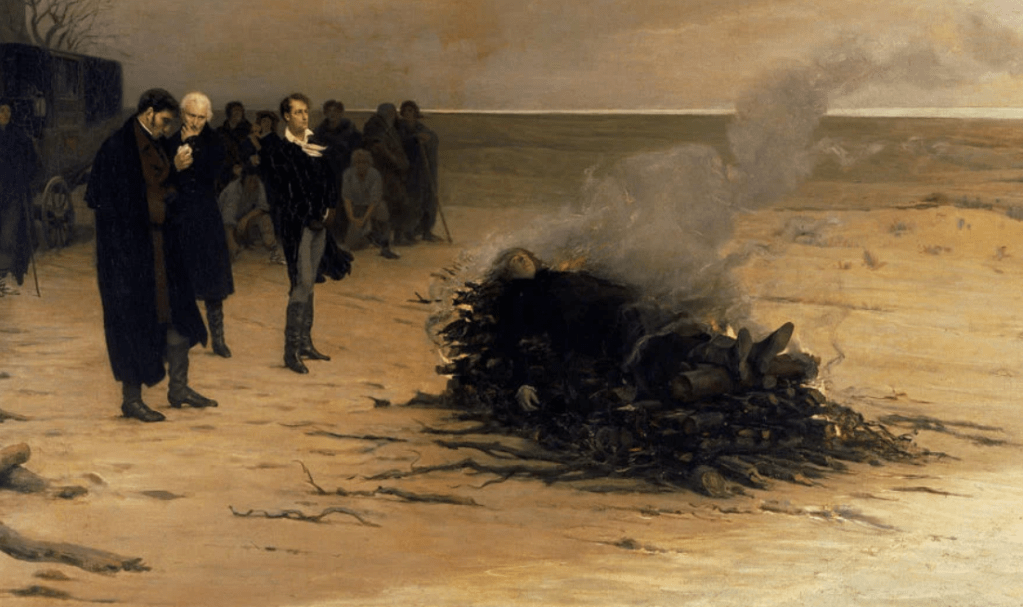

The notion of honouring a women has developed into the context of sexual gratification, as the man ceremoniously falls to his knees and the woman lays on her back. While facilitating women’s fantasies and men’s stringent appetites, the basis of ‘honouring’ a women wreaks havoc on our death sentence, representing our last depiction to those in black heels and even blacker ties. The core of women’s struggles lie in the simplicity of ‘honouring,’ as they are tied up in sexual escapades and unwarranted death sentences. The issue remains simple: Eulogies have become overrated.
This opinion is rooted in my identity as a woman. A woman who has a present mother, a known grandmother, a sister, female relatives. It stands in a future of black dresses, wet grass and stained mud trousers, empty tissues boxes, flower-filled tents and an eventual grey headstone. It means those who have surpassed me will come to recognise in shame-filled speeches huddle up at the podium, as they announce to many, or even few, of the latest moments spent together, and while they laugh over our past conversations they imagine I might be doing the same too. Now, ridden with normalcy in this context, imagine a speech of children remembering their mother, their partner coming to the podium, a possible grand-child carefully announcing each word they have written the night before, and while those burdened by grief may push their heads together and tighten their pinky’s, this symbol of unity is entrenched in monologues developed from Pinterest, rewritten in sprawled handwriting where the letter ‘y’ is a straight line, but in their rush they made sure to dot each ‘I’. A blur of monotone syllables, praising the women’s devotion to her family as she managed to self-sabotage, self-slaughter, reinvent, and tarnish her personality and passions and excitement as they made their way through late school mornings and every home-cooked meal. Women, mothers, deserve more than the context of their labor as means of appreciation, as means of ‘I love you and I’m sad you passed‘. The overall lack of change of their level of gratification toward their death degrades each un-slept sick nights and stretch-marked layers of skin, leaving each women’s monetary value to be based on their proficient ability to be a mom, rather than be a person.
Euology Example for Mothers.. from son and daughters, cancers and suitable poems to read in front of others, the issue extends further than this, runs deeper than sudden death speeches and unknown relatives aged 20 years. Why does death and sexual favours all we are promised as women? To some, the issue is ‘not that deep’ nor does it house any relative ground of importance in the matter of death, but I am willing to disagree on the notion that women have deserved more in every single current period of history than they were ever given, and developing such claim as I have now, my digression on reused eulogies stems from a certain lack of empathy, that in some respects explains the debasement women face in socio-political and economic terms. In continuation of this supposed ‘theory,’ it is necessary to acknowledge that these speeches are not the root cause of degradation or inequality women face, but rather a facet to explore, compared to the usual gender pay gap or physical abuse women are to endure in their lifetime.
In some ways I wish to relay the delicacy of womanhood, the grace and pride we hold like the hands of our mothers, to grasp at every crevice of our bodies and show the purpose of each finger and piece of skin attached to our beating hearts while we managed to create the body of another. Maybe, I just wish to bring life into each women carpooling seven children for her third night in-a-row and her dinner’s once again, forgotten. I want to shield the bodies of the younger girls who have known other hands than their own. Often, in my head, such issues regarding the health, safety, and overall well-being of women become redundant, scarily normal, and always a hinderance. I remember each tear shed in windowless rooms, the act of weaving through the sidewalk as I pushed the bodies of my friends away from the catcalls, fisted hands, beer bottles near empty and another in their back pocket. I didn’t have a word for such fear, if it was intended to men as a whole or to those I felt I couldn’t outrun, but in a minute conclusion, the effects of womanhood follows the ultrasound and pink balloons to death and even past the grave.
Furthering the discussion of womanhood, why has honouring women become so hard? To alter the descriptor of the sentence, words such as cherish, accept, uplift, dedicate, heal, might create for an easier conversation but the significance is consistent: The lack of such descriptors above created the narrative that punished women for centuries as their place in society was seen as less than a indicator for respect and more so a position of earned merit. While easy to acknowledge, it is rather hard to digest when force-fed a subservient status out of common place tradition instilled in society centuries, even millennium prior, and so therefore even in present moments, adjusting to the inferiority become the first acknowledgement of being a women, the next step is determining how little you wish to adjust for social acceptance.
I divulge once more into the commonplace ritual of reused eulogies. Expressing the nurture women often neglect toward themselves, a sort of degradation of personal worth in order to uplift their children, or family, or even socially established standards, the daily practice is seen as normal, a sort of rival to hustle culture where you are deemed a ‘mother’ if sleep is conditional, every home-cooked meal takes personal free-time, that by extension you live vicariously through your kids in theme parks, school events, children’s tv programs. While I hate to demean children in such a light, mother’s begin a process of being condemned for their children who cry in grocery stores as they juggle shopping and crinkled receipts as they wonder when they next phone bill hits their account. They are personal chauffeurs in cars oiled in three-week-old fries and misplaced gum dried in summer heat. They become professional cleaners three-months in and juggle coinciding naps, late homework, PTA meetings, and food the kids are willing to eat. All of this is to say, the existence of mother, and by extension women, has been misconstrued, punished, diminished, and blindly encapsulated into a few minor point of gratefulness for their ability to provide attached to a few remarks of their unwavering generosity, are the last words attached to the mother, by their tender impartialness.
Often, scrolling through social media, in this case Tiktok, the movement of slideshows filled with forlorn quotes paired to slowed music meant for the effects of personal devastation and splicing parental issues, misogyny makes an appearance in forms of personal encounters and statements delivered by women congregated in moments of unity, where women can like, repost, comment, follow, inform, rebuild and so on of how men have affected them. In relation to motherhood here is a quick comment, “If you knew as many women I know, who are forced or coaxed into marriages, where the man uses then only for sex, to birth kids, to take care of his parents, to iron his clothes and serve his tea to his friends, with absolutely no regard for her well being or happiness and you saw women just tagging along walking behind them, hands full with kids and a belly full with another one, doing things on command existing as nothing but to serve them, you’d want to set them on fire too.” While strung together from quotes of women’s secret belief of their own insanity, the strange abuse of personhood as a teenage girl, God and his detriment to womanhood, the mourning women shelter for themselves, the background solidifies the present post with Adele’s, “Love in The Dark.” It is the multitude of posts akin to the emotional depth, everlasting empathy, women don and in itself allows women to complain, and argue, throw pity parties and question each intimate detail about themselves on their displayed bodies. Women know what they want, how they wish to be treated, and even more presently the standards they hold themselves to. A resilience unmatched, unwavering, and purely female.
I’ll end this with one simple idea: Eulogies women receive on the day to commemorate their death are too mundane, overworked, and dissolve women personhood to a mere recognition of their labor and ability to cater. Should you ever have to honour a women past the sentence of death or foreplay, may you understand the preconditions their body were forced to handle and should you leave commonplace poems, know that actions become much more complacent with recognition than toleration.
 The Olive Press Review
Leave a comment